Tag: strategy RPG

  • First Impressions: Fire Emblem Shadows

    First Impressions: Fire Emblem Shadows

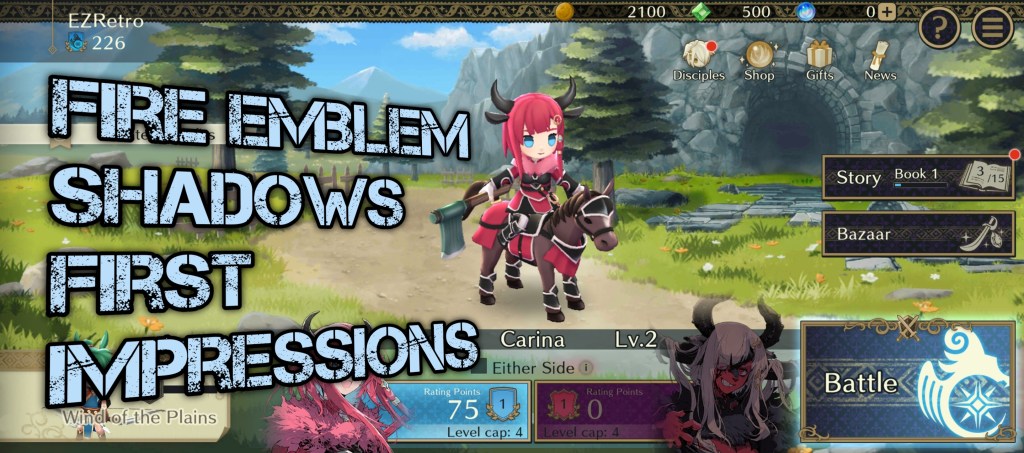
    If you guys follow my blogs, you’ll know that Fire Emblem is one franchise I’m absolutely crazy about. And today, out of nowhere, Nintendo just dropped another entry on mobile called Fire Emblem Shadows.

    I’ve got to be honest—when I first saw the news, I was surprised there wasn’t any build-up or hype leading to this release, nothing like the huge campaign that came with Fire Emblem Heroes a few years back. But now that I’ve actually played it, I get it. This wasn’t just a launch—it was a shadow drop in every sense of the word.

    Nintendo unveiled Fire Emblem Shadows with a short trailer that went live right alongside the game’s release. The presentation leaned heavily into the idea of secrecy and betrayal, teasing its unique hook: real-time tactical battles where one of your supposed allies might secretly be working against you. The press release itself echoed the same theme—“real-time tactics and treachery”—and it fits the vibe perfectly.

    Idle Gameplay Meets Social Deduction
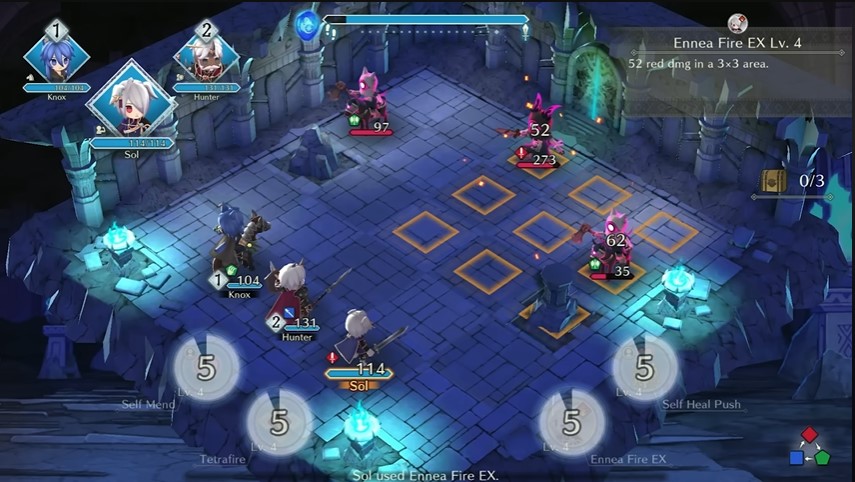
    So essentially, at least from my first few hours, Shadows plays out more like an idle game than a traditional strategy RPG. The combat mostly runs on autopilot, with the only real interaction being when you tap to trigger skills as their cooldowns reset. Then, starting from the second battle, the game flips into an Among Us-style twist—you and your group actually get to vote on who the disciple of shadow is. That vote affects how the next battle unfolds, which is a pretty wild departure from the Fire Emblem formula we’re used to.

    My Honest Take
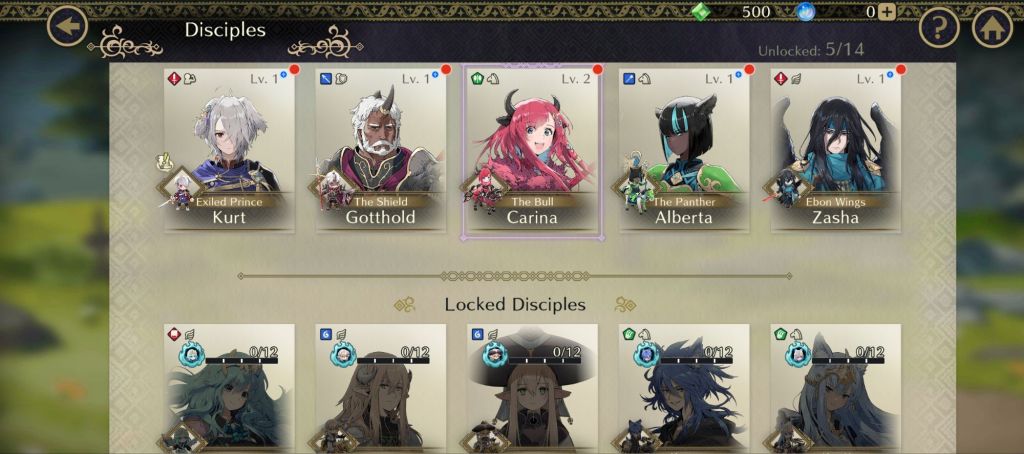
    And like I said, I’ve got to be honest here—I’m not loving this game, although I’m trying hard to give it a chance. It honestly feels like the devs suddenly got someone on the creative team who said:

    “Hey, you know what would make Fire Emblem on mobile more epic? Take all the things that make a mobile game work—idle gameplay, cutesy characters, microtransactions for gacha pulls on skins, costumes, and playable units—then mash it together with Among Us mechanics so we can justify it being multiplayer.”

    And boom—Fire Emblem Shadows happened.

    Multiplayer Fun… But a Bit Shallow
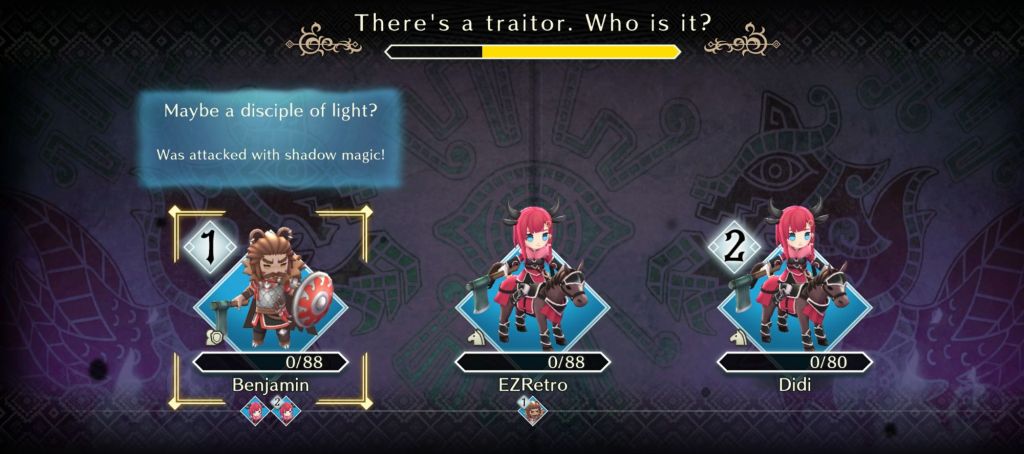
    It is fun in a way, because now Fire Emblem is a multiplayer game. Although, to be honest, I actually enjoyed Fire Emblem Heroes more because it was a single-player experience where I could play at my own pace. With Shadows, everything seems to revolve around the online battles. You and two other players team up to fight monsters—but here’s the twist: one of you is secretly trying to be sneaky and backstab the rest without being too obvious.
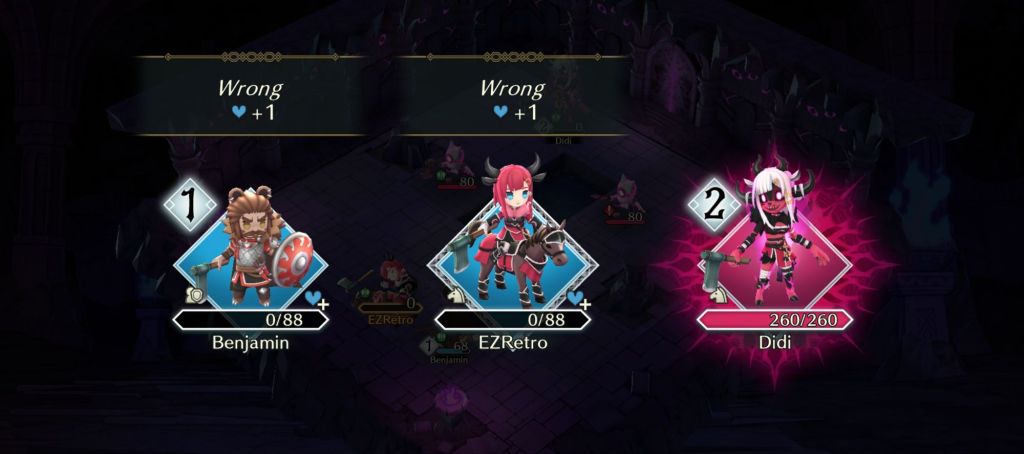
    Then comes the second battle phase, where you and your team vote on who you think the disciple of shadow is. If your guess is right, your team gets a big advantage, like being able to revive twice instead of just once.

    Now, I’ve only been playing for about an hour to get a feel for it, but for some reason I keep getting accused of being the disciple—even when I’m not! Maybe it’s my handle, or maybe it’s because I’m always using the main protagonist in battle? Either way, it’s a weirdly frustrating but kind of funny part of the experience.

    Game Mechanics & Depth
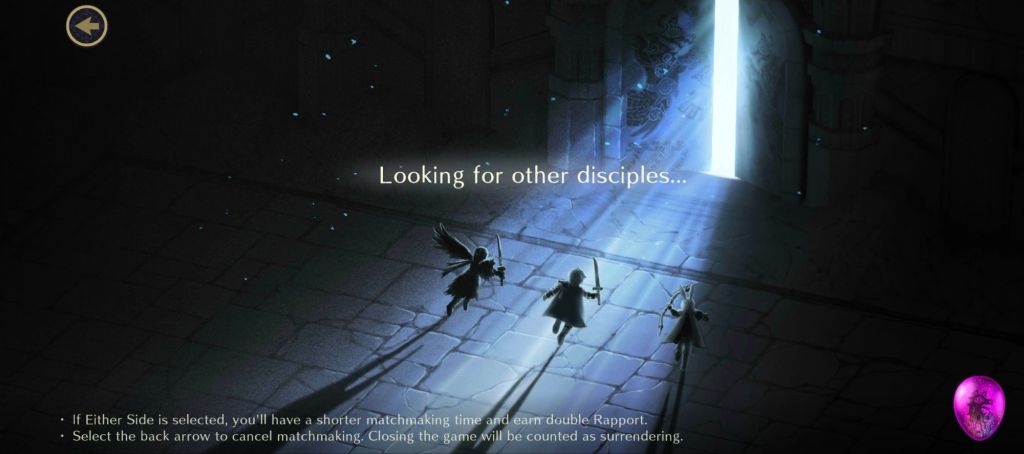
    As far as game mechanics go, I don’t see a ton of depth here. Each game only has three players, so there’s a 50% chance you’ll guess the disciple correctly. That makes the social-deduction element pretty shallow right now, but this is just the early stage, so maybe the devs will refine it over time.

    And that, my friends, is why mobile games become hits—through beta testing and tweaking before going live. Honestly, I don’t know who beta-tested this game or why they thought it was a great launch, but the game is out now and you can try it for yourself on the Play Store and App Store.
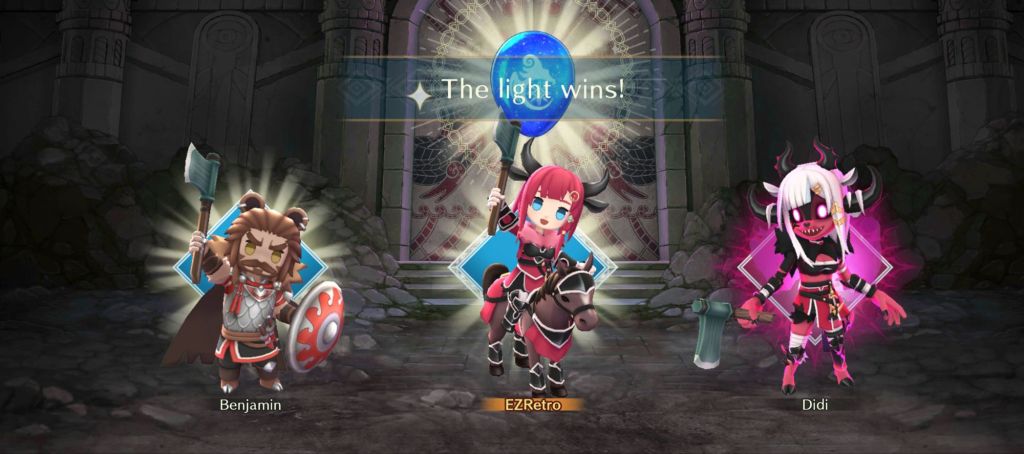
    For me, though? I’m putting this one down for now. I’ll wait a few months until the game figures out what it wants to become. Playing it now and griping over it could probably sour my mood for the Fire Emblem franchise on mobile, and I don’t want that.

    Good thing Fire Emblem Heroes is still there to pick up the ball—it’s honestly the best mobile game Nintendo has made so far, and that includes Mario Kart Mobile as well.
  • A Beginner’s Guide to The Last Remnant’s Union System – Explained the Way I Understand It

    A Beginner’s Guide to The Last Remnant’s Union System – Explained the Way I Understand It

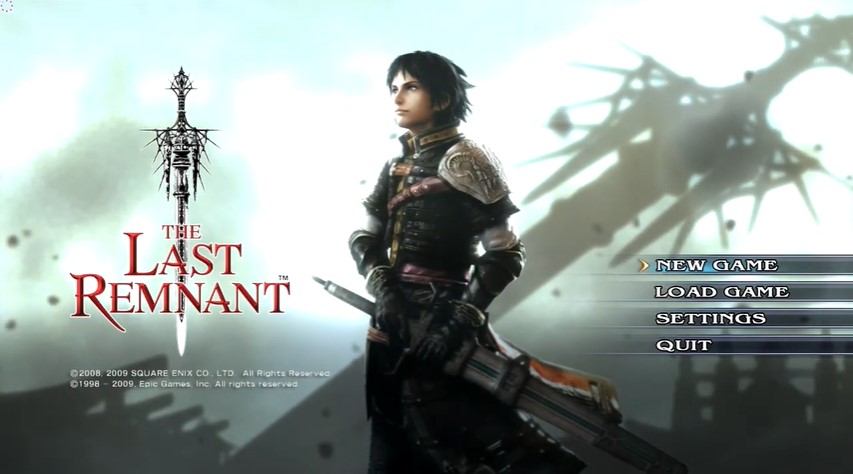
    Through the years, whenever my buddies ask me what game I’m grinding on my phone that feels long and epic, one of my top answers has been The Last Remnant Remastered on mobile.

    Now, don’t get it twisted—I’m no pro at this game. In fact, I’d still call myself a beginner even after all the hours I’ve sunk into it. But maybe that’s exactly why I want to talk about it. Because when I first picked it up, I was just as lost as anyone else, especially with the game’s biggest curveball: the Union System.

    This is my take on it—not as an expert, but as someone who slowly figured things out and wants to make it a little less confusing for the next beginner diving in.

    So What’s the Deal With the Union System?

    Before The Last Remnant, JRPGs mostly stuck to familiar formulas:

    • Classic Turn-Based (like Dragon Quest or Final Fantasy I–X) → You control each character one by one, pick from “attack, magic, item, defend,” and watch the turns play out. Simple and reliable.
    • ATB – Active Time Battle (popularized by Final Fantasy IV–IX) → Each character has a gauge that fills in real time. When it’s full, you act. It added pressure and speed to the turn-based formula.
    • FFXII’s Gambit System (2006) → This one let you pre-program AI behavior, like “if ally HP < 50%, then cast Cure.” It was revolutionary for letting battles play out more automatically but still under your rules.

    And then along comes The Last Remnant. It said: “Forget controlling individuals—what if you controlled squads instead?”

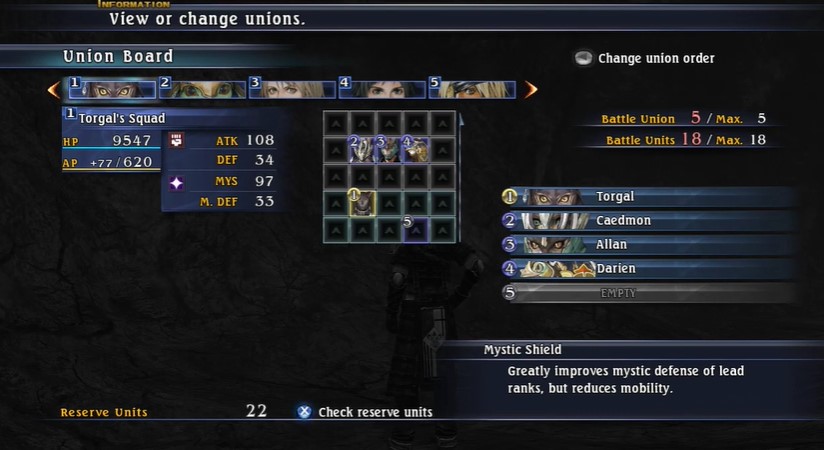
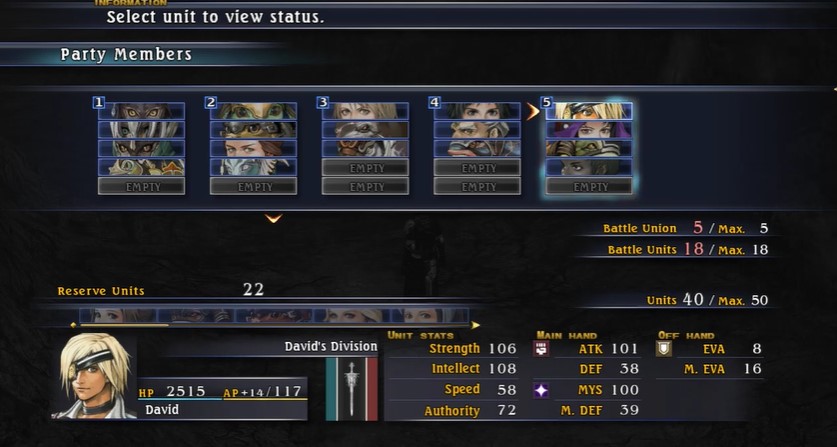
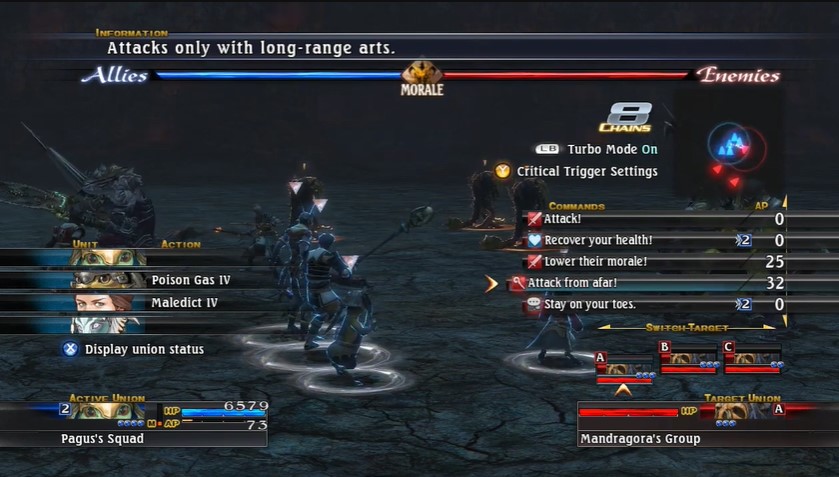
    That’s the Union System. Instead of giving commands to each party member, you organize them into unions (basically mini-teams). You don’t pick every spell or attack. You issue orders to the entire squad, and they act as one.

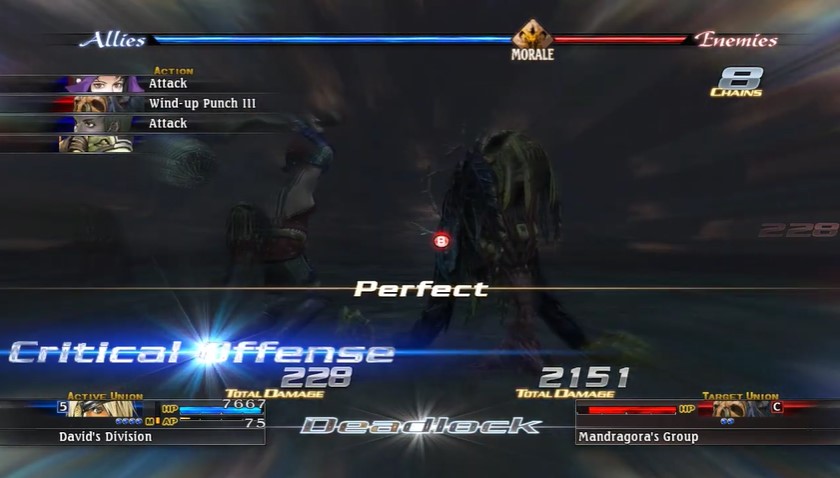
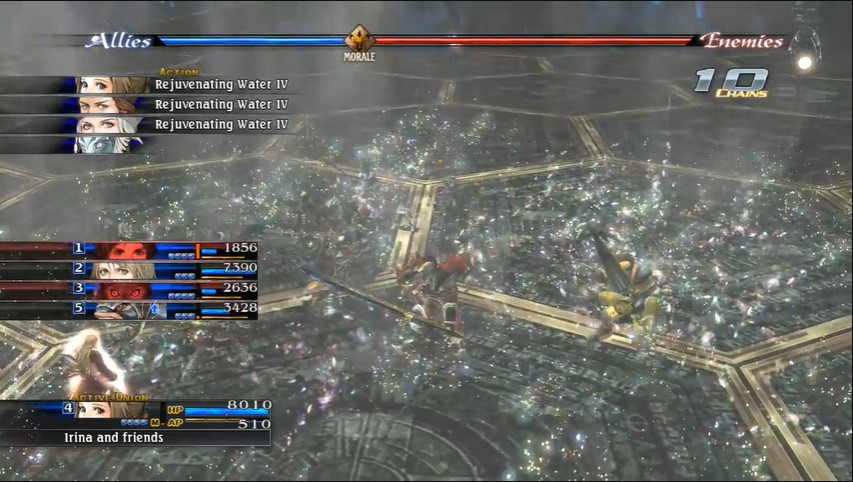
    This flipped combat into something totally different. Suddenly, you’re less like a hero leading a party and more like a commander directing armies. Positioning, morale, and squad synergy mattered just as much as raw stats.

    For some players, that shift felt groundbreaking. For others—me included when I first tried it—it felt confusing as hell.

    The Flow of Battle – What You Do Before You Even Swing

    The real fight doesn’t start when you press “attack”—it starts in how you set up your unions. As a beginner, this part felt overwhelming to me because you have to think about:

    • Who leads each union (leaders bring skills and arts)
    • Who fills the squad (soldiers add stats and stability)
    • What formation you’re using (offensive, defensive, or balanced setups)

    And then, once you’re in a dungeon or field, you also have to pay attention to enemy groups. Do you charge them head-on? Try to flank? Or split your unions to keep them from surrounding you?

    This whole “prep before action” makes fights feel more like mini war puzzles. If you mess up the setup, the battle feels 10x harder no matter how strong your characters are.

    Commands – The Clear and the Confusing Ones

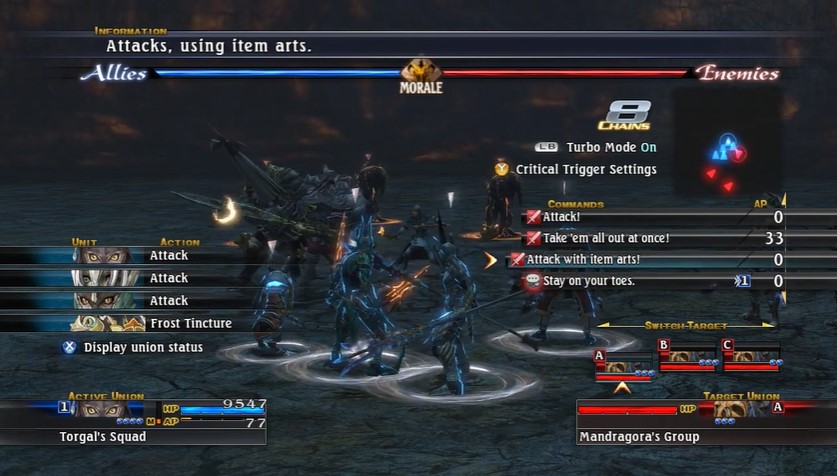
    Once the fighting actually starts, the game gives you commands for your unions. Some are straightforward and easy to understand:

    • Attack with combat arts! → your melee moves
    • Attack with mystic arts! → your spells
    • Heal with remedies! → your items and recovery

    But then you get the vague stuff like:

    • Play it by ear
    • Go all out!
    • Wait and see

    And here’s where the frustration kicks in. As a beginner, I remember just staring at those and going, “What am I actually telling my squad to do?”

    How I Learned to Read the Vague Commands

    After a lot of trial and error (and a few rage quits), here’s how I’ve come to understand those vague orders:

    • Play it by ear → Think of it as “do what makes sense.” The union might attack, heal, or buff depending on the situation. Good for balanced teams.
    • Go all out! → Pure offense. They’ll blow AP, use their strongest moves, and ignore healing. Best for when the enemy’s on the ropes.
    • Wait and see → Defensive or conserving mode. They’ll defend, poke with weak moves, or just save AP. Use it when you’re setting up or trying to survive.
    • Save them no matter what! → Your emergency revive/heal button. Everyone drops offense to bring allies back.
    • Keep your HP up! → Focuses on healing and survival above all else.

    Once I started thinking of them like battle moods instead of strict commands, they made a lot more sense.

    Strategy – When to Use What

    Here’s my beginner advice on using these commands without losing your mind:

    • Use “Play it by ear” for balanced unions that can attack and heal. It gives the AI room to adapt.
    • Use “Go all out” when you know you’re safe or you just need raw damage to push through.
    • Use “Wait and see” to stall or when you’re trying to build AP for big moves later.
    • Use “Save them no matter what” sparingly, because sometimes it wastes turns if no one is actually down.
    • Use “Keep your HP up” when facing tough bosses or multiple enemy unions that can shred you in a turn.

    It’s not perfect—you’ll still sometimes scream at your squad for making dumb choices—but it’s part of the chaos that makes this system fun.

    Wrapping It Up – Why I Still Recommend This Game

    Here’s the truth: The Last Remnant is still hard to understand, even today. If you’re new, the Union System will feel overwhelming and the vague commands will confuse you. But once you get past that hump? The game transforms. Battles feel bigger, strategies feel deeper, and experimenting with different unions actually becomes addictive.

    That’s why I keep it on my phone. I’ve spent hours tweaking squads, retrying fights, and just enjoying the controlled chaos of this system. And yeah, the mobile remaster costs around $19.99, which isn’t exactly cheap. But for me? If I dropped twenty bucks and didn’t play it, that would be the real waste.

    So I keep coming back. And maybe that’s the magic of The Last Remnant: it doesn’t hold your hand, but once you start to get it, you’ll want to stick around and keep learning.

Design a site like this with WordPress.com
Get started