Tag: reviews

  • Raven 2 First Impressions – A Beautiful Game That Plays Itself

    Raven 2 First Impressions – A Beautiful Game That Plays Itself

    Global Launch: October 22, 2025

    When I first heard about Raven 2, I was hyped. Netmarble has always been one of those studios that knows how to make games look incredible. I still revisit Marvel Future Fight from time to time because it remains one of the best-looking mobile titles ever made. Even Marvel Future Revolution, despite being shut down, was a visual masterpiece — and honestly, it still stings that they closed its servers for good.
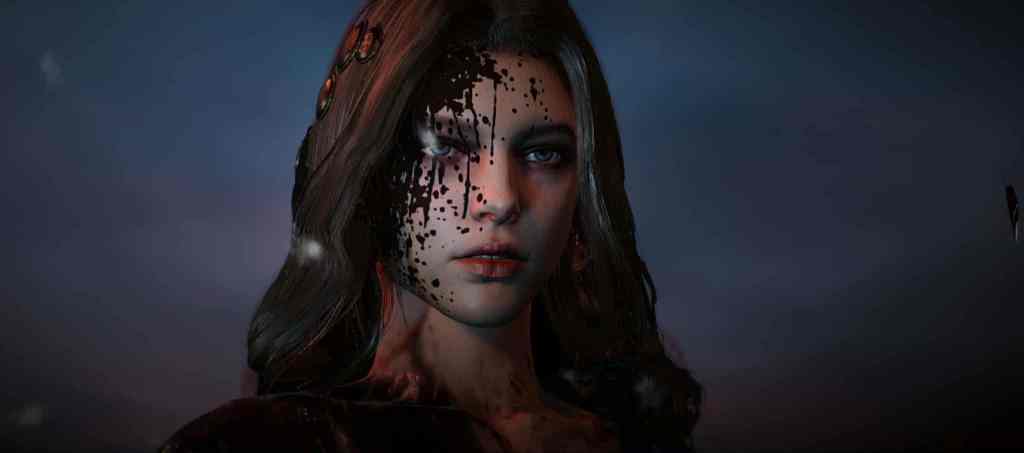
    But enough nostalgia — let’s talk about Raven 2, which officially launched globally today, October 22, 2025. After spending a few hours with it, here are my first impressions — the good, the bad, and everything in between.


    First Impressions – Dark, Cinematic, and Distinctly Atmospheric
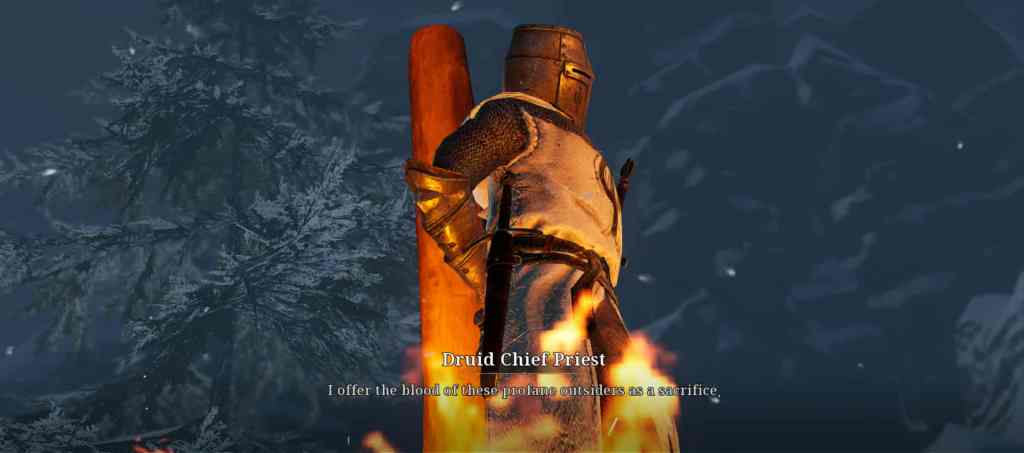
    From the opening cinematic alone, Raven 2 makes a strong first impression. The visuals are gorgeous — dark, moody, and atmospheric, with that unmistakable Diablo-style tone that pulls you right in. It’s cinematic, dramatic, and absolutely dripping with polish, which is very much in line with Netmarble’s DNA.

    Then came my first surprise: the voiceovers are entirely in Korean.
    Now, I don’t mind games using their native languages — in fact, it often makes them feel more authentic. But for a global launch, I did expect an English voice option, similar to what Wuthering Waves or Black Beacon offered.

    Being an anime fan, I’d even settle for Japanese voiceovers — they’re familiar and easier for global audiences to connect with. Korean, on the other hand, is something I mostly hear in K-dramas like Goblin or My Sassy Girl. Still, once I got used to it, I have to admit: the voice acting, music, and sound design blend beautifully. It feels like watching a high-budget fantasy drama — only you’re part of the story this time.


    Character Creation – Stylish and Customizable
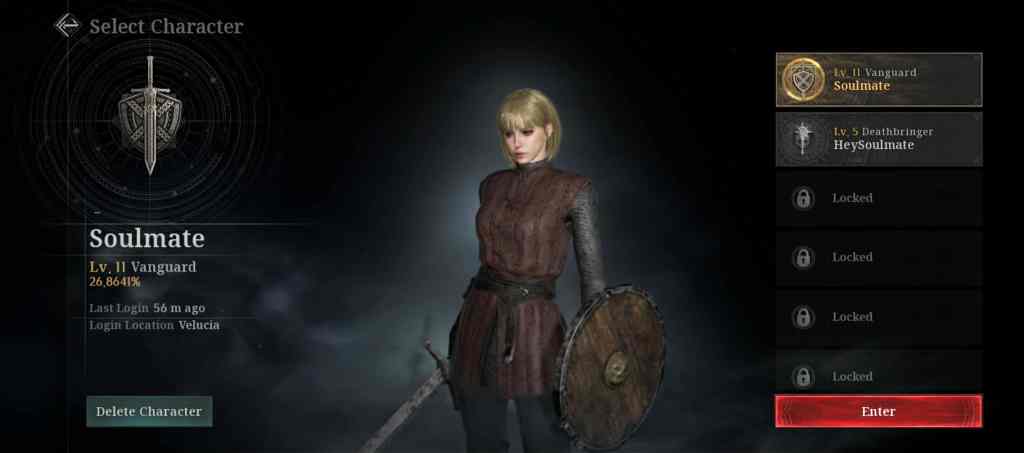
    The character creation screen instantly impressed me. Raven 2 offers several classes: Assassin, Berserker, Elementalist, Vanguard, and others — each with unique aesthetics and playstyles.

    Since I usually play tank roles, I went with the Vanguard class, creating a female character for my first run. I’ll be honest, I was tempted to pick one of the female-exclusive class looks — because wow, the designs here are stunning. Thankfully, every class allows both male and female options, so you can customize however you want without losing visual appeal.


    Gameplay – When “Auto” Takes Control
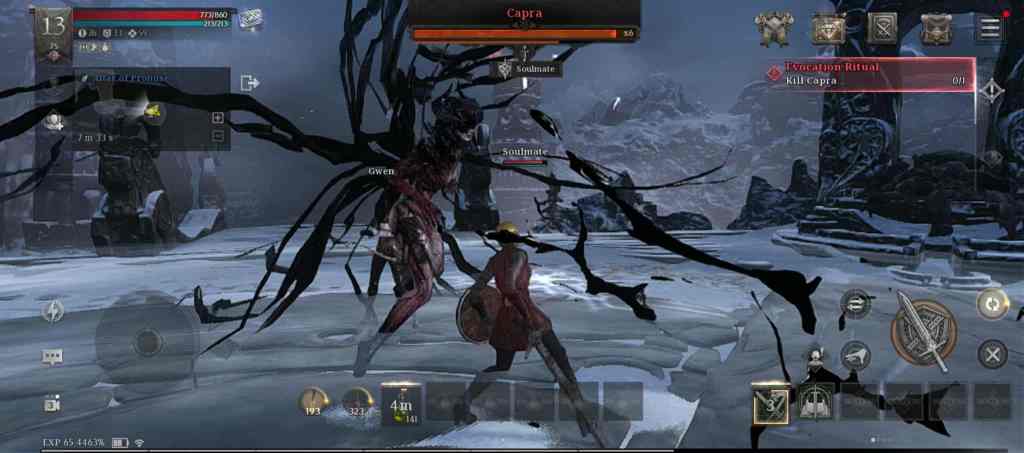
    Here’s where things got interesting.
    I went into Raven 2 expecting something closer to Darkness Rises — a high-action, combo-driven hack-and-slash RPG with manual controls and dynamic combat. Instead, what I found was an idle MMORPG dressed in premium visuals.

    The game lets you switch between three camera perspectives — top-down, isometric, and over-the-shoulder — and the moment I saw the horizontal skill bar beneath the attack button, I knew what kind of experience this would be.
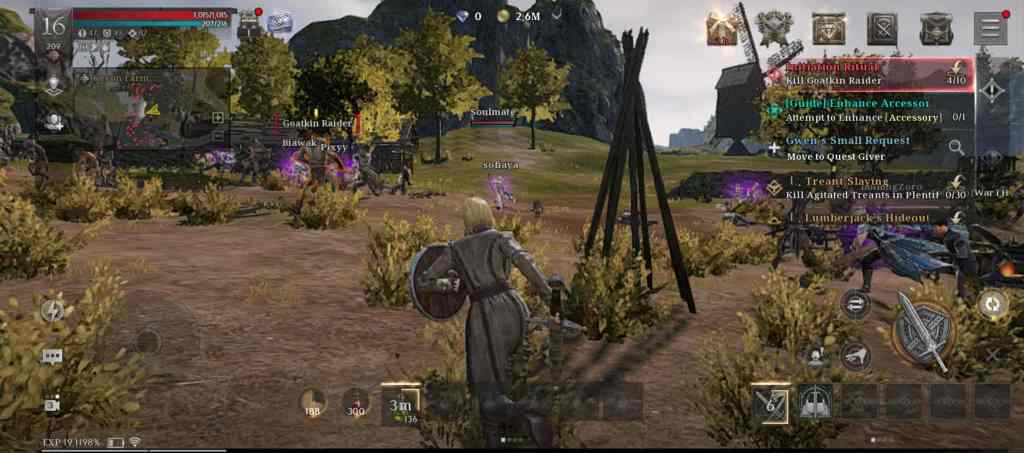
    Combat can be manual, sure, but the auto-battle and auto-cast features quickly take over. You can literally sit back while your character chains skills, fights enemies, and completes quests on their own.

    The quest tracker, found on the top-right corner, handles most navigation for you. Tap a quest, and your character automatically walks to the right NPC, triggers dialogue, hunts enemies, and even turns in objectives. A single tap afterward claims your rewards and pushes you straight to the next task.

    For some, that’s a dream setup. It’s convenient, smooth, and perfect for mobile gaming — especially if you’re multitasking or just want to progress casually. But for players like me who crave hands-on action, it can feel like the game’s doing all the heavy lifting.

    Raven 2 executes its systems well, but it often feels like watching a really good-looking game play itself.


    Global Launch Rewards – Netmarble’s Welcome Package
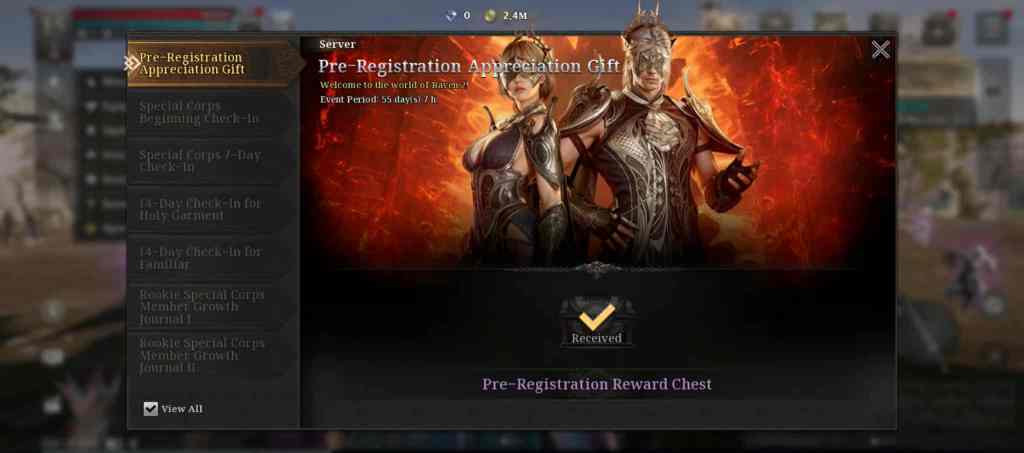
    To celebrate the global launch, Netmarble rolled out some enticing bonuses and pre-registration rewards to kickstart your journey.

    Official Pre-Registration Rewards

    • Heroic-grade Holy Garment – basically a character skin given automatically to all pre-registered players at launch. I tried it out for a bit, but honestly, I ditched it quickly. Everyone I ran into was wearing the same outfit, and it completely killed the sense of individuality for me. I actually prefer my default look — I intentionally made my character resemble Clare from the anime and manga Claymore, because… well, I’m a huge fan.
    • Special Pre-Registration Package – a bonus bundle sent through in-game mail (contents not officially detailed and may vary by region).

    Global Launch Events
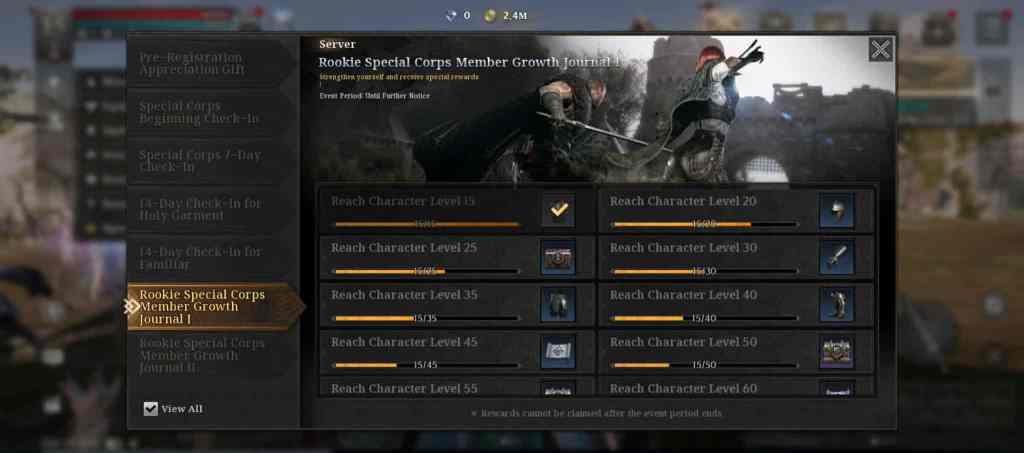
    In addition to the pre-reg rewards, several time-limited events are live now:

    • Daily Login Rewards – includes gold, enhancement materials, and consumables.
    • Level Milestone Rewards – designed to help new players gear up faster.
    • Global Celebration Bonuses – mount tickets, costumes, and premium currency for early progression.

    These incentives definitely make the early game smoother and give players plenty of reasons to log in daily.


    Verdict – An Eastern Take on a Western Celtic-Inspired World
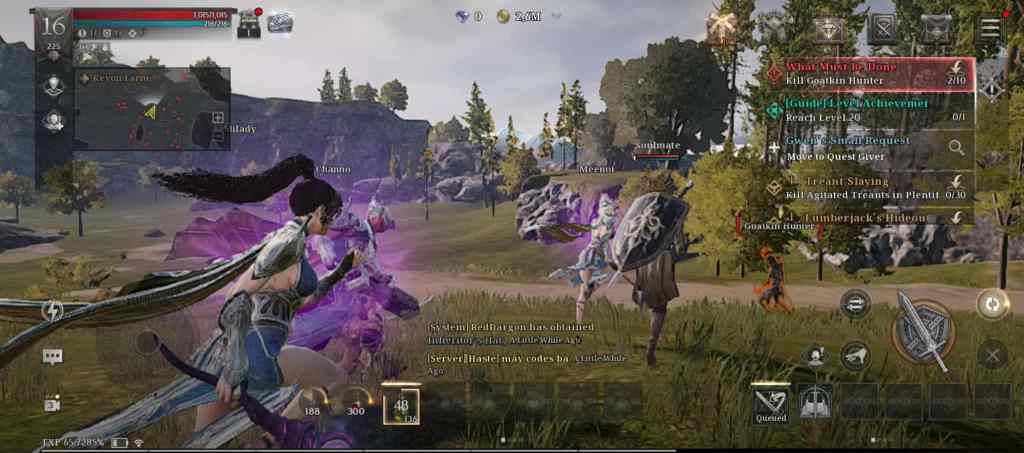
    At the end of the day, Raven 2 is a visual powerhouse — and if you doubt that, just notice your phone overheating while it’s running. It’s that demanding. The game drains battery fast, and even on lower visual settings, it still looks absolutely stunning.

    If you love graphically impressive games with a dark, bloody fantasy atmosphere, this one’s a dream come true. It’s a perfect blend — an Eastern developer’s take on a Western, Celtic-inspired world. The tone is grim and mystical, the armor and landscapes evoke pagan energy, and the soundtrack feels like it was pulled straight from a medieval battlefield. It’s that unique fusion of styles that gives Raven 2 its distinct identity.
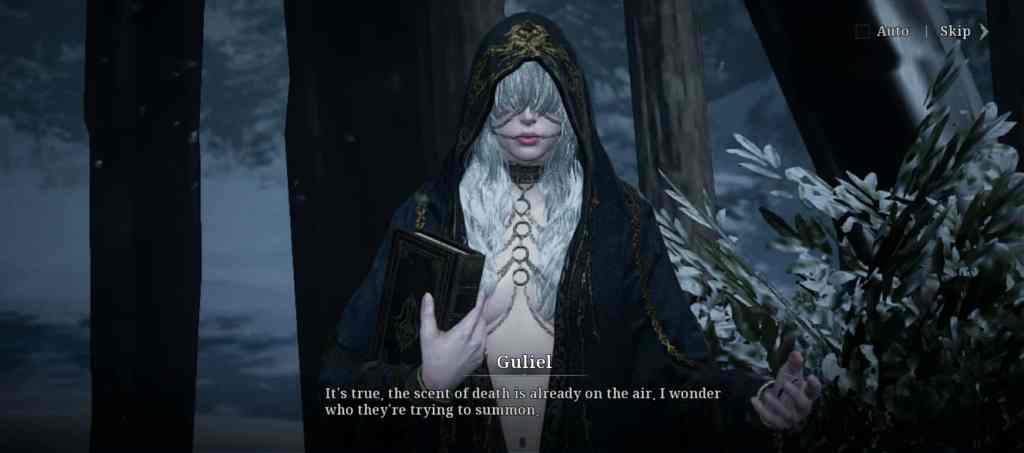
    That said, all that style comes with a trade-off. The auto-play heavy design still holds it back from being truly engaging. I’ve never been a fan of games that rely on an “Auto” button to do most of the work. It’s convenient and great for grinding, but it takes away the thrill of mastering combat and controlling every move yourself.

    If Netmarble had followed the Dragon Nest approach — tight, skill-based combat with real control — Raven 2 could’ve easily outshined most mobile titles this year.

    For now, I’m setting it aside. Not because it’s bad — far from it — but because it’s built for a different audience. It’s made for players who love beautiful, cinematic MMOs and don’t mind trading depth for spectacle.

    If that sounds like you, Raven 2 will absolutely deliver.
    But if you’re the kind of gamer who values interaction over automation, you might find it all flash and little substance.

  • Top 10 Horror-Themed Games to Play on the Sega Genesis

    Top 10 Horror-Themed Games to Play on the Sega Genesis

    The Miyoo Mini might have a small 2.9-inch screen, but that’s exactly what makes it perfect. It’s a portal back to those quiet nights hiding under a blanket, playing in secret long after bedtime. You can almost feel that moment again, the dim light of the screen, the hum of the fan, the fear of hearing footsteps outside your door.

    And with Halloween coming, there’s no better way to relive that feeling than through the dark side of the Sega Genesis. The console may not have had realistic horror, but it mastered atmosphere and dread. These games didn’t rely on gore alone. They worked through tone, tension, and gameplay design that still holds up today.

    So get comfortable, dim the lights, and step into the shadows of 16-bit horror.


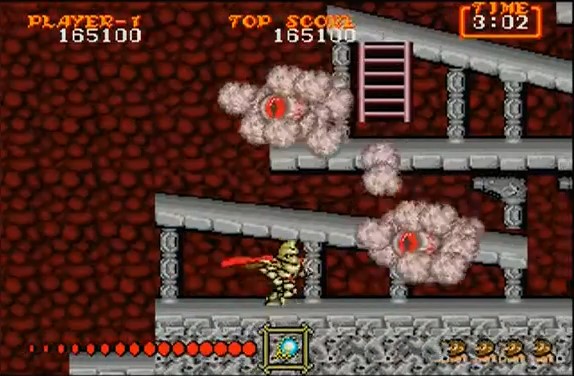
    10. Ghouls ’n Ghosts (1989)

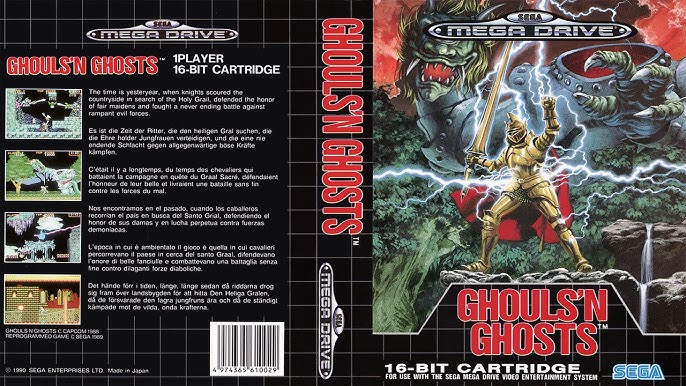
    Capcom’s Ghouls ’n Ghosts is a brutal test of skill set in a world crawling with undead knights, demons, and grotesque monsters. As Arthur, you battle through crypts and cursed landscapes to rescue souls and reclaim your armor piece by piece.

    What stood out: It demanded precision and pattern recognition. Every enemy’s timing mattered, every jump had consequences, and the punishment for mistakes made victory feel monumental. It was horror through tension and vulnerability.

    Fun Fact: The Genesis version was one of the console’s first faithful arcade ports, helping cement Sega’s reputation for serious, challenging games.


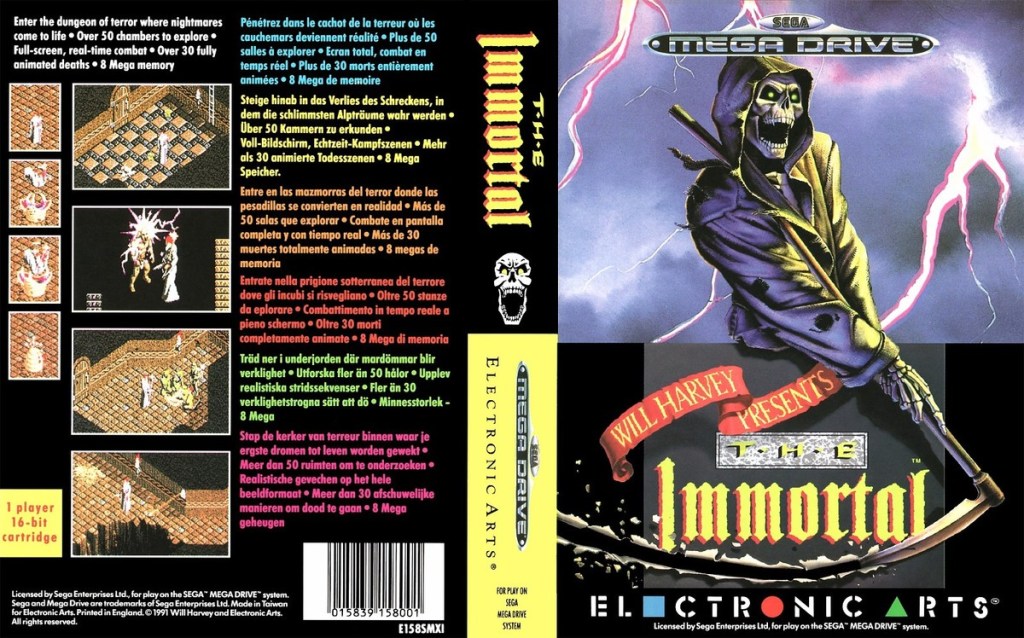
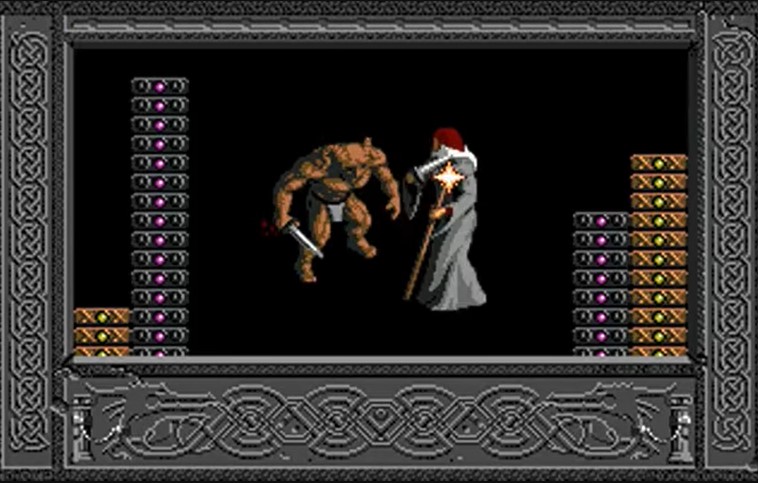
    9. The Immortal (1990)

    An isometric dungeon crawler drenched in darkness, The Immortal forces players to survive traps, monsters, and cruel puzzles in an underground labyrinth.

    What stood out: The focus on environmental hazards created genuine dread. Rooms weren’t just obstacles; they were death traps waiting for you to make a single wrong move. The sense of caution it inspired turned every step into a risk.

    Fun Fact: The game’s fight scenes used zoom-ins and blood animations rarely seen on the Genesis, adding an early cinematic feel to combat.


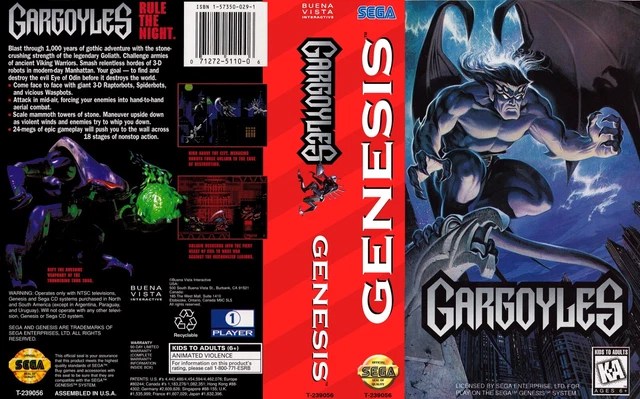
    8. Gargoyles (1995)

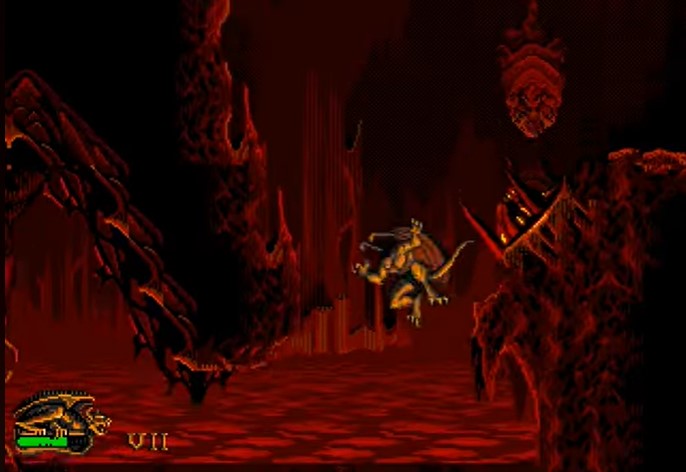
    Based on the darker Disney animated series, Gargoyles delivers gothic platforming at its best. You play as Goliath, a cursed stone warrior battling demonic enemies across medieval castles and stormy skylines.

    What stood out: The animation and movement system gave Goliath a real sense of weight and power. Climbing walls, gliding through the air, and smashing enemies felt tactile and brutal. The visual direction remains one of the Genesis’ most atmospheric achievements.

    Fun Fact: The developers used multiple parallax layers and shadow mapping to achieve its stormy, cinematic look, pushing the hardware late in its life cycle.


    7. Altered Beast (1988)

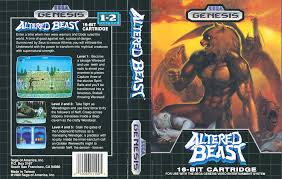
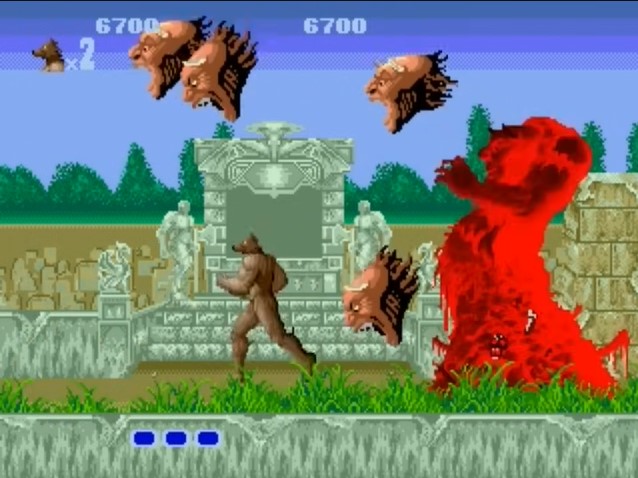
    One of Sega’s earliest Genesis titles, Altered Beast remains a haunting blend of mythology and horror. You rise from the grave as a resurrected warrior, transforming into werewolves, dragons, and other beasts to defeat the underworld’s creatures.

    What stood out: The transformation mechanic was the centerpiece. Each form had unique attacks and movement styles, forcing you to adapt on the fly. Its slow pacing and eerie resurrection theme gave it a mythical horror feel that still defines early Genesis identity.

    Fun Fact: Altered Beast was originally bundled with the Sega Genesis as a pack-in game before Sonic the Hedgehog took over the role in 1991.


    6. The Ooze (1995)

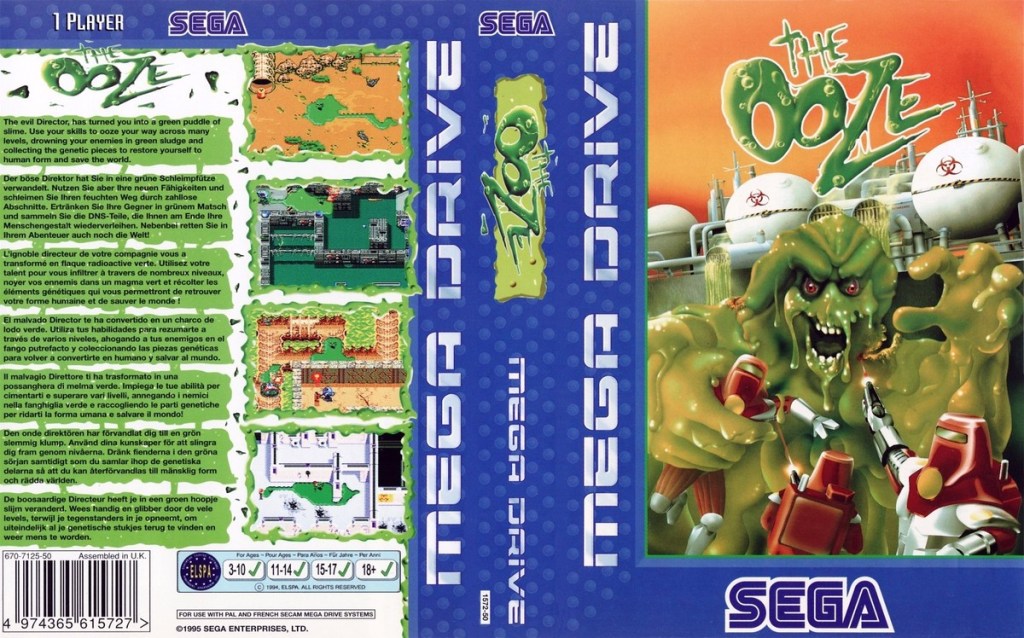
    You play as a mutated scientist turned blob, crawling through labs and cities in search of revenge. The Ooze is grotesque, slow, and suffocating — perfect for horror.

    What stood out: The control system tied your health directly to your size. The more you moved or attacked, the smaller and weaker you became. It forced restraint and calculation, turning movement itself into a risk.

    Fun Fact: The developers wanted players to feel both powerful and helpless, a rare design goal that perfectly fit the game’s tragic tone.


    5. Chakan: The Forever Man (1992)

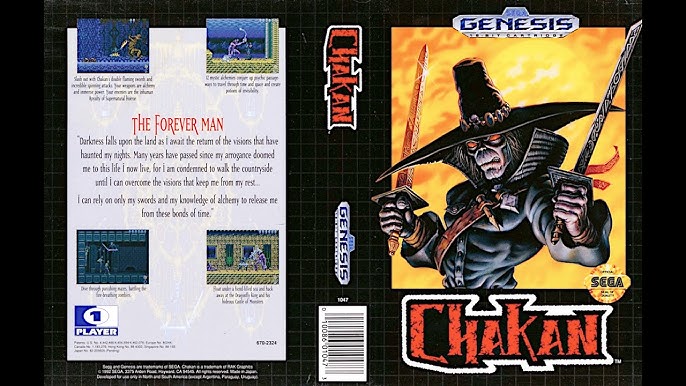
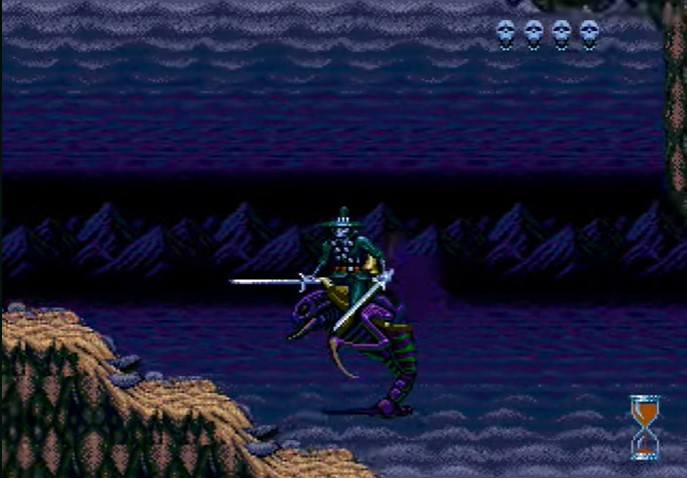
    Adapted from Robert Kraus’ comic, Chakan follows an immortal warrior cursed to fight until every evil creature in existence is destroyed. It’s grim, relentless, and soaked in atmosphere.

    What stood out: The non-linear level design gave players the freedom to choose their path, but every stage was built to punish overconfidence. Its combat system demanded precise timing and mastery of weapon effects, making survival itself a victory.
    Fun Fact: True to its source, Chakan ends with the hero realizing that even eternal victory offers no peace, and he must continue fighting in the afterlife.


    4. Alien 3 (1993)

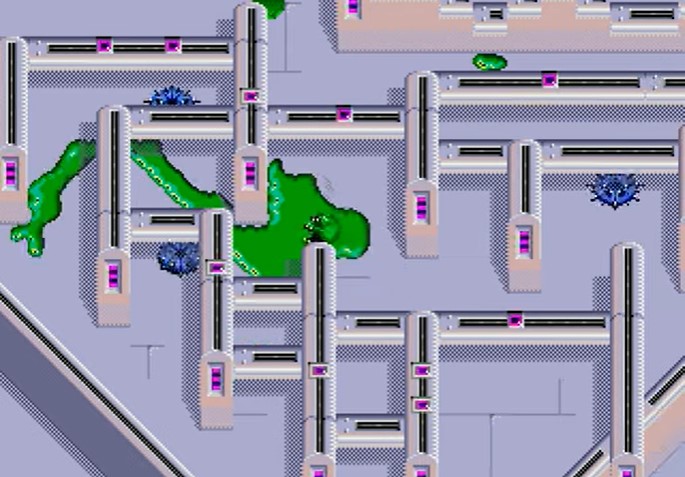
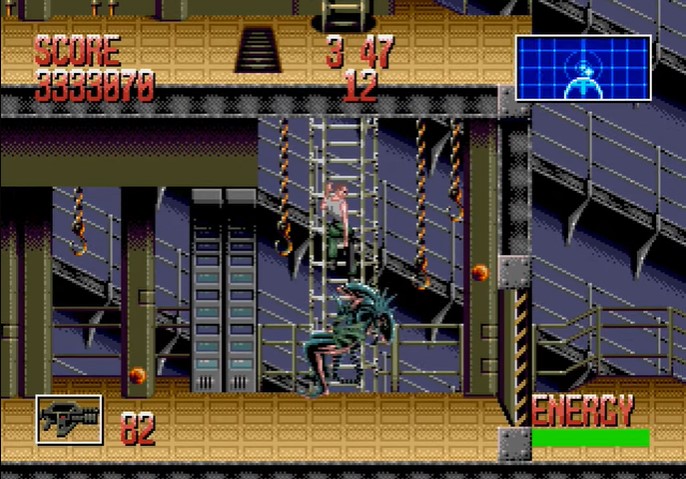
    Alien 3 delivered sci-fi horror with precision. As Ripley, you race through labyrinthine corridors to rescue prisoners before they’re consumed by xenomorphs.

    What stood out: The time-based mission structure made it feel more like survival horror than an action game. You couldn’t afford to waste time or ammunition. The result was a constant push-and-pull between urgency and fear of failure.

    Fun Fact: The randomization of alien encounters kept players tense, since you never knew when something might burst out of the shadows.


    3. Castlevania: Bloodlines (1994)

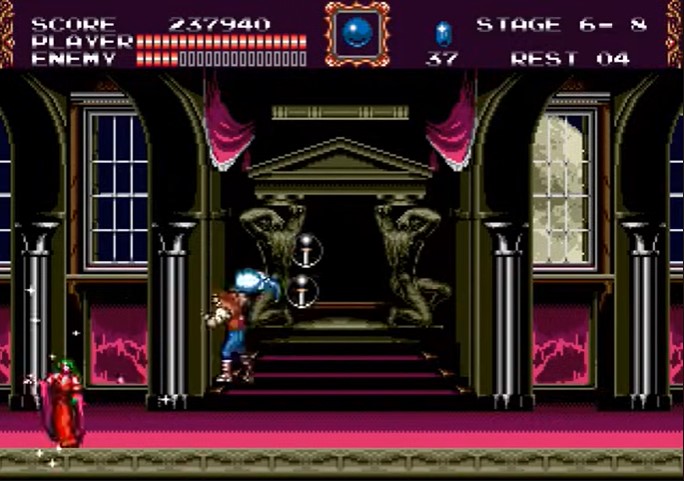
    Bloodlines was Konami’s answer to the question, “What does gothic horror look like on Genesis?” The result was a masterpiece of atmosphere and mechanical depth.

    What stood out: Its dual protagonists changed the traditional Castlevania formula. John Morris could swing across gaps, while Eric Lecarde used vertical spear thrusts for aerial combat. This gave every level two distinct ways to play, adding complexity without sacrificing the series’ haunting mood.

    Fun Fact: The European version, Castlevania: The New Generation, toned down violence and color palette due to censorship, making the U.S. version the definitive dark experience.

    2. Splatterhouse 2 (1992)

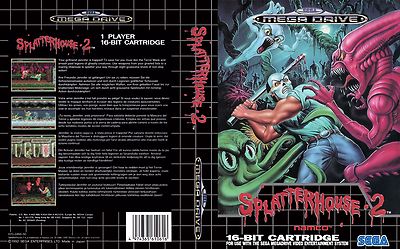
    No subtlety here. Splatterhouse 2 was horror incarnate, a side-scrolling bloodbath inspired by ’80s slasher films.
    What stood out: The slow, deliberate combat created tension in every movement. The physics of your attacks made you feel both powerful and vulnerable. Each strike and scream lingered, making progress feel like survival rather than victory.

    Fun Fact: The developers slowed the game down from its arcade counterpart to make combat heavier, emphasizing dread between each attack.


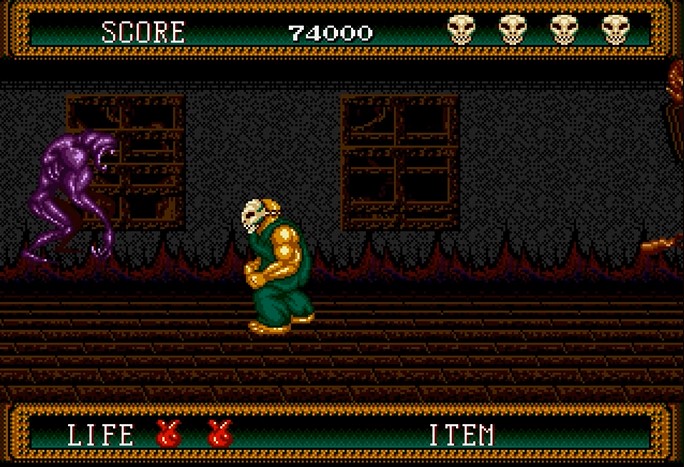
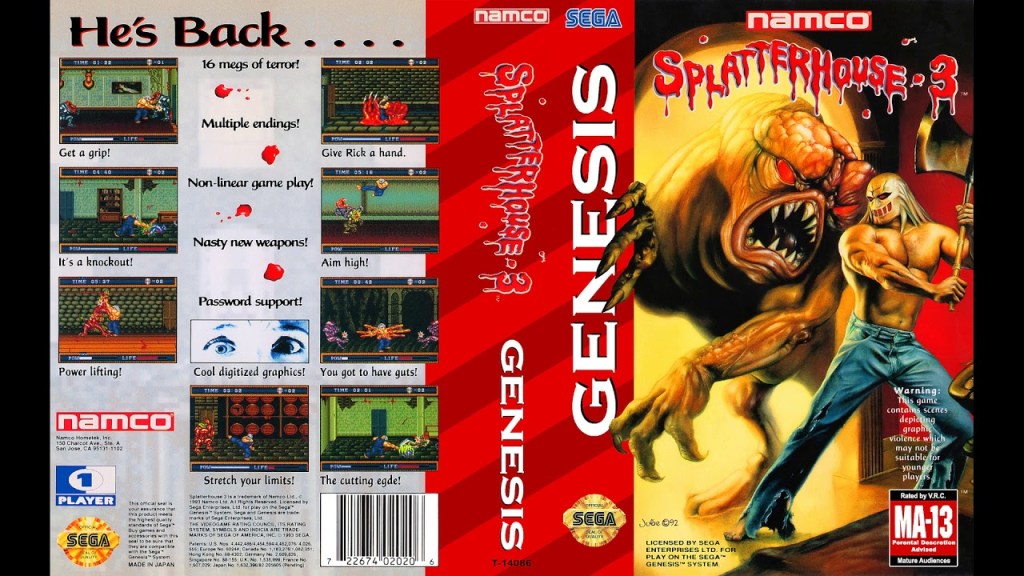
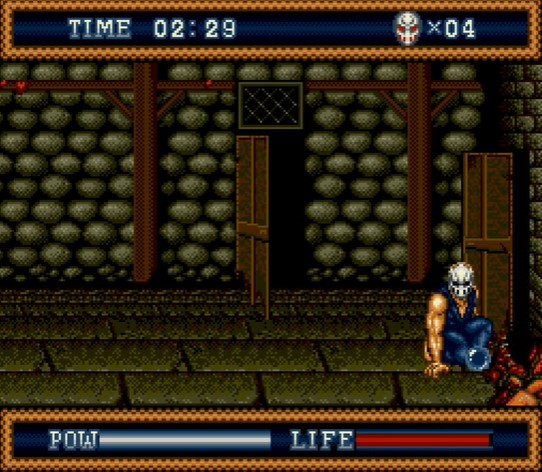
    1. Splatterhouse 3 (1993)

    The final and finest chapter of Genesis horror, Splatterhouse 3 evolved from a straightforward brawler into a psychological test. With branching paths, timed missions, and multiple endings, it turned horror into a moral struggle.

    What stood out: The time mechanic transformed the experience. Each minute you spent fighting or exploring changed who lived or died. It turned urgency into a narrative weapon, and that tension hasn’t aged a day.

    Fun Fact: Splatterhouse 3’s branching storylines made it one of the earliest console games to integrate player performance into narrative outcomes.


    Final Thoughts

    The Sega Genesis didn’t need realism or jump scares to create horror. Its best games relied on tone, challenge, and imagination to get under your skin. Whether it was through the slow dread of Splatterhouse, the gothic majesty of Castlevania, or the mythic resurrection of Altered Beast, these titles captured the essence of fear in 16-bit form.

    Playing them on a Miyoo Mini or any handheld today still feels just as eerie. There’s something timeless about these pixelated nightmares that modern games can’t quite replicate.

    So turn off the lights, pull the blanket over your head, and let the old horrors come alive again.

  • Otogirisō (1992): The Flower That Haunts — Revisiting Chunsoft’s Sound Novel That Defined Retro Horror

    Otogirisō (1992): The Flower That Haunts — Revisiting Chunsoft’s Sound Novel That Defined Retro Horror

    I first stumbled upon Otogirisō while browsing through old Super Famicom titles a few weeks ago. At first, I thought it was just another forgotten horror visual novel — until I learned it was actually one of the original sound novels, the very foundation for everything that came after from Chunsoft. With an English translation patch available, I decided to load it up on my Miyoo Mini, and it instantly became one of my favorite finds this October.

    It’s perfect for the Halloween season, a game that doesn’t rely on visuals or gore but on atmosphere, sound, and storytelling. The kind of horror that creeps in slowly, like a whisper instead of a scream. And playing it with earphones on, in the dark, made it feel like I was sitting right there inside that mansion as the storm raged outside.

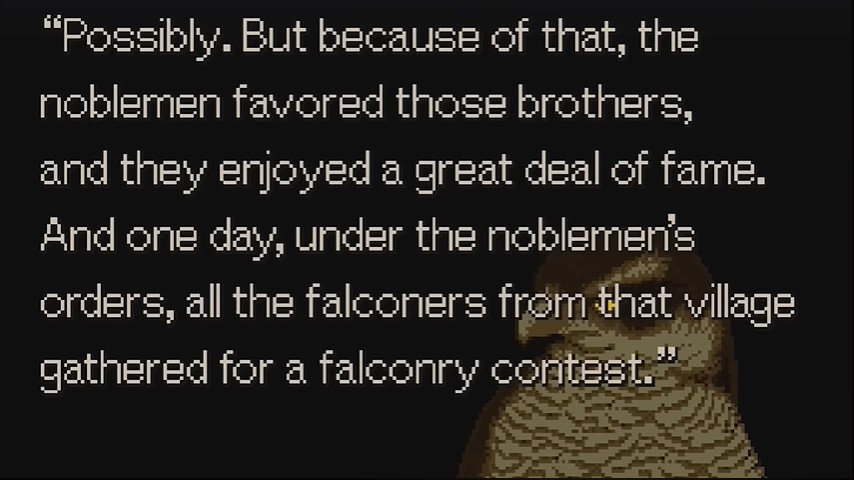
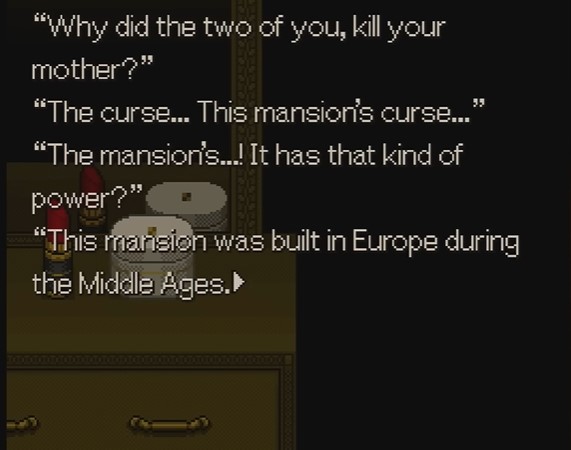
    On the drive, the conversation turns to the roadside flowers, and the protagonist explains what they are. He tells Nami about the Otogirisō — St. John’s Wort — and the old legend that goes with it. The tale is simple and brutal: two brothers once lived together, betrayal ripped them apart, one killed the other, and from the ground where the blood spilled the Otogirisō bloomed. That moment, me telling Nami the story as the rain fell, hooked me immediately. It sets the tone, and the subtle sounds in the background — tires on wet asphalt, distant thunder, soft static — made the whole scene sink into my bones.

    I named the protagonist Bob for my playthrough, after my favorite wrestler, Bob Backlund. Call him what you want, the game lets you, and that little choice made the nightmare feel oddly personal.


    Inside the Mansion

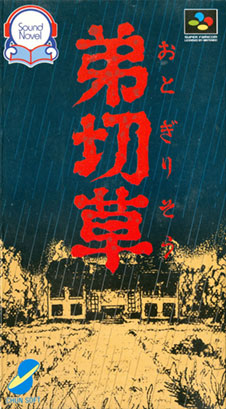
    Otogirisou snes cover

    From the moment Bob and Nami enter, you’re greeted by creaking wood, thunder rolling above, and faint music that seems to breathe with the house itself. You start to explore, and immediately you can sense the unease — the mansion feels alive.

    Unlike modern horror games that rely on visuals, Otogirisō lets the sound design do the heavy lifting. Every pause between lines feels intentional, like the mansion itself is waiting for you to make the wrong move.

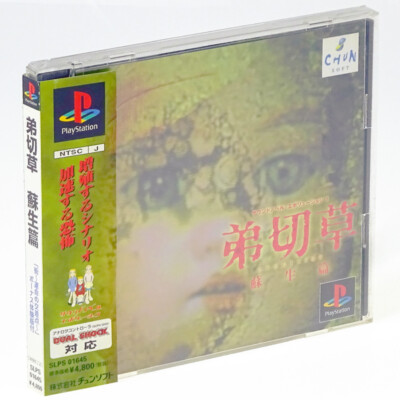
    Ps1 cover for Otogirisou

    The story then splits into multiple routes based on your decisions — and this is where Otogirisō truly shines. Each route isn’t just a different ending; it’s a different truth about what’s happening in the mansion. The game contains many endings across multiple routes, and replaying is how you slowly assemble the full picture.


    Route 1: The Curse of the Twins

    This is the route that hit me the hardest — not because it’s the scariest, but because it’s the most tragic.

    If you comfort Nami, stay close, and focus on exploring personal rooms like bedrooms and the study, you begin to pull at threads of the family’s history. Dusty diaries and portraits reveal twin sisters, an uneven love, and a household that fell apart from jealousy. Nami’s memories come back in flashes, she recognizes corners of the house, and gradually it becomes clear that this once was her family home.

    The final scenes are devastating: Nami confronting the twin she was never allowed to be, a sense of completion that’s more a claim than a cure. The Otogirisō flower imagery returns, blooming in scenes of rain and memory. The sound drops to a single soft note as the screen fades. It’s sorrow more than terror, and it lingers because it’s about loss, not spectacle.

    What stands out: the emotional weight and how grief is foregrounded over cheap shocks. The slow pacing lets the player absorb the inevitability, which made it one of the most affecting endings I’ve experienced in a retro horror title.


    Route 2: The Fire

    If you act boldly — exploring suspicious rooms, probing basements, and pressing on despite warnings — you unlock the Burned route.

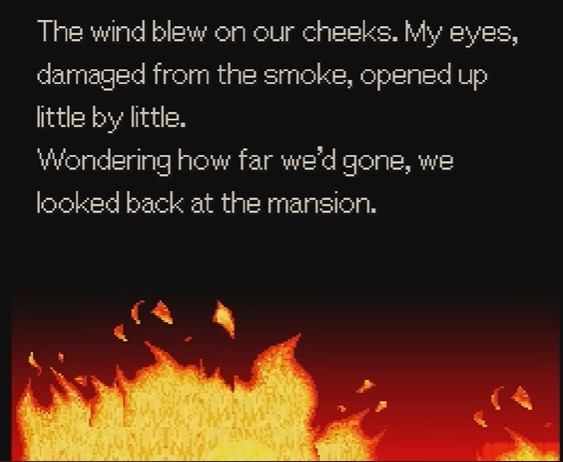
    This path centers on a night the mansion went up in flames. As Bob finds charred letters and witness fragments, a picture forms of betrayal that boils over into arson. The house’s blackened halls echo with the memory of fire, and the sound design leans into crackles and whispers that suggest the blaze never truly died.

    The twist is how premeditated the violence turns out to be. It wasn’t a random catastrophe but an act of calculated revenge from the heart of the family. Nami’s sanity fractures as she relives those screams, and the ending can leave you trapped watching the fire consume everything while you’re helpless.

    What stands out: the suffocating inevitability and the way the game uses environmental details to imply history. Flames are suggested rather than shown, and that suggestion becomes dread. The Burned route feels like punishment for curiosity, both for the characters and the player.


    Route 3: The Well

    This one is the most unexpected and disturbing.

    If you explore the grounds early and investigate the well, the tone shifts from gothic family drama to something more monstrous. You find notes that read like lab journals, sketches of malformed creatures, and entries hinting at ritual experiments. The story implies that someone in the household tried to bridge life and death with grotesque methods.

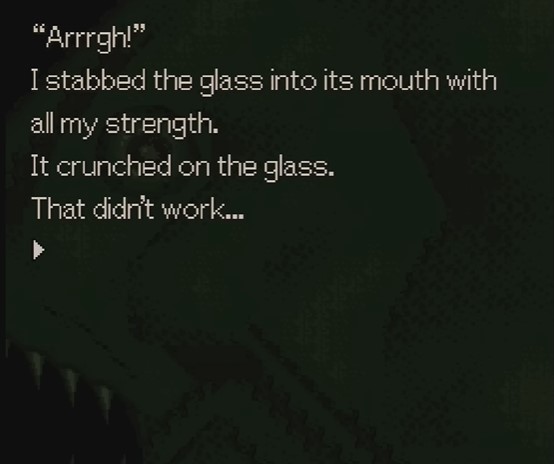
    When the well is opened, the game leans into sound and pacing — wet, heavy noises, a rising heartbeat in the music track, text flashing faster — and the horror becomes physical. You don’t see the creature clearly; you hear it. The ending is abrupt and cosmic, with Nami dragged into something ancient beneath the house and the final line: “The Otogirisō blooms again.”

    What stands out: how the game can pivot to cosmic horror within the same narrative framework, and how sound alone conjures an image far worse than literal spritework could manage. It’s one of the weirdest and most effective surprises I’ve seen in retro horror.


    What makes it stand out

    Otogirisō doesn’t rely on jump scares. Its horror is built from suggestion, from the space between lines. The storm, the piano that mimics a heartbeat, the way Nami’s voice trembles over static, these elements build a tension that’s more intimate than loud.

    What makes the experience eerie and enjoyable:

    • Personal stakes: because you name the protagonist and make choices about how to treat Nami, the horror feels intimate.
    • Sound-first design: the noises and silence create a private theater in your head — you imagine the worst, and the game confirms it.
    • Route-based truths: each route reveals a different facet of the mansion’s curse, so every playthrough reframes what you thought you knew.

    Final Thoughts

    Otogirisō isn’t a game you play for jump scares. It’s a game you experience for atmosphere — the unease, the sorrow, and the weight of what’s left unsaid. Playing it on the Miyoo Mini with headphones made the story feel intimate and immediate, like a ghost story folded into a pocket-sized book.

    The legend I told Nami on the road — of two brothers and the flower that grew from betrayal — isn’t just a setup. It’s the beating heart of the game. After seeing the routes, every ending felt like another stanza of that same lament. The image of the Otogirisō blooming from pain will stay with me, long after the rain has stopped in the game and in real life.

    If you want something to play this Halloween that doesn’t just frighten but haunts, give Otogirisō a night. Name your protagonist, maybe call him Bob, and let the mansion whisper its stories into your headphones.

    Because here, horror doesn’t scream, it whispers — and sometimes that’s far more terrifying.

  • A Beginner’s Guide to The Last Remnant’s Union System – Explained the Way I Understand It

    A Beginner’s Guide to The Last Remnant’s Union System – Explained the Way I Understand It

    Through the years, whenever my buddies ask me what game I’m grinding on my phone that feels long and epic, one of my top answers has been The Last Remnant Remastered on mobile.

    Now, don’t get it twisted—I’m no pro at this game. In fact, I’d still call myself a beginner even after all the hours I’ve sunk into it. But maybe that’s exactly why I want to talk about it. Because when I first picked it up, I was just as lost as anyone else, especially with the game’s biggest curveball: the Union System.

    This is my take on it—not as an expert, but as someone who slowly figured things out and wants to make it a little less confusing for the next beginner diving in.

    So What’s the Deal With the Union System?

    Before The Last Remnant, JRPGs mostly stuck to familiar formulas:

    • Classic Turn-Based (like Dragon Quest or Final Fantasy I–X) → You control each character one by one, pick from “attack, magic, item, defend,” and watch the turns play out. Simple and reliable.
    • ATB – Active Time Battle (popularized by Final Fantasy IV–IX) → Each character has a gauge that fills in real time. When it’s full, you act. It added pressure and speed to the turn-based formula.
    • FFXII’s Gambit System (2006) → This one let you pre-program AI behavior, like “if ally HP < 50%, then cast Cure.” It was revolutionary for letting battles play out more automatically but still under your rules.

    And then along comes The Last Remnant. It said: “Forget controlling individuals—what if you controlled squads instead?”

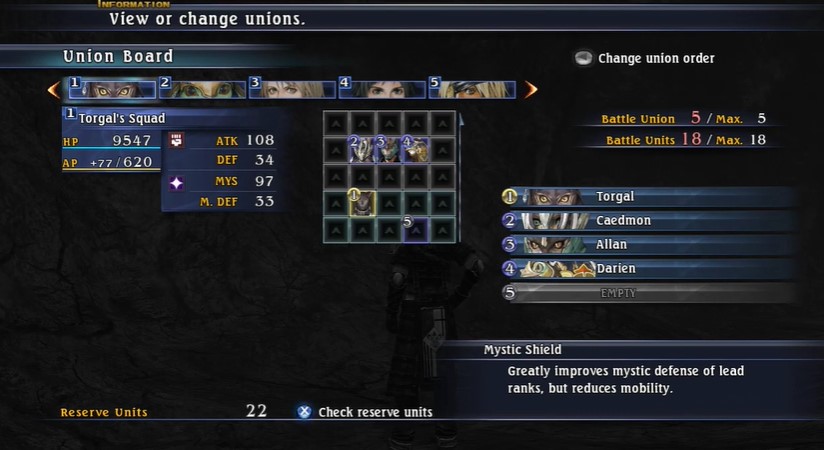
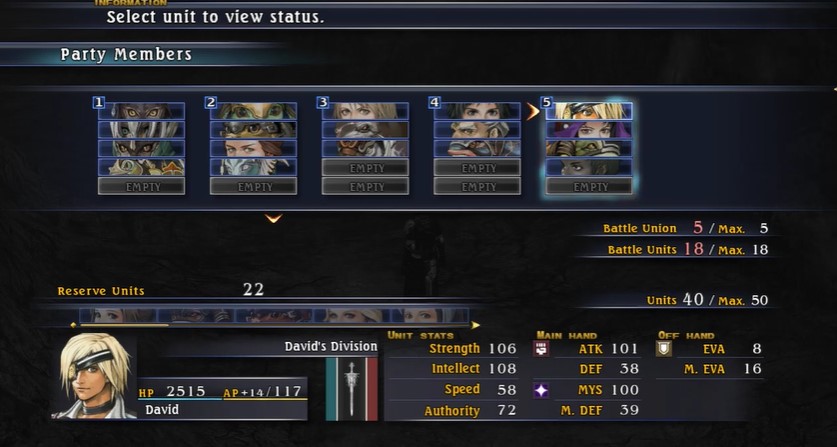
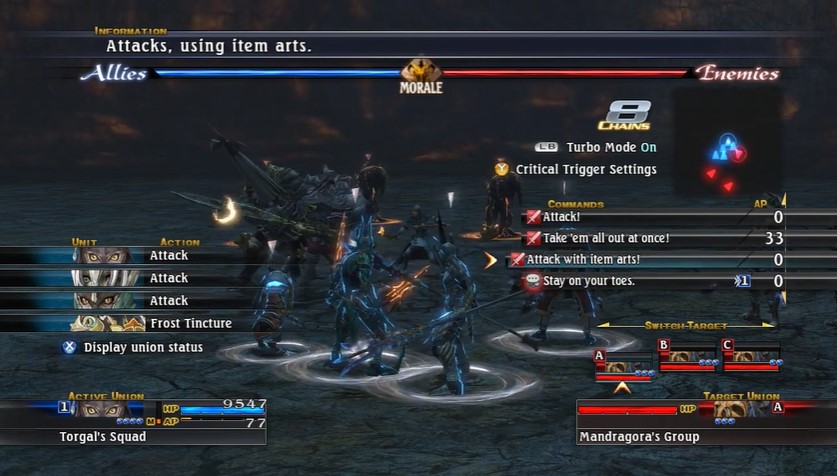
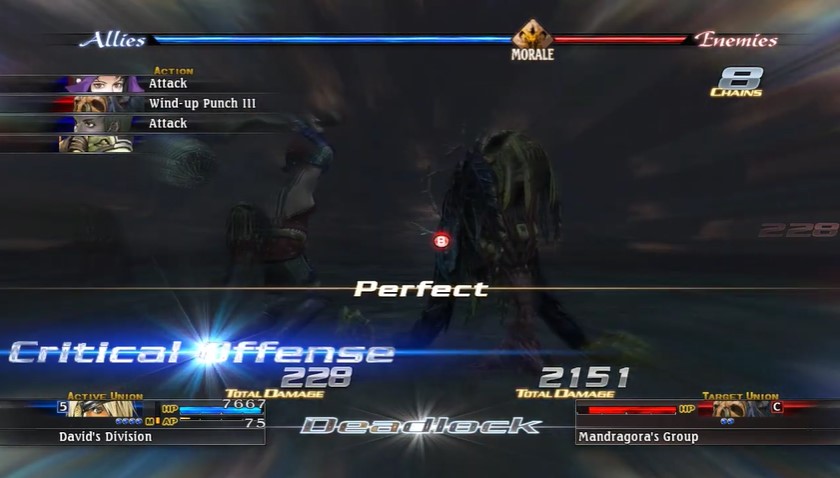
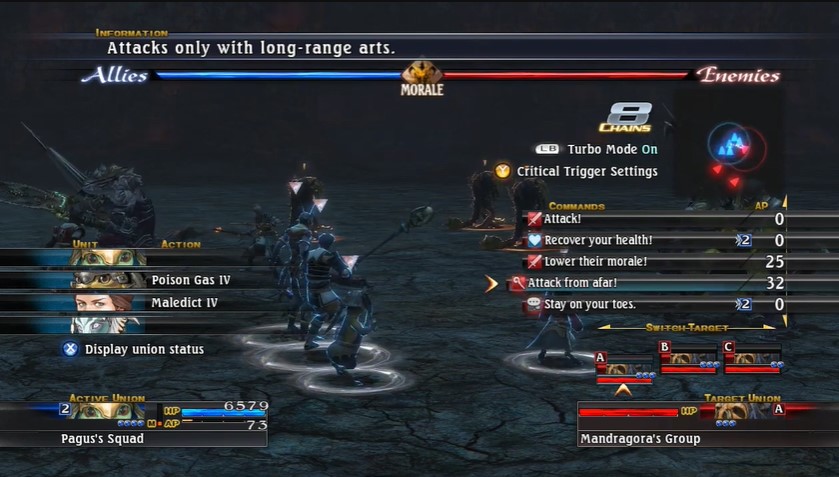
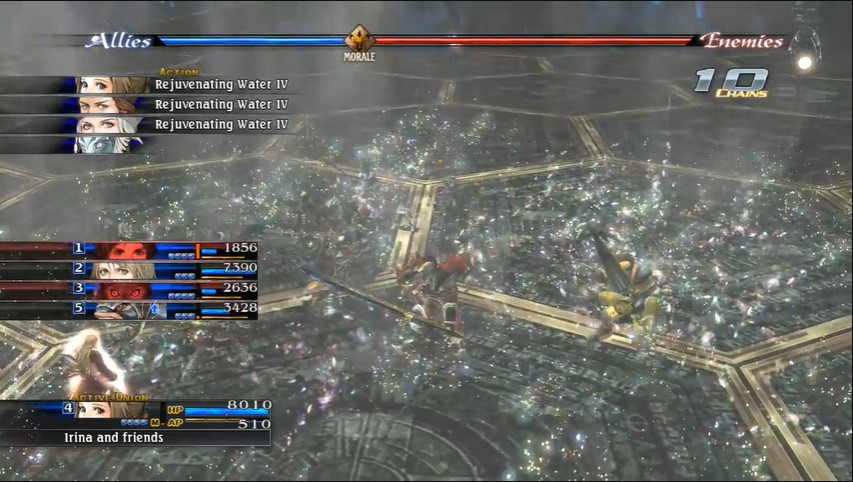
    That’s the Union System. Instead of giving commands to each party member, you organize them into unions (basically mini-teams). You don’t pick every spell or attack. You issue orders to the entire squad, and they act as one.

    This flipped combat into something totally different. Suddenly, you’re less like a hero leading a party and more like a commander directing armies. Positioning, morale, and squad synergy mattered just as much as raw stats.

    For some players, that shift felt groundbreaking. For others—me included when I first tried it—it felt confusing as hell.

    The Flow of Battle – What You Do Before You Even Swing

    The real fight doesn’t start when you press “attack”—it starts in how you set up your unions. As a beginner, this part felt overwhelming to me because you have to think about:

    • Who leads each union (leaders bring skills and arts)
    • Who fills the squad (soldiers add stats and stability)
    • What formation you’re using (offensive, defensive, or balanced setups)

    And then, once you’re in a dungeon or field, you also have to pay attention to enemy groups. Do you charge them head-on? Try to flank? Or split your unions to keep them from surrounding you?

    This whole “prep before action” makes fights feel more like mini war puzzles. If you mess up the setup, the battle feels 10x harder no matter how strong your characters are.

    Commands – The Clear and the Confusing Ones

    Once the fighting actually starts, the game gives you commands for your unions. Some are straightforward and easy to understand:

    • Attack with combat arts! → your melee moves
    • Attack with mystic arts! → your spells
    • Heal with remedies! → your items and recovery

    But then you get the vague stuff like:

    • Play it by ear
    • Go all out!
    • Wait and see

    And here’s where the frustration kicks in. As a beginner, I remember just staring at those and going, “What am I actually telling my squad to do?”

    How I Learned to Read the Vague Commands

    After a lot of trial and error (and a few rage quits), here’s how I’ve come to understand those vague orders:

    • Play it by ear → Think of it as “do what makes sense.” The union might attack, heal, or buff depending on the situation. Good for balanced teams.
    • Go all out! → Pure offense. They’ll blow AP, use their strongest moves, and ignore healing. Best for when the enemy’s on the ropes.
    • Wait and see → Defensive or conserving mode. They’ll defend, poke with weak moves, or just save AP. Use it when you’re setting up or trying to survive.
    • Save them no matter what! → Your emergency revive/heal button. Everyone drops offense to bring allies back.
    • Keep your HP up! → Focuses on healing and survival above all else.

    Once I started thinking of them like battle moods instead of strict commands, they made a lot more sense.

    Strategy – When to Use What

    Here’s my beginner advice on using these commands without losing your mind:

    • Use “Play it by ear” for balanced unions that can attack and heal. It gives the AI room to adapt.
    • Use “Go all out” when you know you’re safe or you just need raw damage to push through.
    • Use “Wait and see” to stall or when you’re trying to build AP for big moves later.
    • Use “Save them no matter what” sparingly, because sometimes it wastes turns if no one is actually down.
    • Use “Keep your HP up” when facing tough bosses or multiple enemy unions that can shred you in a turn.

    It’s not perfect—you’ll still sometimes scream at your squad for making dumb choices—but it’s part of the chaos that makes this system fun.

    Wrapping It Up – Why I Still Recommend This Game

    Here’s the truth: The Last Remnant is still hard to understand, even today. If you’re new, the Union System will feel overwhelming and the vague commands will confuse you. But once you get past that hump? The game transforms. Battles feel bigger, strategies feel deeper, and experimenting with different unions actually becomes addictive.

    That’s why I keep it on my phone. I’ve spent hours tweaking squads, retrying fights, and just enjoying the controlled chaos of this system. And yeah, the mobile remaster costs around $19.99, which isn’t exactly cheap. But for me? If I dropped twenty bucks and didn’t play it, that would be the real waste.

    So I keep coming back. And maybe that’s the magic of The Last Remnant: it doesn’t hold your hand, but once you start to get it, you’ll want to stick around and keep learning.

  • Gunhound – My Go-To PSP Mecha Game for Short Bursts

    Gunhound – My Go-To PSP Mecha Game for Short Bursts

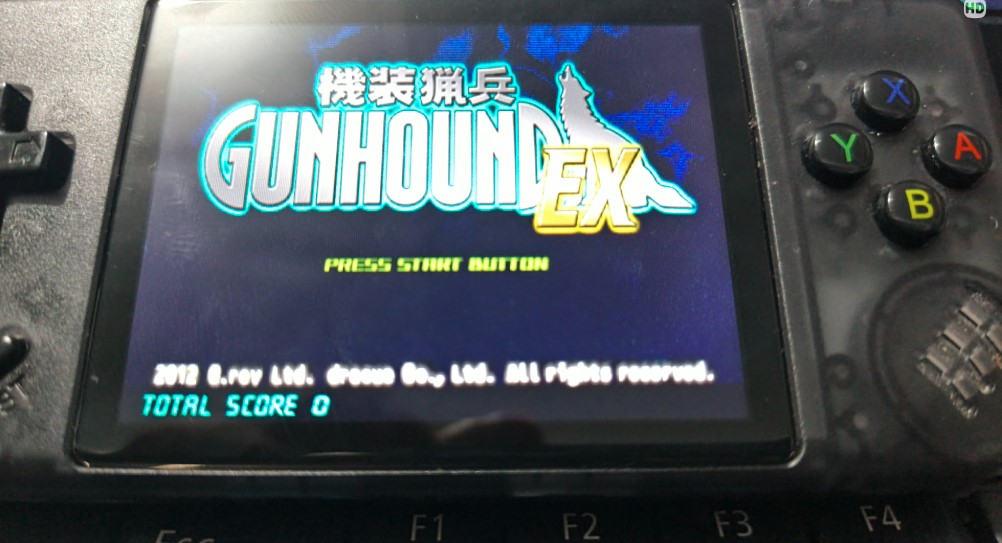
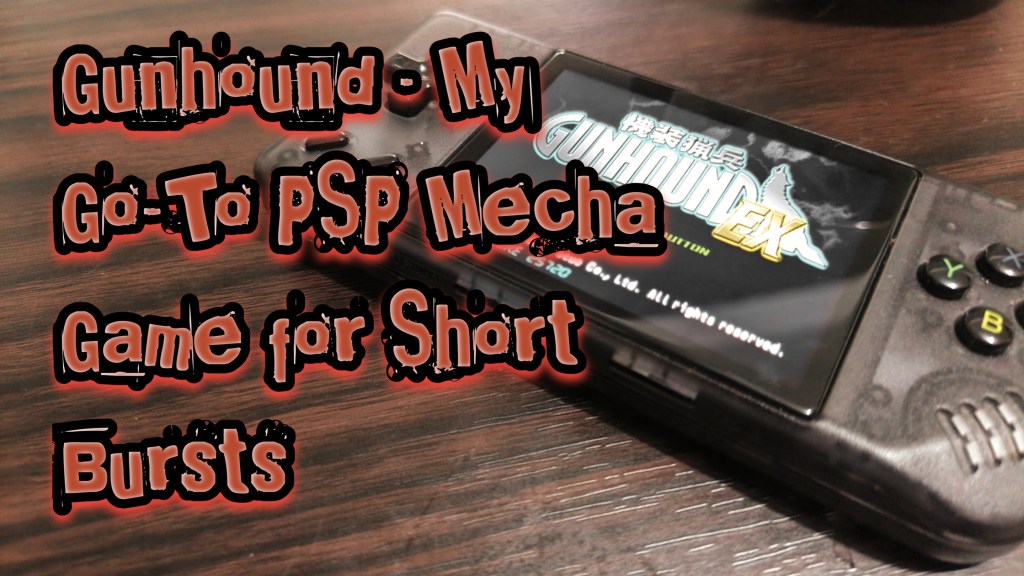
    When I need a quick break in between tasks, Gunhound on PSP is the game I usually go to. It’s fast, it’s exciting, and it scratches that itch for a mecha action experience without needing hours of commitment. It’s not available on smaller retro handhelds like the Miyoo Mini since those can’t run PSP games, but if you’ve got a Miyoo Mini Plus, Flip, or any other handheld that supports PSP, it plays beautifully.

    I actually just picked up the Anbernic RG28XX recently. I was looking for the Miyoo A30 but couldn’t find one locally, so this became my alternative. Luckily, it runs PSP titles smoothly, and Gunhound feels right at home on it.

    A Bit of History

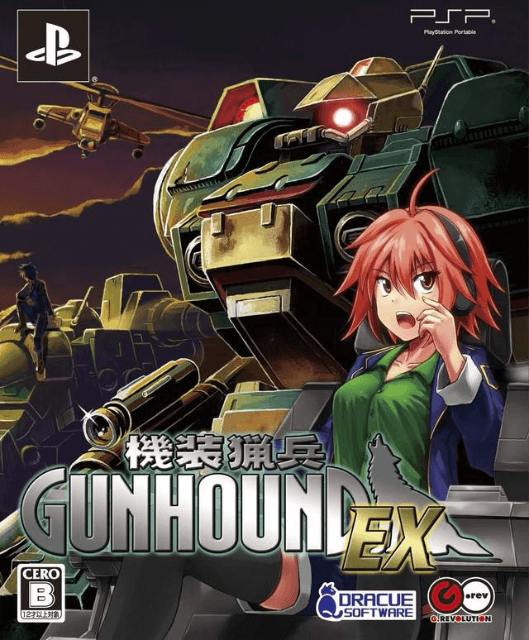
    Gunhound EX (full title: Kisou Ryouhei Gunhound EX) came out in Japan back in 2013 for the PSP. It was developed by a small Osaka-based team called Dracue Software, a doujin (indie) studio known for loving mecha games. Later on, the game got a Windows PC port in 2014 with the title Armored Hunter Gunhound EX.

    The reception was decent, especially from fans of old-school mecha shooters like Assault Suit Valken (Cybernator) and Assault Suit Leynos. Famitsu gave the PSP version a 29 out of 40, and Western reviews of the PC port hovered around 7 to 8 out of 10. Reviewers praised the fast-paced action and anime-style presentation, though some said it felt like the ideas could’ve gone even further.

    As for sales, there’s no reliable number out there — it was a niche release, after all, and never really broke into the mainstream. That’s also one of the reasons it isn’t famous: it was a Japan-only release on PSP, with no official English localization. But honestly, who needs a full translation when your main job is to pilot a mech and fire at anything that moves?

    Dracue didn’t become a big studio after this either. Gunhound EX remains their standout game — more of a cult classic than a widely recognized PSP hit.

    The Story

    The game’s setup is straight out of a 90s mecha anime. You pilot a heavy combat machine through different missions, fighting waves of enemies, giant bosses, and military hardware that just keeps coming. The story isn’t super detailed, but it’s enough to push you forward between battles and cutscenes. The real fun is in the action, not reading walls of text.

    Game Mechanics

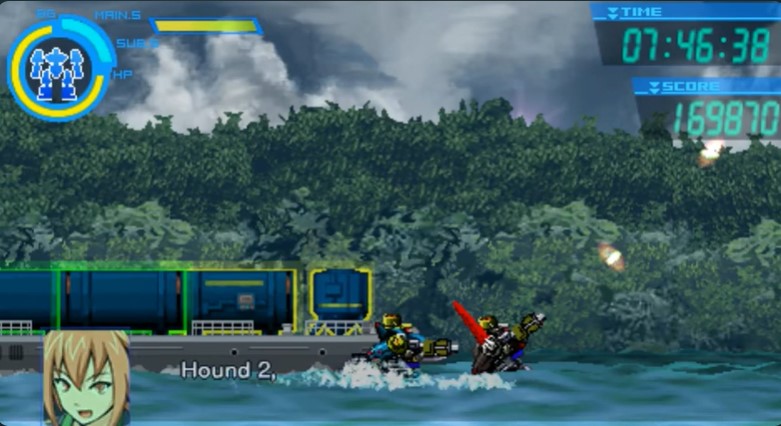
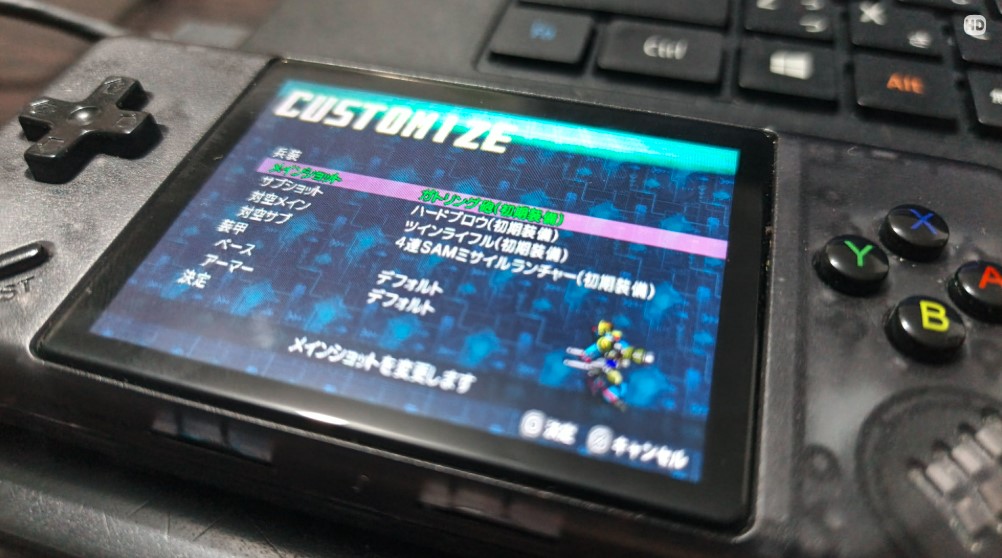
    The mix of mechanics makes Gunhound really stand out. You get machine guns, missiles, and one of the coolest parts — a grappling hook. It’s not just for climbing but also for swinging and repositioning during fights. That little touch changes how you approach stages, giving it a different flavor compared to standard run-and-gun games.

    The game captures that heavy mech feeling while still staying responsive. You’re not zipping around like a ninja; you’re piloting a powerful machine that has weight to it, and learning that rhythm is half the fun.

    Controls

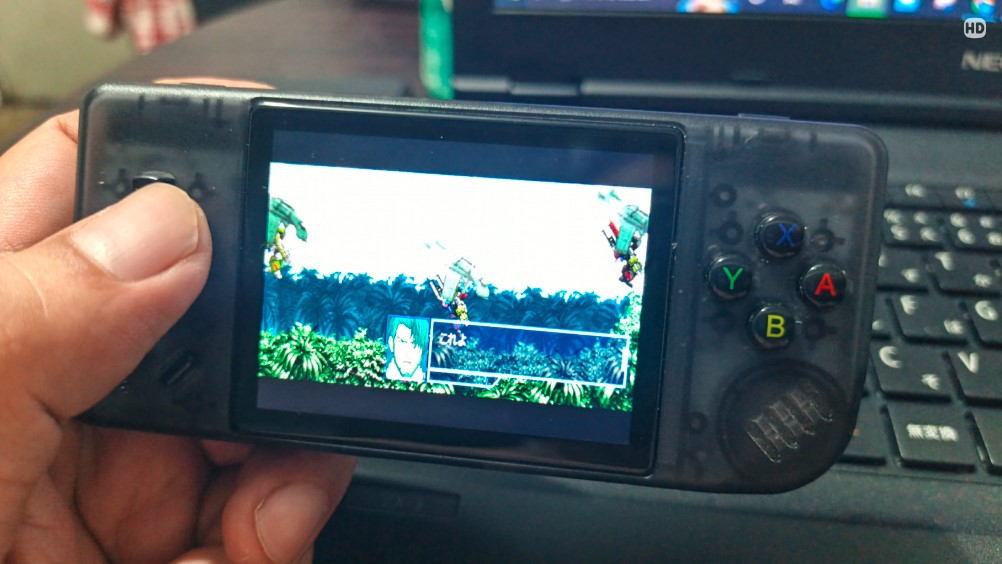
    The controls feel surprisingly smooth for a PSP mecha game. Swapping weapons, firing, and using the grappling hook all click into place once you’ve played a couple of missions. On handhelds with good buttons and a d-pad, like the RG28XX or Miyoo Mini Plus, the game plays almost like it was built for these smaller devices.

    Why It Fits on a Small Retro Handheld

    This is where Gunhound really shines for me. The missions are short enough to pick up and play in between tasks, and the anime-inspired visuals scale perfectly to smaller screens. The intensity is still there, but it feels tighter and more personal when played on a handheld. For a game that’s all about quick bursts of action, portable is the way to go.

    Every time I load this up, it gives me that mix of anime mecha excitement and arcade-style quick action. It doesn’t need hours of play, and the grappling hook always makes the combat feel fresh. I’ll tell myself “just one mission,” and then end up playing two or three because it’s so hard to put down once you’re in the zone.

    Final Thoughts

    Gunhound EX may not be a mainstream PSP classic, but it’s one of those hidden gems that deserves more attention. Between its anime-inspired mecha action, simple pick-up-and-play missions, and perfect fit for retro handhelds, it’s a game I recommend to anyone looking for something different on PSP. The lack of an English release probably held it back, but if you enjoy action that doesn’t waste your time, you’ll feel right at home with Gunhound.

Design a site like this with WordPress.com
Get started