Tag: Nintendo

  • Sony PSP: Lightning in a Bottle, Lost to Time

    Sony PSP: Lightning in a Bottle, Lost to Time

    A Pocket Full of Memories

    I was scrolling through my phone the other night, hopping between retro handheld pages and game lists trying to find something new to play.
    But as I kept going, I noticed something. Most of the games that caught my attention, the ones that made me stop and think, all pointed to one thing: the Sony PSP.

    Released in Japan on December 12, 2004, North America on March 24, 2005, and Europe on September 1, 2005, the PSP stayed around until 2014, a solid 10-year run.
    In that time, it built up over 1,300 game titles, which is insane when you think about it.
    You could play something new every week and still not run out for years.


    A Console in Your Pocket
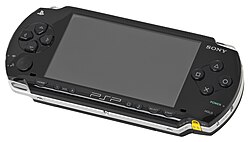
    SONY PSP 1000 model

    The PSP came out during the PS2’s prime years and somehow it kept pace.
    While the PS2 was out there delivering hits every month, the PSP was taking some of those worlds and putting them in your hands.

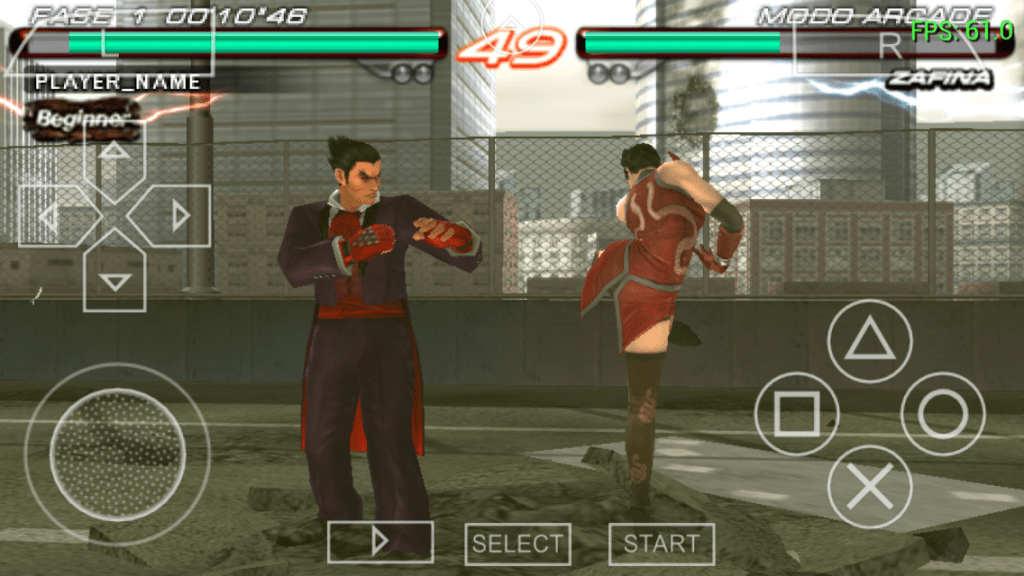
    You had games like Def Jam: Fight for New York, Fight Night Round 3, and even Tekken 6 running smooth on a handheld.
    And the exclusives? That’s where the PSP really showed off with Crisis Core: Final Fantasy VII, Final Fantasy Type-0, Dissidia 012 Duodecim, Patapon, and Half-Minute Hero.
    These weren’t watered-down versions, they were full experiences made for the PSP.

    Then there’s Monster Hunter, and honestly, that game changed everything.
    When Monster Hunter Freedom and Freedom Unite came out, the PSP turned into a real-life multiplayer hub.
    You’d see people hanging out in malls or cafés, PSPs in hand, connecting through ad-hoc to hunt rare monsters together.
    It wasn’t just about grinding or loot drops, it was community.
    That era was pure vibes, no Wi-Fi, no mic chat, just real people meeting up to play.
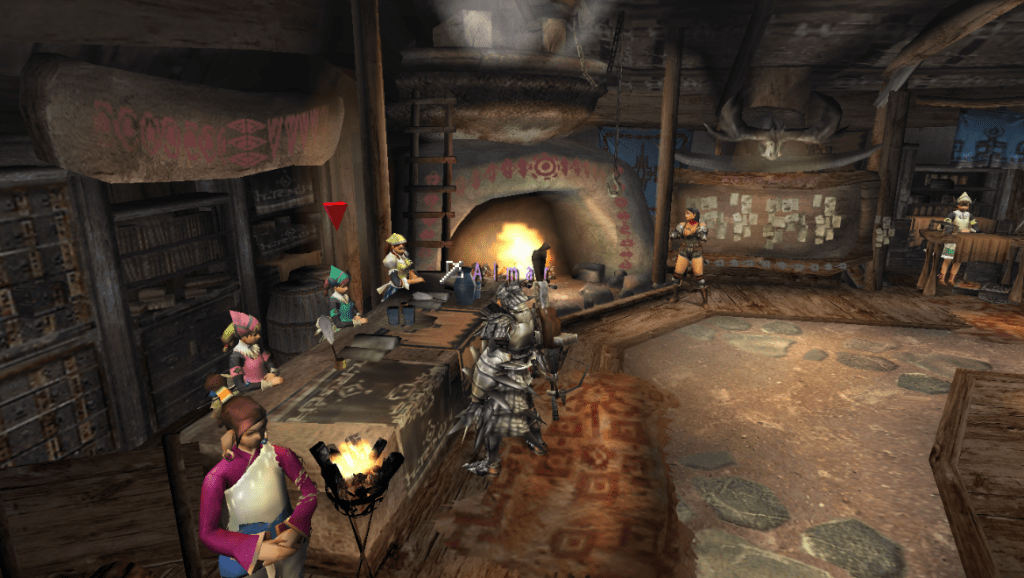
    monster hunter freedom unite guild hall

    “Everyone had a PSP in their bag.
    You’d walk by a table, hear the sound of a Great Sword swing, and know exactly what was going down.”


    Why I Still Love the PSP Today
    One of the coolest things about the PSP is how easy it is to play now.
    You don’t even need a fancy handheld or gaming phone because emulation runs smooth on almost anything.

    I still play Tekken 6 on my phone, and honestly, I like it better that way.
    Sliding my combos on the touchscreen just feels smoother than mashing buttons on the real PSP or a controller.
    Might sound weird, but it just works for me.

    That’s the charm of the PSP. It still fits in today’s world.
    It’s not too old for new players, but it still hits that retro nostalgia we all chase.


    The Hype That Fell Flat
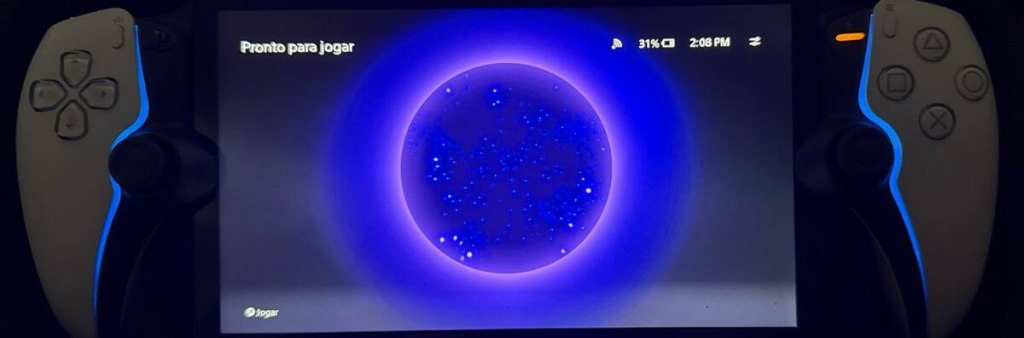
    When Sony announced the PlayStation Portal, I got hyped.
    I really thought, “This might be it. The PSP comeback. Maybe even a Switch killer.”

    But when it finally came out on November 15, 2023, the excitement turned into disappointment.
    It wasn’t a new handheld. It was basically a remote screen for the PS5.
    You can’t even use it without owning one.

    And man, that hurt.
    The PSP stood on its own. You didn’t need anything else, just the console, a UMD, and maybe a memory stick if you were lucky.
    The Portal, on the other hand, felt like half a step forward.

    “The PSP gave you freedom.
    The Portal gave you a reminder that you still need your PS5.”


    Why That Magic’s Hard to Find Now
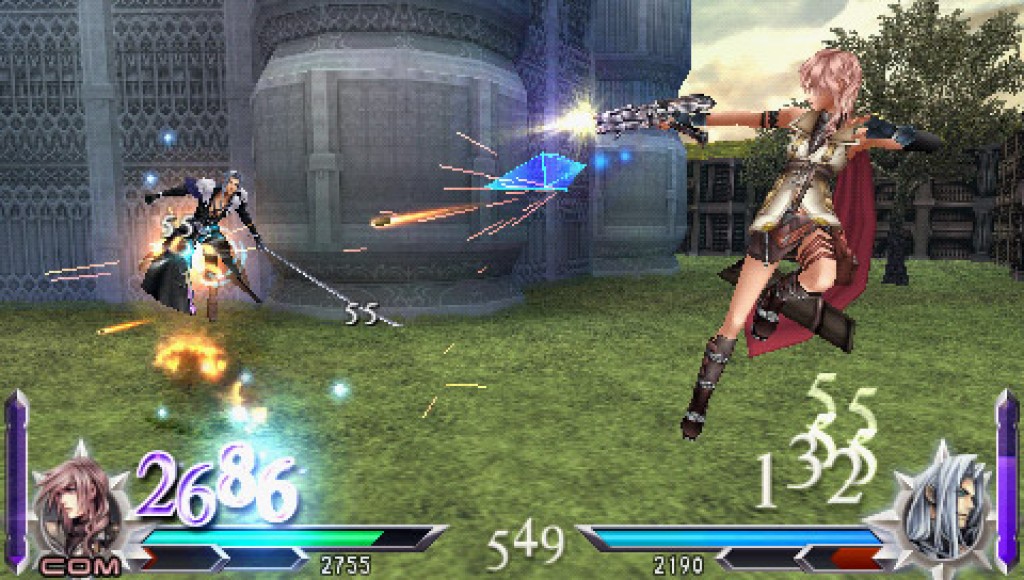
    The PSP hit different because developers back then were still experimenting.
    They were testing ideas, taking risks, and seeing how far they could push a handheld.
    Games felt like passion projects, not business plans.

    Now it’s mostly about monetization, DLCs, and keeping players spending.
    And that shift killed a lot of that creative fire.

    Even Sony’s follow-up, the PS Vita, proves that.
    On paper, it was the PSP’s smarter, faster sibling with dual analog sticks, touchscreen features, and those back-touch controls.
    And the games looked great, like they were really made for the Vita.
    Titles like Killzone Mercenary, Gravity Rush, and Soul Sacrifice were stunning for their time.

    But here’s where it dropped the ball, the price.
    Everything about the Vita was expensive.
    The handheld itself, the games, and especially that Sony-exclusive memory card you had to buy separately just to save anything.
    So imagine this: you buy the console, then you find out you need an overpriced memory card, then you realize there’s no free game included.
    That’s another trip to the store and another dent in your wallet.
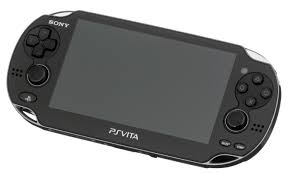
    Sony PS Vita

    To be fair, the PSP wasn’t cheap either, but the difference is, the PSP got hacked early on.
    Once custom firmware came in, people turned it into a do-everything handheld.
    You could emulate older consoles, load your own games, and basically carry your entire library on a single memory stick.
    It became the retro handheld before retro handhelds were even a thing.

    And honestly, that spirit, the whole “make it your own” vibe, carried over to the Vita too.
    Once that system got cracked, it came alive again.
    People used it to play PSP and PS1 titles, homebrew, emulators, everything.

    In a way, that just proves the point.
    The handhelds that lived on weren’t the ones with the best specs, they were the ones people could make personal.
    That’s what the PSP had.
    Freedom. Flexibility. A sense of ownership.
    Something modern handhelds just don’t give anymore.


    Looking Back, Still Ahead of Its Time
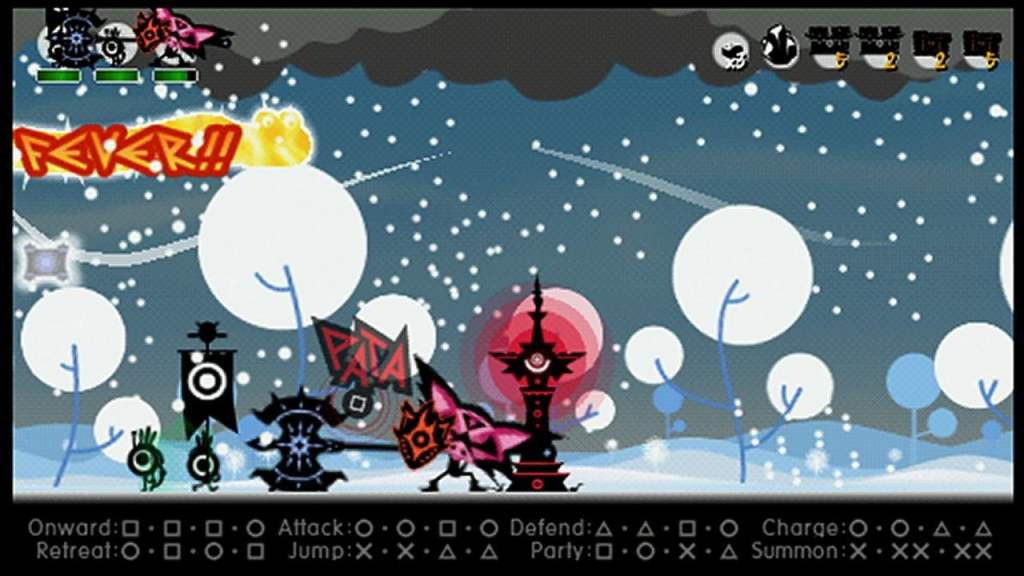
    The PSP wasn’t just another console, it was a moment.
    It gave us console-level games in our hands, real-world multiplayer before online took over, and a library that still holds up today.

    It wasn’t perfect, but it felt real.
    You could tell it was built by people who wanted to push gaming forward, not just chase trends.

    The PSP will always have the top spot on my retro list.
    Not because it’s perfect, but because it reminded us what gaming felt like when everything was new and exciting.
    It was lightning in a bottle, and no one’s managed to catch it again.
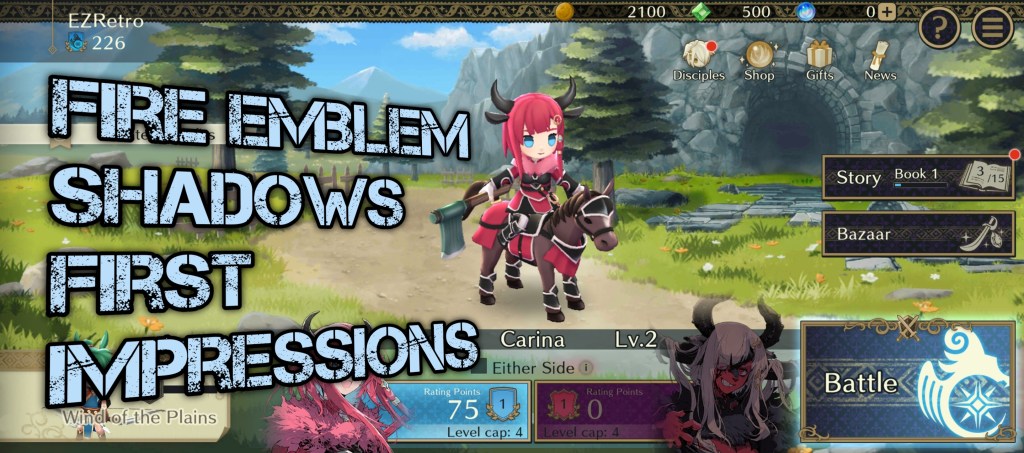
  • First Impressions: Fire Emblem Shadows

    First Impressions: Fire Emblem Shadows

    If you guys follow my blogs, you’ll know that Fire Emblem is one franchise I’m absolutely crazy about. And today, out of nowhere, Nintendo just dropped another entry on mobile called Fire Emblem Shadows.

    I’ve got to be honest—when I first saw the news, I was surprised there wasn’t any build-up or hype leading to this release, nothing like the huge campaign that came with Fire Emblem Heroes a few years back. But now that I’ve actually played it, I get it. This wasn’t just a launch—it was a shadow drop in every sense of the word.

    Nintendo unveiled Fire Emblem Shadows with a short trailer that went live right alongside the game’s release. The presentation leaned heavily into the idea of secrecy and betrayal, teasing its unique hook: real-time tactical battles where one of your supposed allies might secretly be working against you. The press release itself echoed the same theme—“real-time tactics and treachery”—and it fits the vibe perfectly.

    Idle Gameplay Meets Social Deduction

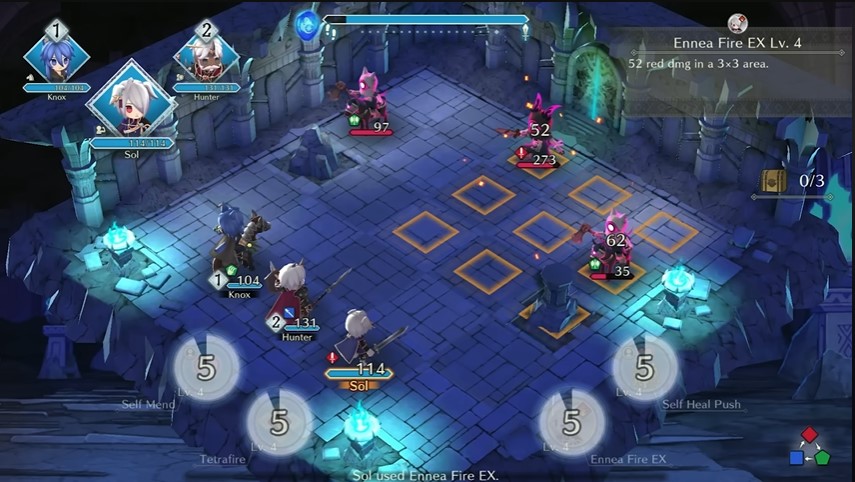
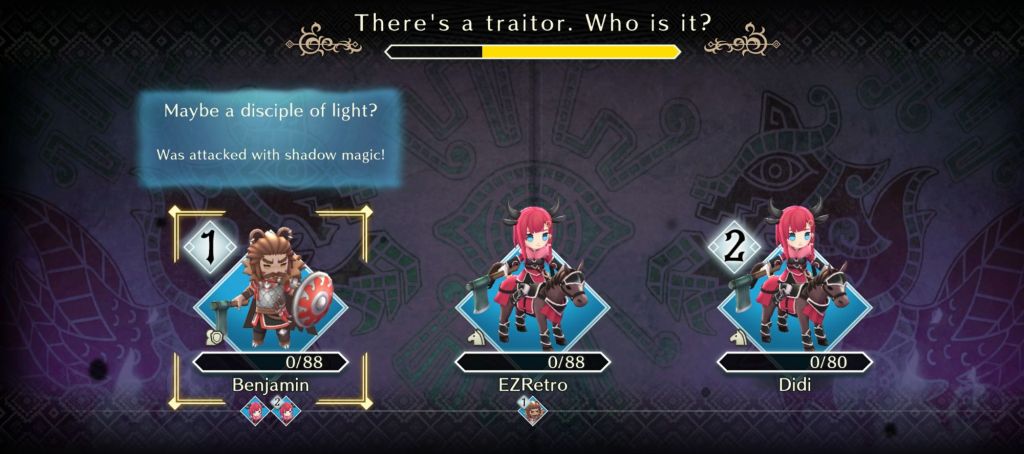
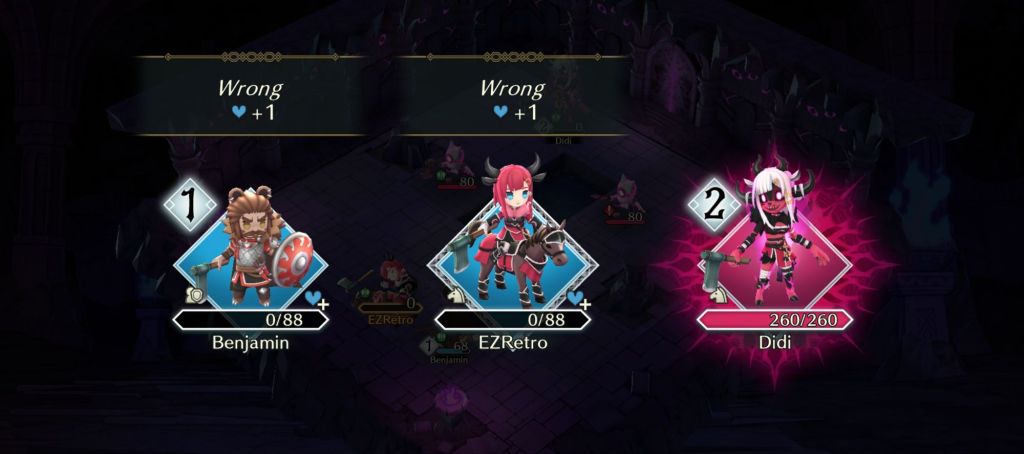
    So essentially, at least from my first few hours, Shadows plays out more like an idle game than a traditional strategy RPG. The combat mostly runs on autopilot, with the only real interaction being when you tap to trigger skills as their cooldowns reset. Then, starting from the second battle, the game flips into an Among Us-style twist—you and your group actually get to vote on who the disciple of shadow is. That vote affects how the next battle unfolds, which is a pretty wild departure from the Fire Emblem formula we’re used to.

    My Honest Take

    And like I said, I’ve got to be honest here—I’m not loving this game, although I’m trying hard to give it a chance. It honestly feels like the devs suddenly got someone on the creative team who said:

    “Hey, you know what would make Fire Emblem on mobile more epic? Take all the things that make a mobile game work—idle gameplay, cutesy characters, microtransactions for gacha pulls on skins, costumes, and playable units—then mash it together with Among Us mechanics so we can justify it being multiplayer.”

    And boom—Fire Emblem Shadows happened.

    Multiplayer Fun… But a Bit Shallow

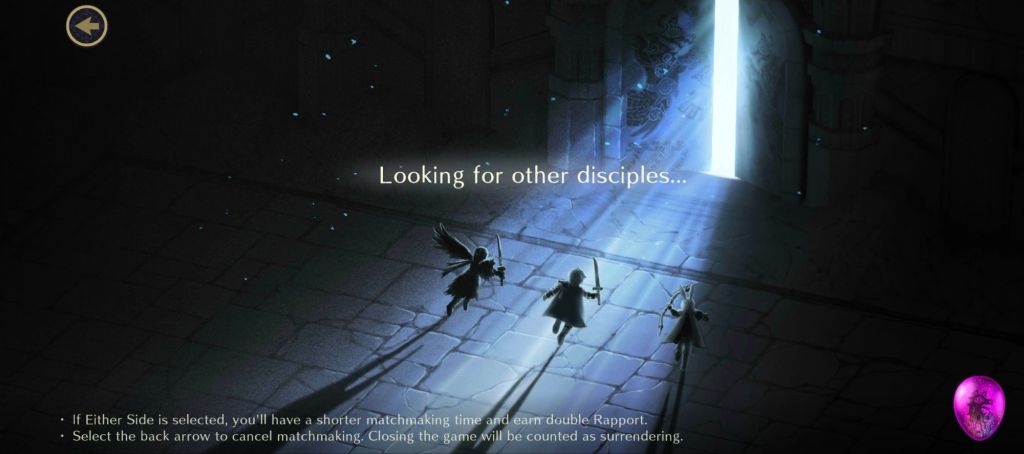
    It is fun in a way, because now Fire Emblem is a multiplayer game. Although, to be honest, I actually enjoyed Fire Emblem Heroes more because it was a single-player experience where I could play at my own pace. With Shadows, everything seems to revolve around the online battles. You and two other players team up to fight monsters—but here’s the twist: one of you is secretly trying to be sneaky and backstab the rest without being too obvious.

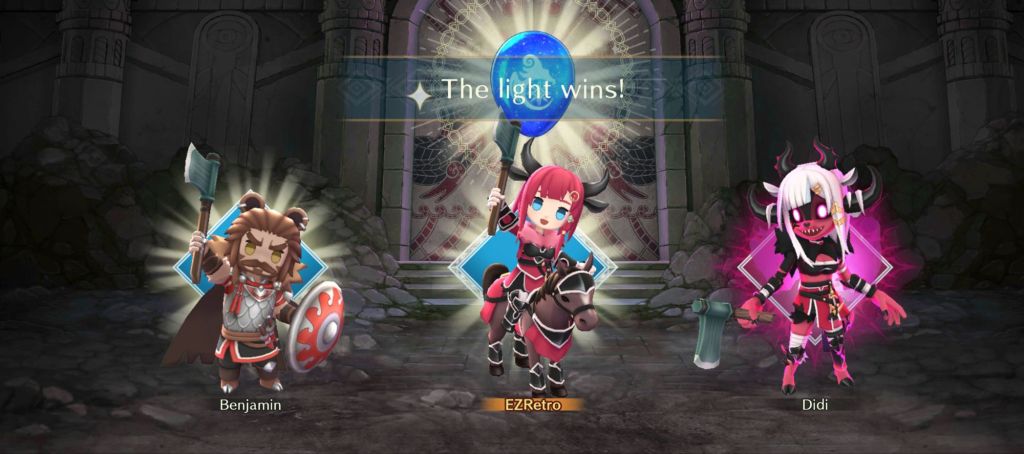
    Then comes the second battle phase, where you and your team vote on who you think the disciple of shadow is. If your guess is right, your team gets a big advantage, like being able to revive twice instead of just once.

    Now, I’ve only been playing for about an hour to get a feel for it, but for some reason I keep getting accused of being the disciple—even when I’m not! Maybe it’s my handle, or maybe it’s because I’m always using the main protagonist in battle? Either way, it’s a weirdly frustrating but kind of funny part of the experience.

    Game Mechanics & Depth

    As far as game mechanics go, I don’t see a ton of depth here. Each game only has three players, so there’s a 50% chance you’ll guess the disciple correctly. That makes the social-deduction element pretty shallow right now, but this is just the early stage, so maybe the devs will refine it over time.

    And that, my friends, is why mobile games become hits—through beta testing and tweaking before going live. Honestly, I don’t know who beta-tested this game or why they thought it was a great launch, but the game is out now and you can try it for yourself on the Play Store and App Store.

    For me, though? I’m putting this one down for now. I’ll wait a few months until the game figures out what it wants to become. Playing it now and griping over it could probably sour my mood for the Fire Emblem franchise on mobile, and I don’t want that.

    Good thing Fire Emblem Heroes is still there to pick up the ball—it’s honestly the best mobile game Nintendo has made so far, and that includes Mario Kart Mobile as well.

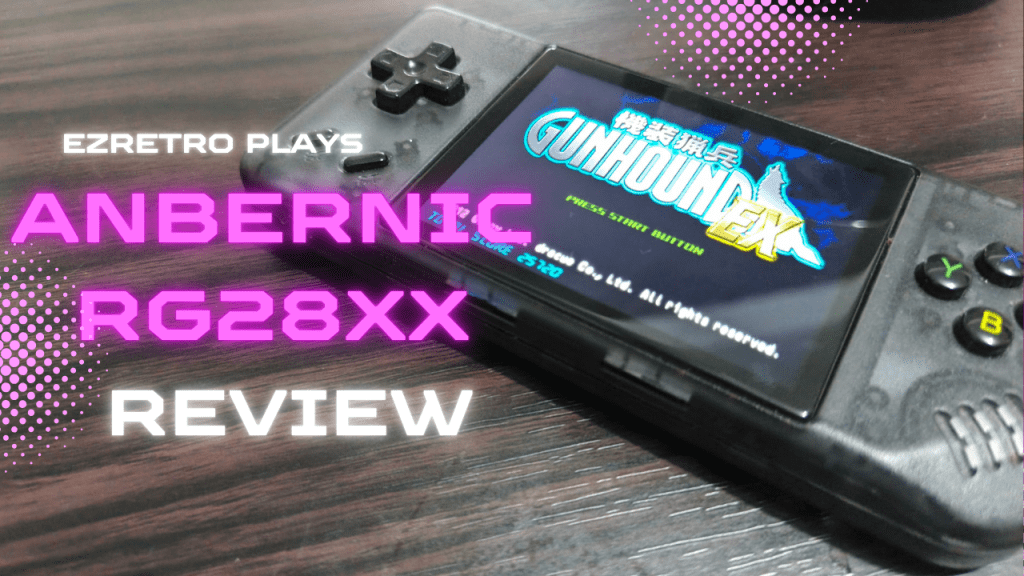
  • Anbernic RG28XX Review – A Pocket-Sized PSP Machine?

    Anbernic RG28XX Review – A Pocket-Sized PSP Machine?

    Lately, I’ve been on the lookout for a small device to play JRPGs and RPGs on the go. Being a fan of the Miyoo Mini, I first decided to get the Miyoo A30 since the Miyoo Mini was the handheld that originally got me into retro handheld emulation. Sadly, I only had it for about a day. I was just getting used to the Spruce OS when I lost it on my way home from work.

    After that, I made a second purchase—the Miyoo Mini V4—and it became my only handheld for quite some time. I absolutely love this little device. It’s powerful enough to play up to PS1 games, and I’ve been having a blast playing in short bursts throughout the day. The only drawback for me was the lack of PSP emulation.

    Back in my young adult years, the Sony PSP defined a lot of my gaming moments. I loved it so much that I actually owned three of the four PSP models—the Phat, the PSP-2000, and the PSP-3000. Naturally, I wanted to relive those moments on a small retro handheld that fits perfectly in my pocket. These days, I don’t have much free time to play, so I needed something small, powerful enough to handle PSP, and affordable.

    That’s when the Anbernic RG28XX was recommended to me. Since it was also the only device available near me, I finally went ahead and made the purchase.

    Specs

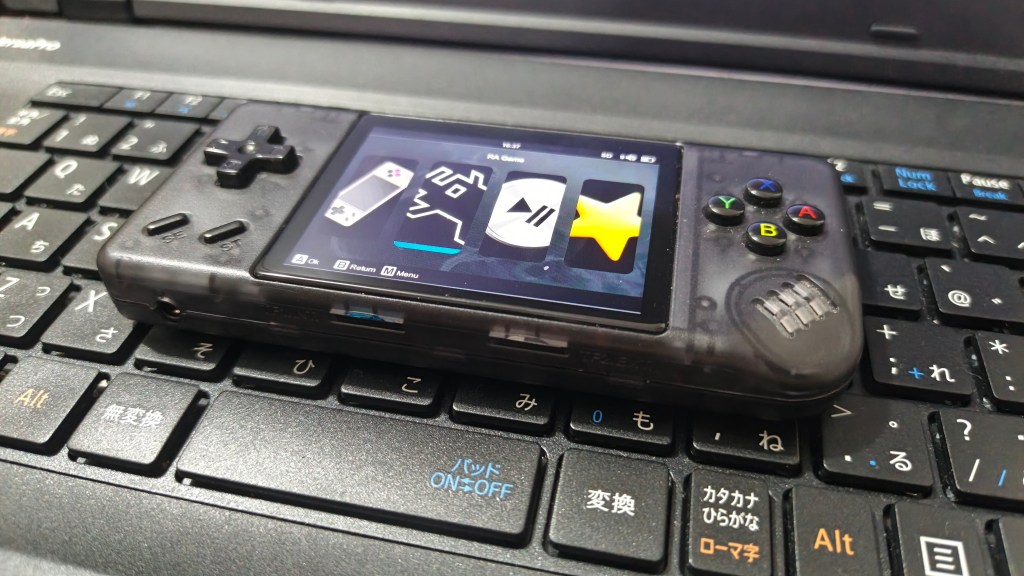
    The Anbernic RG28XX is designed as a compact retro handheld that balances portability with enough power to emulate systems up to PSP. It runs on the Allwinner H700 chip with 1GB of RAM, and comes with a 2.83-inch IPS screen at 640×480 resolution. Storage is handled through dual microSD slots — one for the system and one for your games — making it easy to expand or swap your library.

    Battery life is rated around 5–6 hours, though this depends on what you’re playing.

    Screen & Firmware

    On paper, the RG28XX’s 2.83-inch IPS display is about the same size as the Miyoo Mini, and brightness is solid enough indoors while staying usable outdoors unless you’re in direct sunlight. Colors pop nicely, and RPG text is generally clear.

    But since I mainly use this for PSP emulation, the aspect ratio difference really stands out. PSP games were designed for 16:9, while the RG28XX screen is a square 4:3. That means you’ll either play with black bars on the top and bottom or stretch the image, which doesn’t look quite right. On top of that, because of the device’s horizontal form factor, text in PSP games feels a little smaller than it should. It’s subtle enough not to ruin the experience, but it nags at me every time I play.

    The stock firmware works fine but takes some getting used to. Coming from Onion OS on the Miyoo Mini, which was simple and intuitive, this felt a bit clunky at first. There are a lot of hotkeys to memorize, and I’m not the type who enjoys flipping through an instruction manual just to figure things out. After a week, I’m still adjusting, but once you learn the shortcuts it’s manageable.

    Controls

    When I first got the RG28XX in hand, I immediately noticed how small everything feels. The D-pad is a bit pointy for my taste, and the face buttons are tiny — I really wish they felt more like the Miyoo Mini’s, which are softer and more comfortable.

    The trigger buttons (L1/L2 & R1/R2) and the select/start buttons are also on the clicky side. They work fine, but they don’t feel as smooth as I’d like. After a week, I’m still not fully adjusted. There’s also a slight rattle inside the unit — not enough to break the experience, but noticeable if you shake it.

    Sound

    For a device this small, the sound is decent but not amazing. The bottom-facing speaker is fine for quiet rooms, but your palm can cover it up depending on how you hold the handheld. Volume is enough indoors, but outdoors or in noisy areas, headphones are a must.

    Thankfully, the headphone jack gives a much better experience. RPG soundtracks really come alive with headphones, pulling me back to the PSP days.

    Battery Life

    On paper, the RG28XX is rated for 5 to 6 hours of gameplay, especially with lighter systems like NES or PS1. PSP drains it faster.

    But since I don’t play in marathon sessions, my real-world use is different. I usually play in short bursts — maybe 20–30 minutes here and there — and with that, I can run it for about two days without charging. Charging via USB-C is quick and convenient, and since most of my devices already use USB-C, it’s hassle-free.

    Ergonomics

    The RG28XX absolutely wins in portability. It slips into my pocket and I don’t even feel it’s there until I need it. For quick sessions, it’s perfect.

    That said, because of the size, long play sessions can get uncomfortable. My hands cramp after a while, especially with the small buttons and stacked triggers. My unit came with a black silicone case, which adds grip and protection, but it makes the already small buttons feel even more cramped. I usually play without it for comfort.

    Emulation & PSP Performance

    The RG28XX can handle all the classics — NES, SNES, Game Boy, Mega Drive, PC Engine, and PS1 — with no issues at all.

    But I got this for PSP emulation, so that’s where I focused. For 2D RPGs and JRPGs, the device does well enough to be enjoyable. Some stutters appear in effect-heavy scenes, but with a little tweaking in PPSSPP, you can get most titles to run at playable speeds.

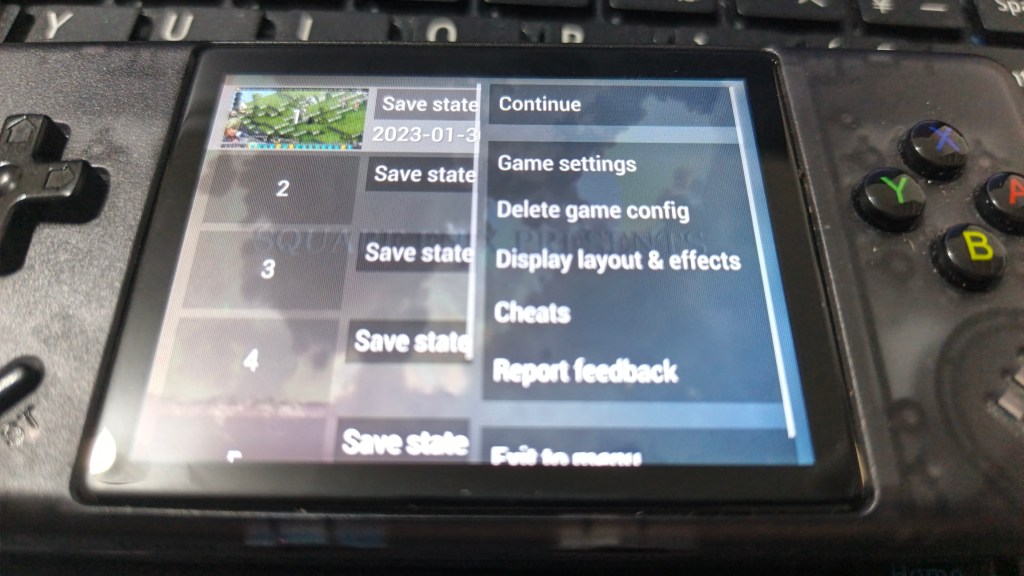
    I was able to play Final Fantasy Type-0 with some remapping. Since there’s no analog stick, you can toggle the D-pad to act as analog by quickly tapping the power button on the right. It takes some getting used to, but it works. Save states and the PSP menu work just like they do on mobile PPSSPP, which I love.

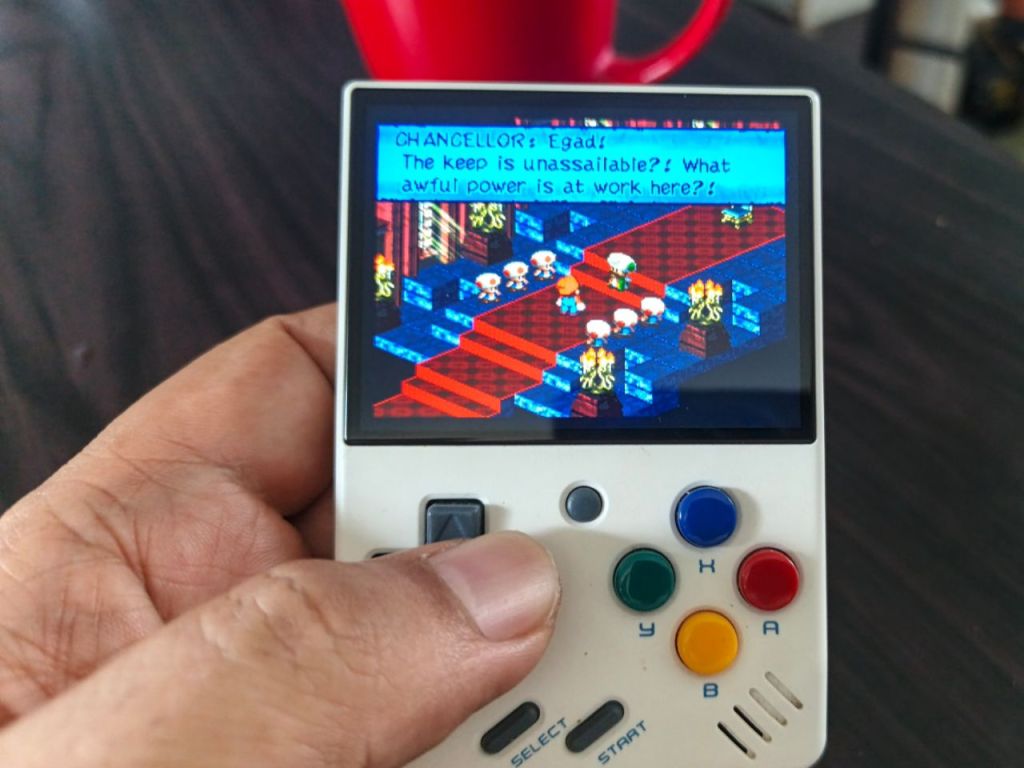
    Not all games run smoothly though. My favorite, Tactics Ogre: One Vision, slows down during dialogue scenes, and I’m still experimenting with settings to smooth it out. Turn-based games are generally playable, but heavier 3D titles will definitely push the limits.

    Pros & Cons

    Pros

    • Pocket-sized and ultra-lightweight
    • Bright 2.83-inch IPS screen
    • Handles retro systems up to PS1 smoothly
    • PSP emulation is playable with tweaks
    • Save states via PPSSPP
    • Solid build quality for the price
    • Comes with a silicone case for protection

    Cons

    • Cramped controls; small, pointy D-pad and tiny face buttons
    • Triggers and select/start buttons are too clicky
    • No analog stick — remapping required for many PSP games
    • Occasional rattling inside
    • PSP performance is hit or miss, with stutters in some titles
    • Long sessions can cause hand cramps

    Final Thoughts

    After a week with the RG28XX, I can say this: it’s a fun little handheld. If what you want is something super portable, pocket-friendly, and affordable, it gets the job done. It lets me carry PSP and retro classics in my pocket, and that alone makes it worth it for me.

    But it’s not perfect. The 4:3 screen doesn’t play nice with PSP’s native 16:9 aspect ratio, which means black bars or stretched visuals. The text also feels smaller than it should, especially compared to the Miyoo Mini, and I notice it every time. Controls are also cramped and take time to get used to.

    If you’re serious about PSP emulation and want a more authentic experience with analog sticks, widescreen support, and stronger performance, then honestly something like the Retroid Pocket 4 is the better option. It’s bigger, sharper, and more comfortable for longer play sessions.

    But if your priority is a tiny handheld that slips into your pocket and still lets you enjoy your favorite RPGs and PSP titles on the go, the RG28XX absolutely delivers on that promise. For me, that balance makes it a keeper.

  • The Goonies on NES – A Childhood Treasure

    The Goonies on NES – A Childhood Treasure

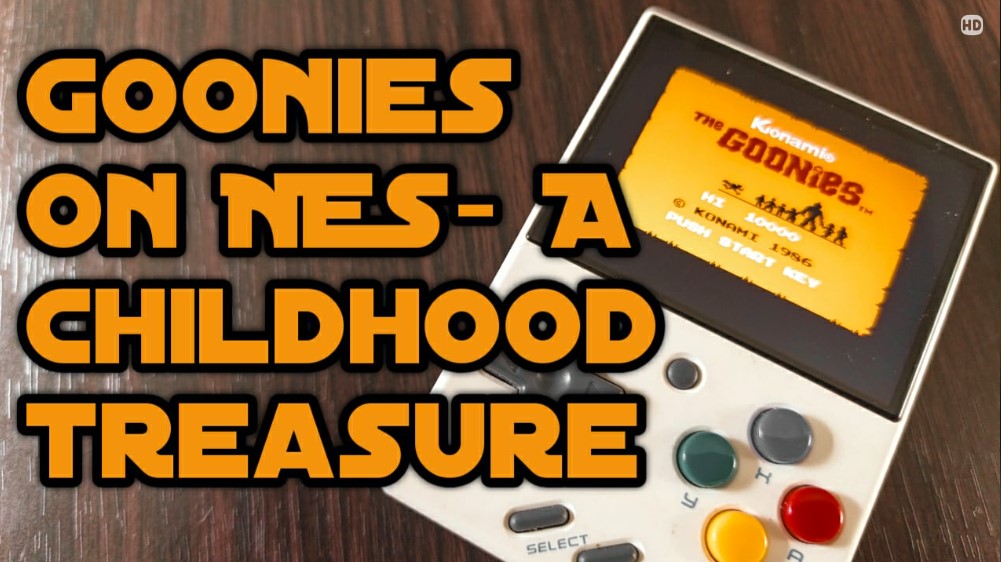
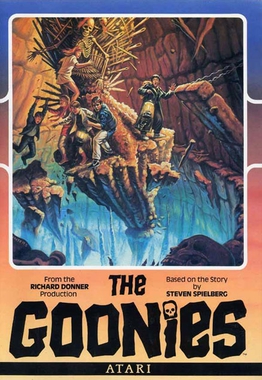
    Growing up, one of the most-played games of my childhood was The Goonies on the NES. At the time, I had no idea it was connected to a movie. To me, it was just this mysterious little game with unforgettable music and fun gameplay. Even now, whenever I hear that chiptune intro theme, I’m instantly brought back to being seven or eight years old, sitting in my living room with my cousins, taking turns until we finally beat it.

    Konami developed and released the game in 1986, based on the 1985 movie. The strange part is that while the game came out on the Famicom in Japan, it never got a normal NES release in North America. Instead, many players only ever discovered the sequel, The Goonies II. But for me, this first game was the one that left a mark.

    Controls and Objectives

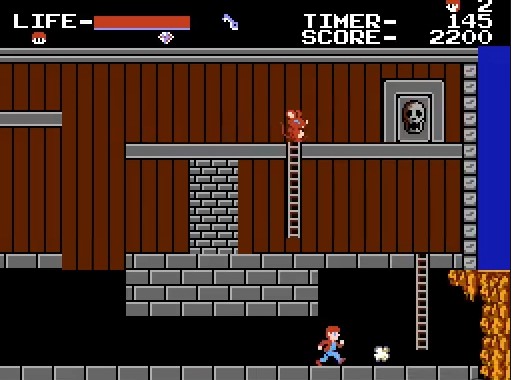
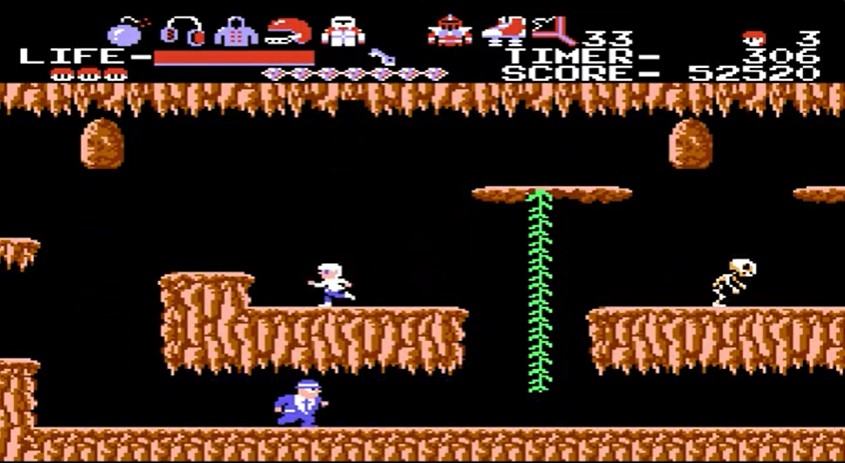
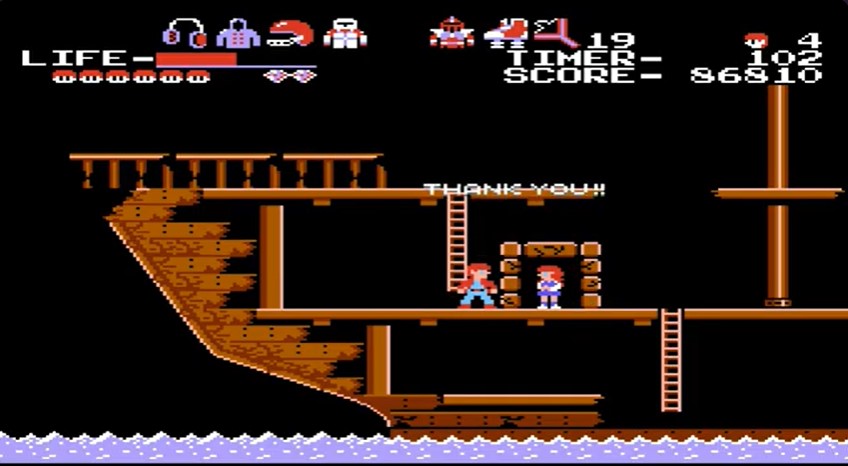
    The beauty of The Goonies is how simple it is to pick up and play. You move Mikey with the D-pad, jump with A, and attack or place bombs with B. Each level has a clear goal:

    • Collect three keys to unlock the exit.
    • Rescue a captured Goonie hidden somewhere in the stage.
    • Survive enemies like bats, skeletons, rats, and of course the Fratellis.

    That’s it — no long cutscenes, no walls of text, just pure action.

    This is also why it feels perfect on the Miyoo Mini’s 2.8-inch screen. The game doesn’t rely on lots of text, so there’s nothing tedious to read. The NES’s simple A and B button layout matches the Miyoo Mini perfectly, making the game feel like it was made for handheld play.

    The Nostalgia Factor

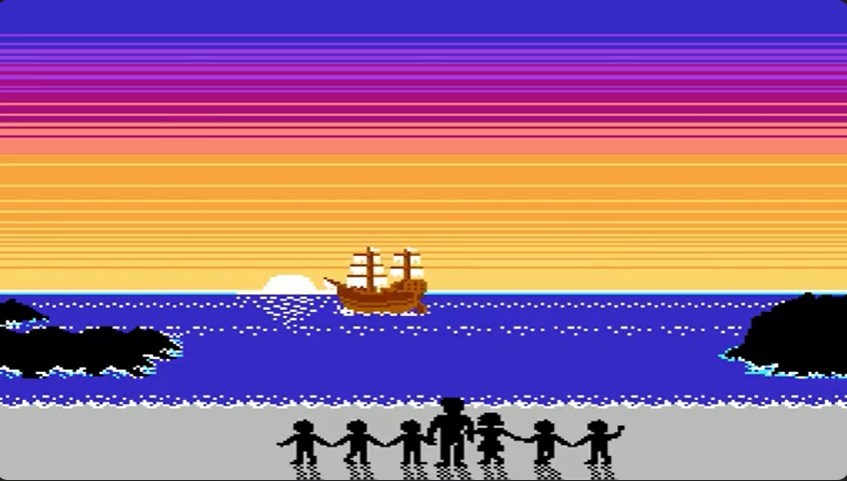
    When I was a kid, I used to think the rats in this game were actually the size of children. They looked so huge and scary to me on the TV screen. Looking back, the graphics are pretty basic, but the way the game combined its music, enemies, and level design made it feel larger than life.

    The difficulty also felt enormous at that age. What seems like a simple loop today — jump, bomb, collect, rescue — was one of the hardest games I had ever played as a kid. But that’s part of what made it so special.

    And of course, what I remember most isn’t just the game itself but the feeling around it: the old TV buzzing in the living room, my cousins sitting beside me, all of us determined to beat the game together. That memory is what makes The Goonies stand out among all the other NES platformers.

    Final Thoughts

    Although there are many NES platformers that are just as good, or even better, The Goonies will always be one of my personal favorites. Not because it’s the most polished, but because it carries so many of my childhood memories.

    I haven’t played The Goonies II, but for me, this first game feels just right. And playing it today on my Miyoo Mini is enough to keep that nostalgic spark alive. The Goonies is just one of many great platformers on the NES — but for me, it’s one of the most unforgettable.

  • 5 Most Iconic JRPGs on the SNES (In My Opinion)

    5 Most Iconic JRPGs on the SNES (In My Opinion)

    When people talk about the golden age of JRPGs, the SNES almost always comes up—and for good reason. The 16-bit era was a time when RPGs weren’t just about grinding levels or saving the princess. Developers were experimenting, pushing boundaries, and proving that games could be more than simple adventures.

    Chrono trigger for Snes

    The SNES gave us innovative gameplay systems, like real-time combat, combo attacks, and even multiplayer RPG experiences. Its sound chip allowed composers to create some of the most memorable video game soundtracks ever made, from sweeping orchestras to catchy battle themes that still stick in your head today. Most importantly, it was an era where storytelling in games matured. We saw deeper characters, emotional twists, and moments of drama that rivaled books and movies—and that legacy is still felt in modern RPGs to this very day.

    So with all that in mind, here’s my personal top 5 most iconic JRPGs on the SNES—counting down from 5 all the way to my number 1 pick.

    5. EarthBound (1994)

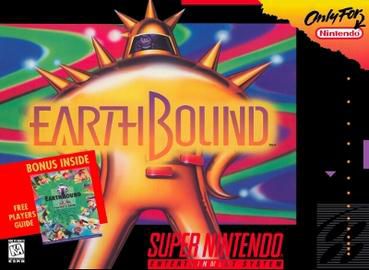
    EarthBound box cover: Developed by Ape and HAL Laboratory, released in 1994.

    At first glance, EarthBound looks silly. Kids fighting aliens with yo-yos and frying pans? But the deeper I went, the more I realized how smart and emotional this game really was. It’s funny, it’s weird, and it sneaks in life lessons when you least expect it.

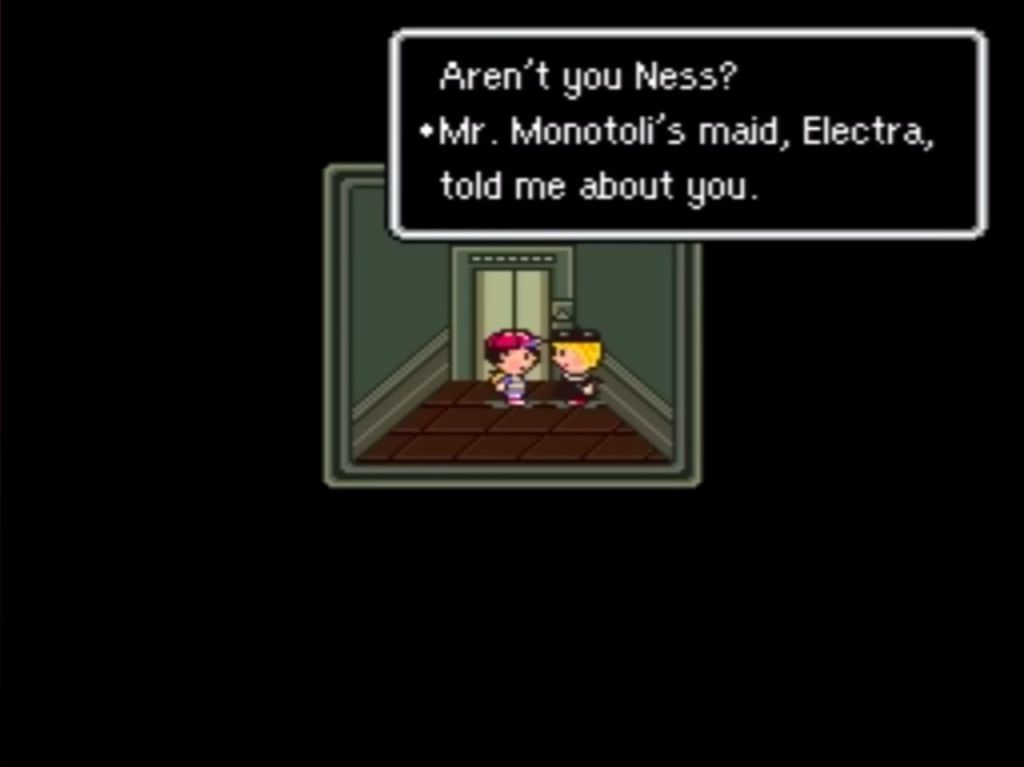
    Earthbound gameplay

    💭 What I took away: EarthBound taught me that heroes don’t always need swords or armor. Sometimes courage comes in the simplest forms—friendship, family, and a belief that even ordinary kids can do extraordinary things.

    4. Secret of Mana (1993)

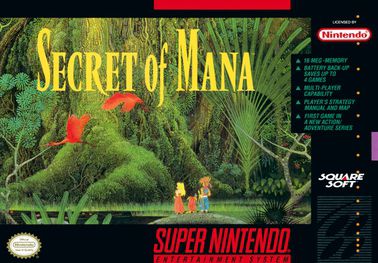
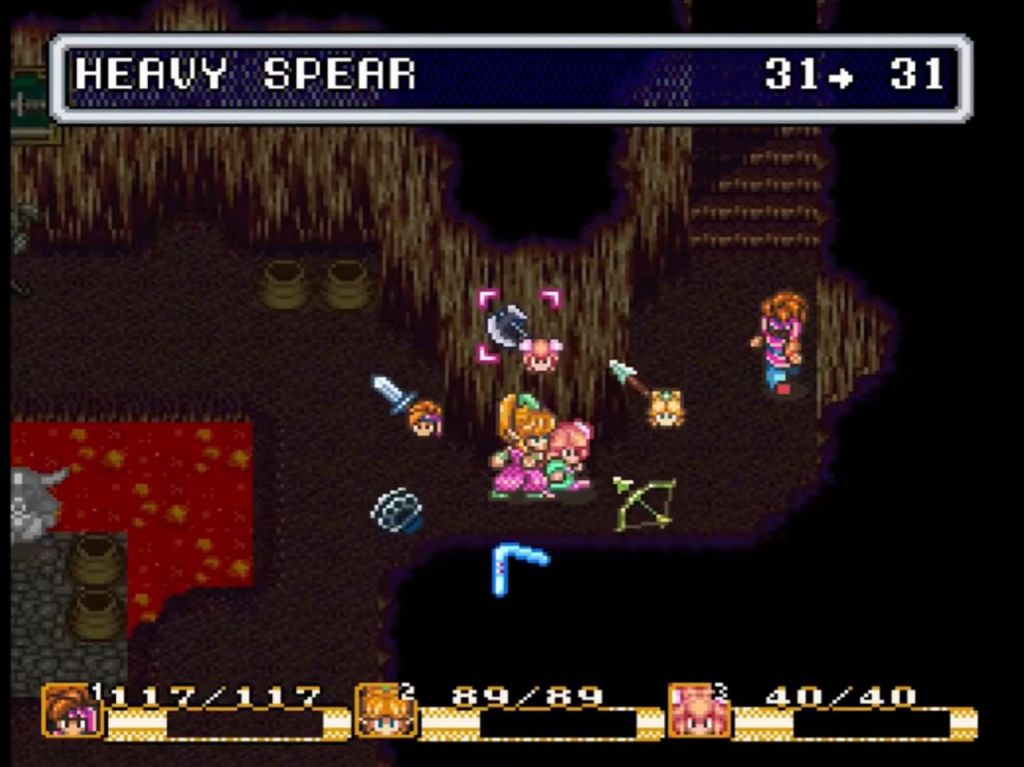
    Secret of Mana, developed by Square Co., Ltd., released in 1993.

    I’ll never forget the first time I played Secret of Mana. The real-time combat felt alive compared to turn-based RPGs, and being able to share the adventure with friends was special. The bright world and enchanting soundtrack gave it a fairy tale quality.

    But what really stuck with me wasn’t just the combat or the music—it was the relationships. Traveling with the Girl and the Sprite made the journey feel alive, like I was part of a small family fighting through impossible odds. And when the story forced me to deal with loss, it hit me harder than I expected. That bond I’d built with the characters made it feel personal, and it’s one of the first times a game really made me feel that kind of emotional weight.

    Secret of mana Snes gameplay

    💭 What I took away: The story reminded me that even victories can come with sacrifice. It taught me that saving the world often means letting go, and that true strength is sometimes about moving forward despite loss.

    3. Final Fantasy VI (1994)

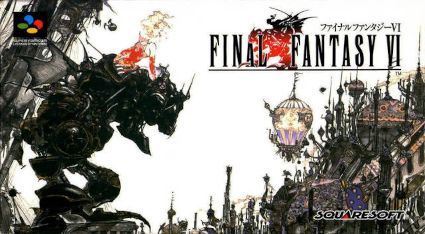
    Final Fantasy VI for the SNES was developed by Square (now Square Enix) and released in Japan on April 2, 1994, and in North America on October 11, 1994

    This is one of the most ambitious RPGs I’ve ever played. A huge cast, an unforgettable villain, and moments that proved games could carry just as much weight as movies or novels.

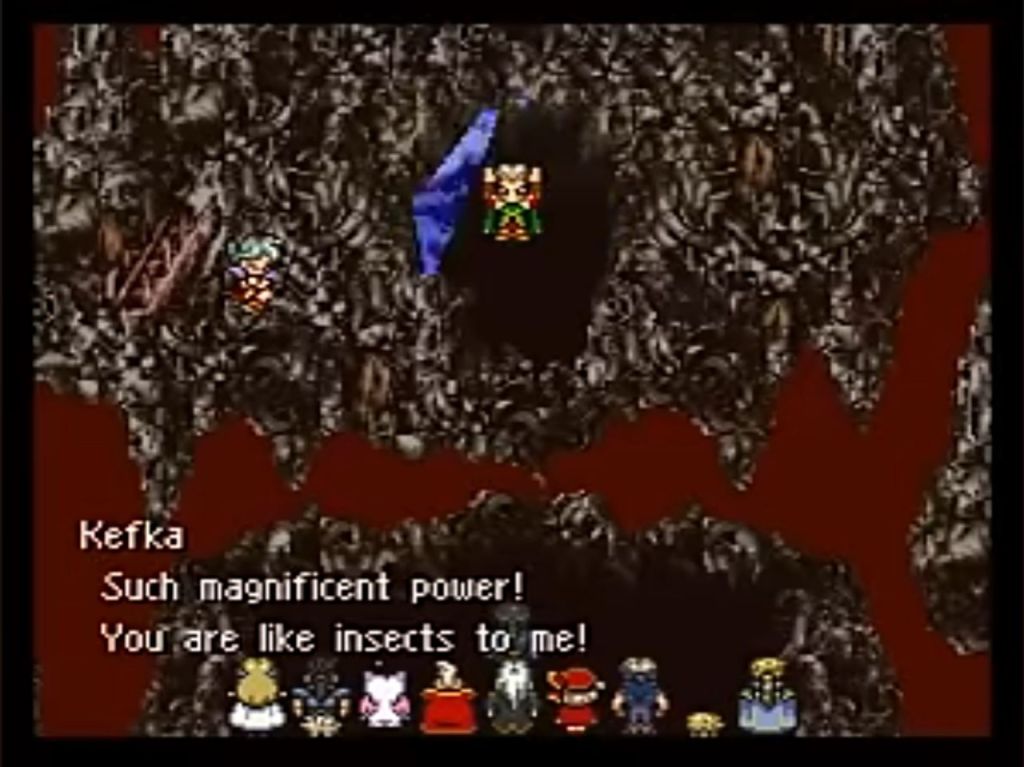
    And then there’s Kefka. Growing up, he honestly terrified me. At first, his clownish personality and over-the-top antics seemed funny—but the more the story unfolded, the more those moments felt chilling. He wasn’t just another villain with a plan; he was completely unhinged, unpredictable, and capable of things I didn’t think a video game character could do back then. Even now, looking back, those “comedic” moments just make his cruelty stand out more.

    Final Fantasy VI Kefka Bossfight

    💭 What I took away: For me, Final Fantasy VI is about hope. No matter how broken the world feels, or how overwhelming despair can be—even when someone like Kefka is pulling the strings—people can come together, rebuild, and find meaning again. That message stuck with me long after the credits rolled.
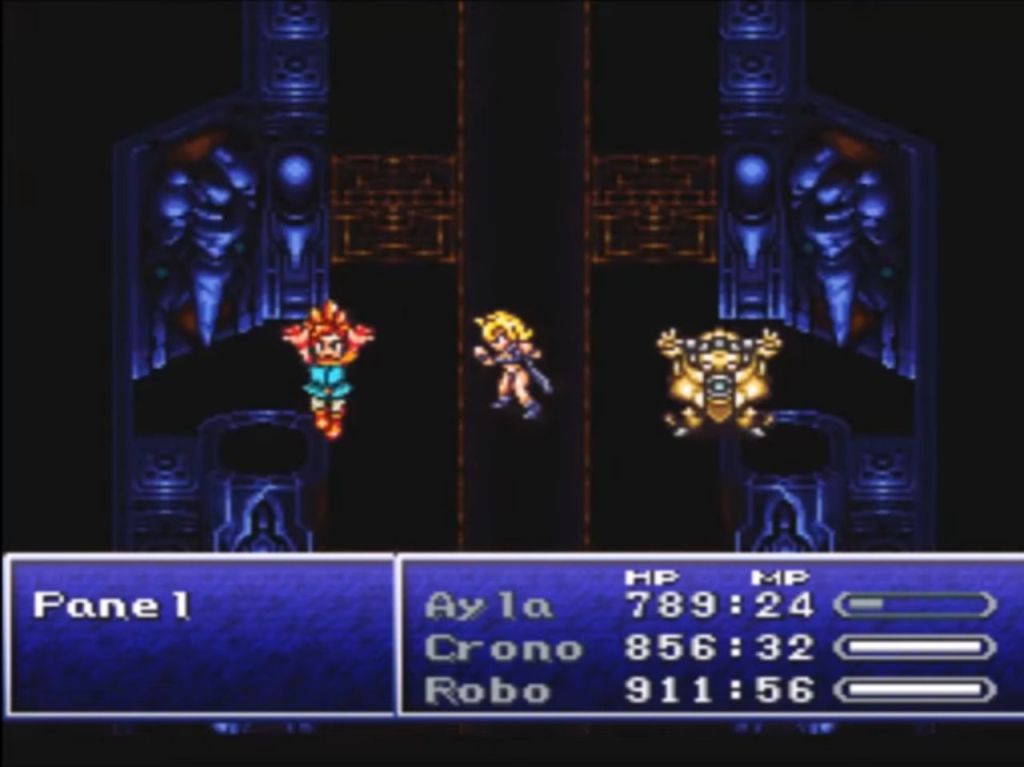
    2. Chrono Trigger (1995)

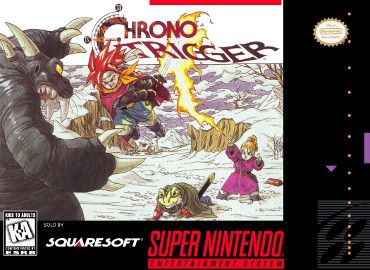
    Chrono Trigger for the Super Nintendo Entertainment System (SNES) was developed by Square and released in Japan on March 11, 1995, and in North America on August 22, 1995 .

    Chrono Trigger is legendary for a reason. Time travel, branching choices, and combat that encouraged creative teamwork—it was ahead of its time. Every jump into the past or future made me feel like I was carrying the weight of history on my shoulders.

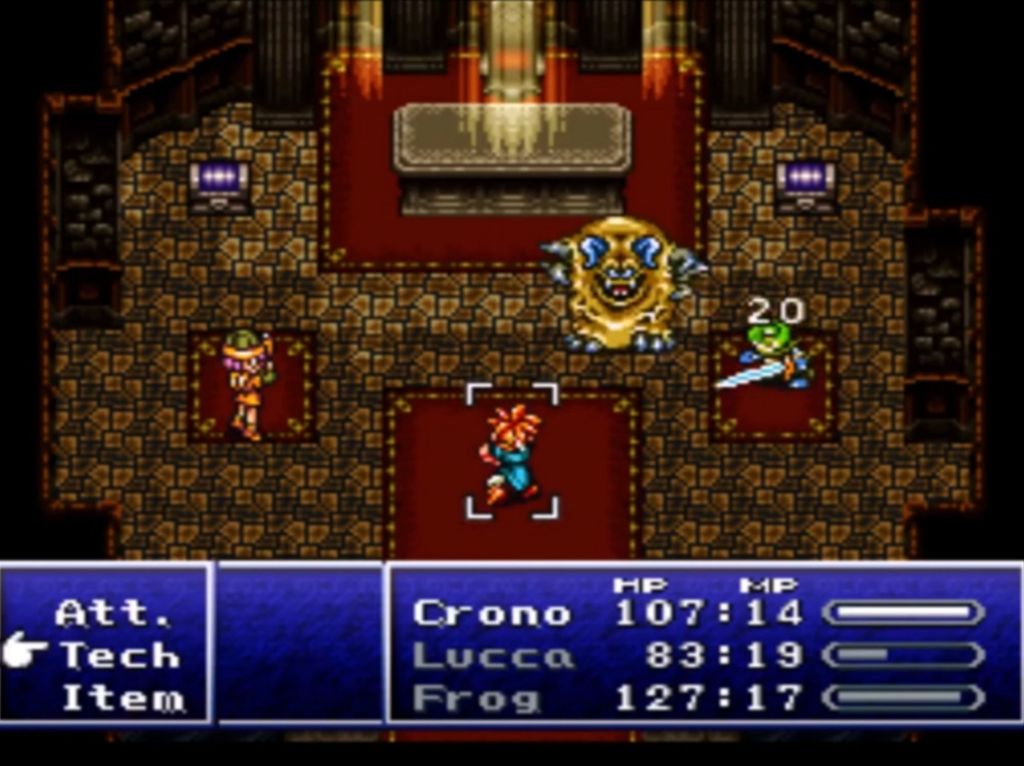
    Chrono trigger snes gameplay

    💭 What I took away: This game taught me that our choices matter. Even the smallest decisions can ripple across time and change everything. It reminded me to value every moment, because what we do today shapes tomorrow. Well, that and if you drop your grades the time you binge play Chrono trigger on weekends, you’re guaranteed to let your parents revoke gaming weekends altogether.

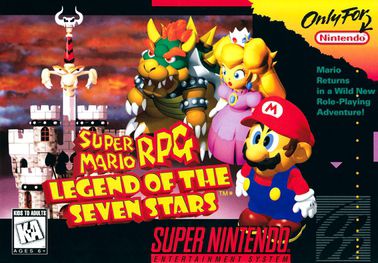
    1. Super Mario RPG: Legend of the Seven Stars (1996)

    Super Mario RPG for the SNES was developed by Squaresoft and published by Nintendo.

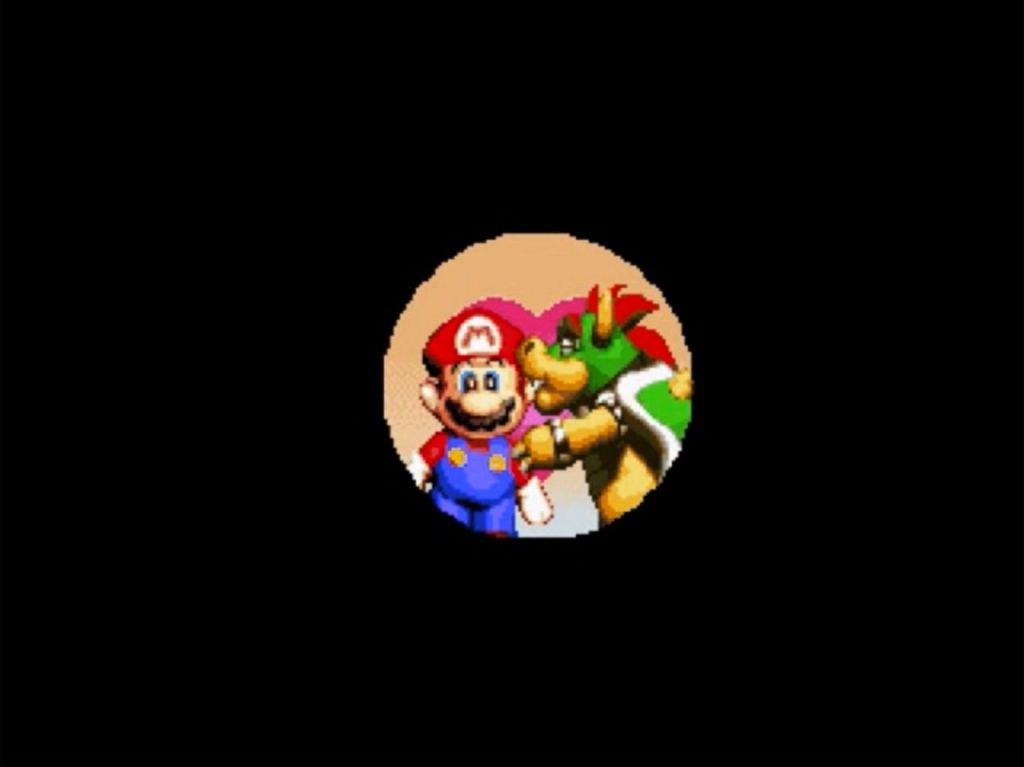
    My number one might surprise some people, but for me, it’s Super Mario RPG. Back then, the idea of Mario in an RPG felt impossible—but somehow, Nintendo and Square pulled it off. The humor, the button-timed combat, the quirky original characters—it was pure magic.

    One of the things that stood out to me the most was Bowser. Before this game, he was always just the silent, menacing villain who kidnapped Peach over and over again. But here, he was fleshed out like never before. His bossy antics, his over-the-top pride, and the way he reluctantly teamed up with Mario gave him a lovable side I never expected. Even when I play later Mario RPG titles, I sometimes miss that version of Bowser—the grumpy but endearing ally who added so much personality to the party.
    And then there’s Smithy. He may not be as famous as Kefka or Lavos, but as a kid, he left a strong impression on me. His factory world felt so different from anything I’d seen in a Mario game, and his sheer power made him feel like a true final boss. For me, he was proof that this wasn’t just a silly Mario spin-off—it was a real RPG with stakes.

    Another reason it’s my top pick is a little more personal—I once made a full walkthrough and guides online for this game. Sadly, the site’s gone now, but maybe one day I’ll make another one—this time in my own writing style—for the Super Mario RPG Remaster on the Switch.

    💭 What I took away: This game showed me that even familiar heroes like Mario can grow beyond what we expect. And Bowser, of all characters, reminded me that people (or villains) can surprise us if we give them the chance. It taught me to appreciate new sides of things I thought I already knew, and that sometimes the most unlikely team-ups make for the best adventures.

    Final Thoughts

    Currently playing Super Mario Armaggedon. Romhack on my Miyoo Mini

    The SNES library is full of unforgettable RPGs, and picking just five wasn’t easy. Each one not only pushed gameplay and storytelling forward, but also left me with lessons I still think about today.

    And while I didn’t grow up playing most of these on the original SNES, I’ve been revisiting them through emulators and most recently on my Miyoo Mini. The Miyoo’s small ergonomics actually fit perfectly for one-handed play, so I often catch myself holding it in one hand and still enjoying these classics just fine. Honestly, I think these are some of the must-play games on the Miyoo Mini—it’s a perfect way to relive the magic of these iconic JRPGs today.

Design a site like this with WordPress.com
Get started