Tag: Mobile Gaming

  • Top 5 Dragon Ball Games That Still Hold Up Today (Retro Edition)

    Top 5 Dragon Ball Games That Still Hold Up Today (Retro Edition)

    Even decades later, some Dragon Ball games just refuse to fade away. Whether you grew up button-mashing on a Sega Genesis or charging up Kamehamehas on your PSP, these classics remind us why Dragon Ball has been a staple in anime gaming.

    This list is by no means the definitive “best of all time” — how great a game feels will always be subjective. But for me, someone who still plays these titles on retro handhelds, these are the five that stand out the most. They’re what I personally consider my top five Dragon Ball games to revisit and enjoy even today.


    1. Dragon Ball Z: Buyuu Retsuden (Sega Genesis, 1994)
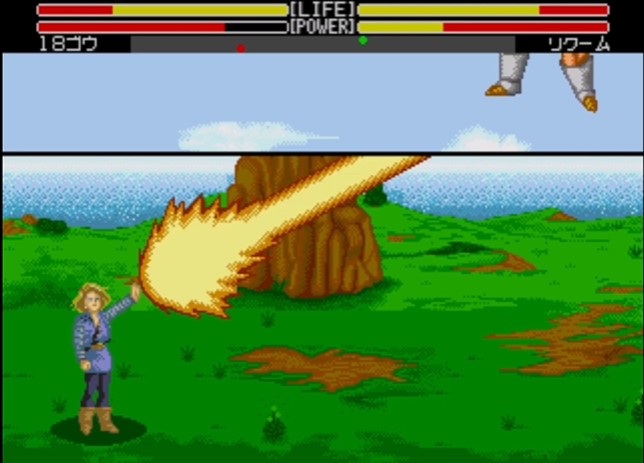
    Before 3D arena fighters and flashy transformations, Buyuu Retsuden gave Genesis owners a taste of pure 2D fighting action. It was fast, fun, and brought iconic battles to life in glorious 16-bit form — long before most of us even dreamed of full 3D Dragon Ball games.

    Why it holds up: Tight controls, nostalgic visuals, and that signature Genesis energy make this a must-play for retro fighting fans.

    Fun Fact: The game had secret moves and even “Super vs. Super” clashes where two characters could unleash ultimate attacks at the same time, creating a mini-game of energy waves. You could also block supers with precise timing — rare for its era and incredibly satisfying when pulled off.


    2. Dragon Ball Z: Buu’s Fury (Game Boy Advance, 2004)
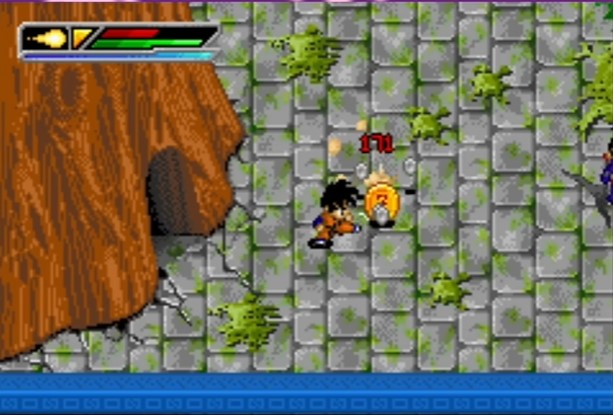
    An action RPG that lets you relive the Buu Saga while leveling up, exploring areas, and smashing enemies in real time. For handheld players, Buu’s Fury was the ultimate way to feel like a Super Saiyan on the go.

    Why it holds up: Classic pixel art, rewarding combat, and a surprisingly emotional story for a GBA title.

    Fun Fact: Buu’s Fury is actually the third in the Legacy of Goku trilogy. It took everything that worked in Legacy of Goku I and II — tighter combat, smoother transformations, better story pacing — and perfected it. Out of all three, Buu’s Fury is easily the best and most polished GBA Dragon Ball adventure.


    3. Dragon Ball Z: Tenkaichi Tag Team (PSP, 2010)
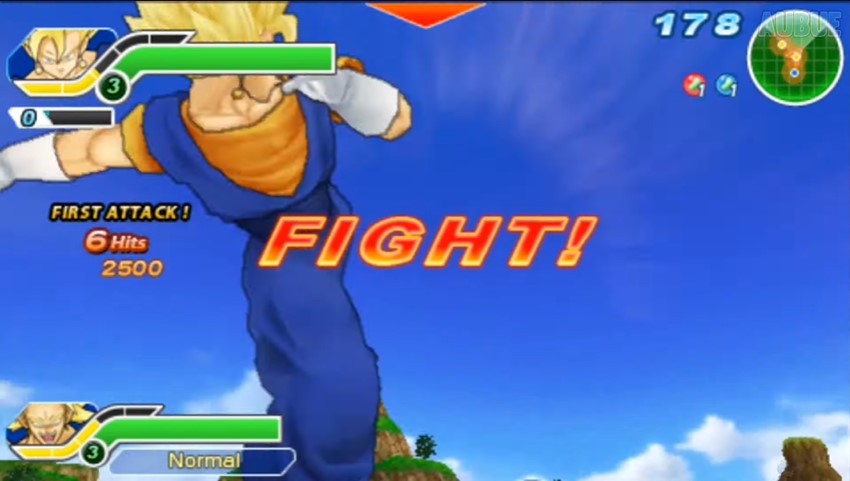
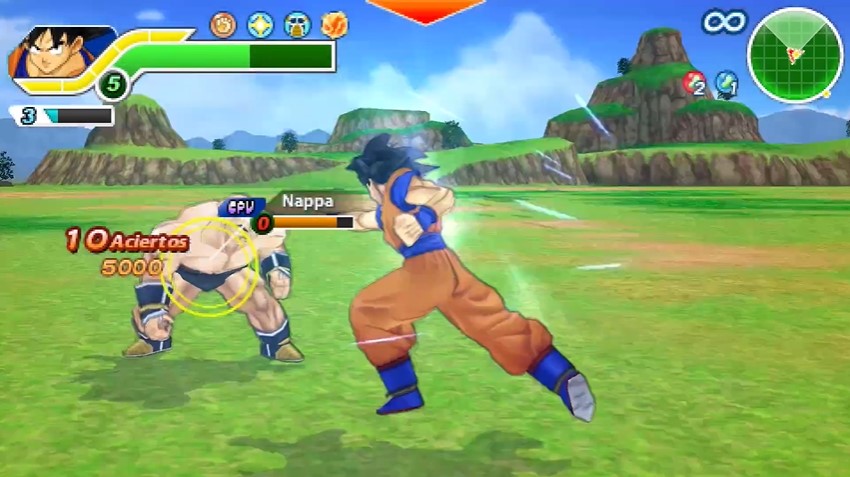
    Portable, explosive, and still one of the most fun Dragon Ball games to this day. Tenkaichi Tag Team let you fight solo or team up for wild 2v2 battles, bringing console-level gameplay to a handheld screen.

    Why it holds up: Fast-paced combat, deep combos, and an iconic roster that’s still unmatched on PSP.

    Fun Fact: Think of this as a lighter, portable version of Budokai Tenkaichi on PS2 — but with tons of content, customizations, and a full story mode. There’s also another hidden gem on PSP called Dragon Ball Z: Shin Budokai, a 2.5D fighter — but between the two, Tenkaichi Tag Team stands taller thanks to its bigger roster, polish, and those chaotic 2v2 battles.


    4. Dragon Ball: Advanced Adventure (Game Boy Advance, 2004)
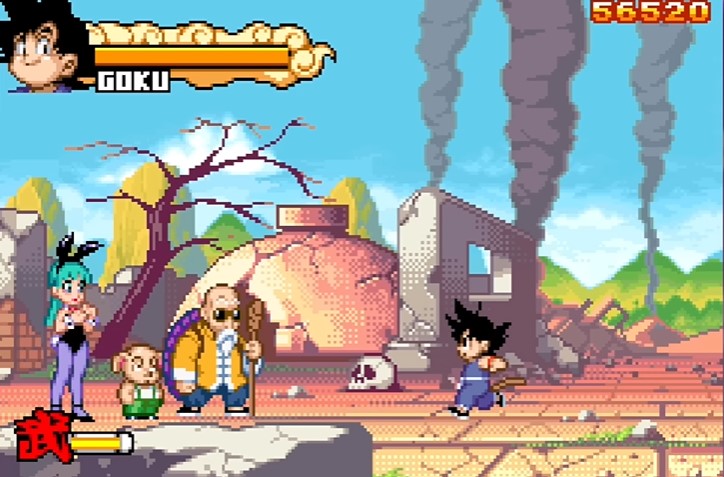
    This one’s a gem. Covering Goku’s original adventures — from meeting Bulma to the final battle with King Piccolo — Advanced Adventure mixes platforming, exploration, and fighting into one charming package.

    Why it holds up: It’s one of the few games that perfectly captures the humor, adventure, and heart of classic Dragon Ball. Plus, that 2D art style still looks fantastic today.

    Fun Fact: This game is pure nostalgia — an action-platformer that tells Goku’s early story as a kid. It blends adventure, one-on-one battles, and side-scrolling action so well that even after all these years, it still plays great and captures the true spirit of early Dragon Ball.


    5. Dragon Ball Fusions (Nintendo 3DS, 2016)
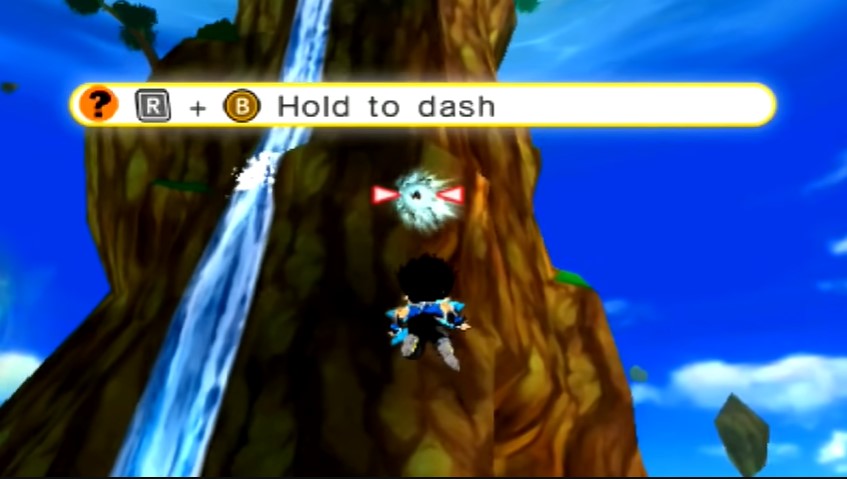
    While it’s newer than the others, Fusions carries that old-school Dragon Ball spirit — letting you fuse just about anyone with anyone. The result? A chaotic, creative RPG that celebrates everything fun about the franchise.

    Why it holds up: Unique mechanics, colorful visuals, and endless replay value make this one a modern classic with retro DNA.

    Fun Fact: What makes Fusions stand out is its deep customization system — you can fuse different characters to create completely new fighters, customize your looks, fighting type, special moves, and skills. It’s a dream come true for fans who ever wished to create their own warrior in the Dragon Ball universe.


    Final Thoughts
    From Buyuu Retsuden’s 16-bit punches to Advanced Adventure’s playful nostalgia, these games prove that Dragon Ball’s legacy in gaming is just as strong as its anime roots.

    Thanks for reading — it really means a lot. Which Dragon Ball game defined your childhood? Drop it in the comments — let’s talk classics.
  • The Galerians Series – Disturbing, Unique, and Forgotten

    The Galerians Series – Disturbing, Unique, and Forgotten

    Some games scare you with monsters. Others disturb you with atmosphere. But then there are games like the Galerians series — games that make you uncomfortable because of the ideas underneath.
    Spanning the original Galerians on PS1 (1999) and its direct sequel Galerians: Ash on PS2 (2002/2003), the series is a one-two punch of sci-fi horror, drug-fueled survival mechanics, and tragic storytelling. For me, these games remain some of the most unique — and frankly disturbing — experiences I’ve ever had in gaming.


    1999: Horror Boom on the PS1

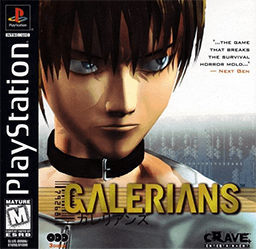
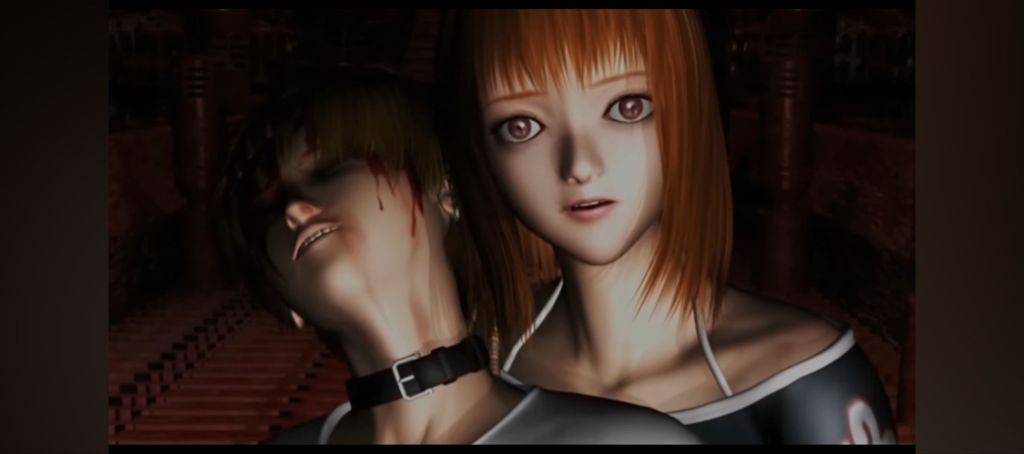
    Galerians Ps1 cover art

    By the time Galerians released in 1999 (Japan) and 2000 (US/EU), the PlayStation was already knee-deep in a survival horror golden age.

    • Capcom had just dropped Resident Evil 2 (1998) and Nemesis (1999).
    • Konami unleashed Silent Hill (1999) — redefining psychological horror.
    • Square dabbled with cinematic horror-RPG hybrids like Parasite Eve II (1999).
    • Capcom even turned dinosaurs into horror with Dino Crisis (1999).

    Everyone wanted a slice of the horror pie.

    So where did Galerians fit? Developed by Polygon Magic and published in the West by Crave Entertainment, the game wasn’t coming from the heavyweights. Crave was mostly known for mid-tier and niche projects — sports titles, racing games, even quirky experiments. But in the late ’90s, even they leaned into the horror trend, picking up Galerians because it stood out: no guns, no zombies, just psychic powers fueled by dangerous drug use.

    While the big publishers were polishing cinematic experiences, Crave doubled down on something raw and unsettling. It wasn’t the mainstream choice, but it gave Galerians its cult edge.


    My First Steps Into Galerians

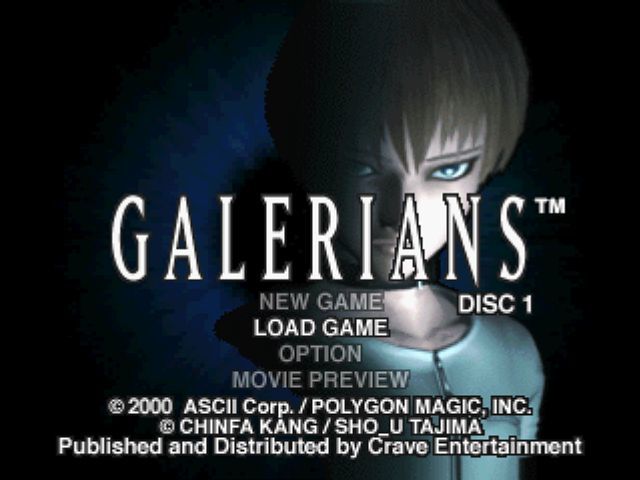
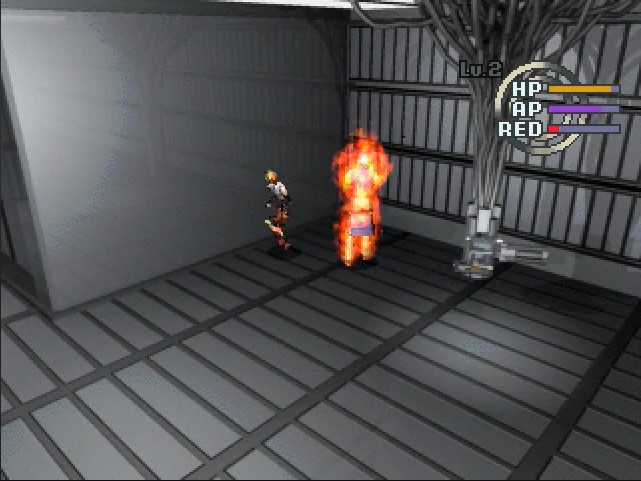
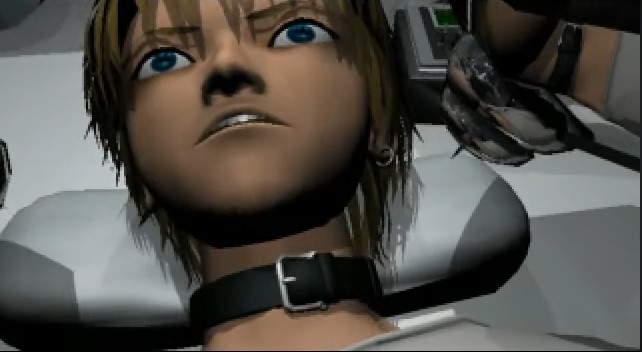
    Booting up Galerians for the first time was like waking up inside someone else’s nightmare. The screen fades in, and you’re just… there. A sterile hospital room, cold and empty, and you have no idea who you are or why you’re strapped into this world of machines.

    Then it happens: a girl’s voice inside your head.

    “Rion… help me… find me…”

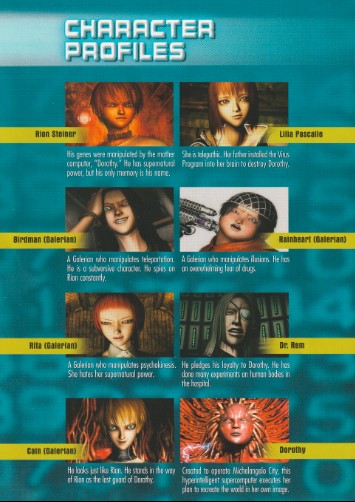
    It’s faint, desperate, and unsettlingly personal. You don’t know her. You don’t even know yourself. But that voice becomes your compass, sparking your journey into the unknown. (Later, the game reveals this telepathic voice belongs to Lilia Pascalle, Rion’s childhood friend — but at the start, you only feel the mystery.)

    And what a brutal start it is. Within minutes, I was already dying — overdosing on my own psychic powers, burning myself out with attacks I didn’t fully understand. Galerians didn’t want you to feel strong. It wanted you to feel fragile, broken, like a failed experiment stumbling forward.

    Each scrap of the world you uncover — medical files, cryptic documents, and eerie computer logs — becomes your only guide. There are no quest arrows, no tutorials, just survival and that haunting voice urging you onward.


    Stages and Bosses

    What makes Galerians so distinct is how each stage feels like a test, both in difficulty and in theme:

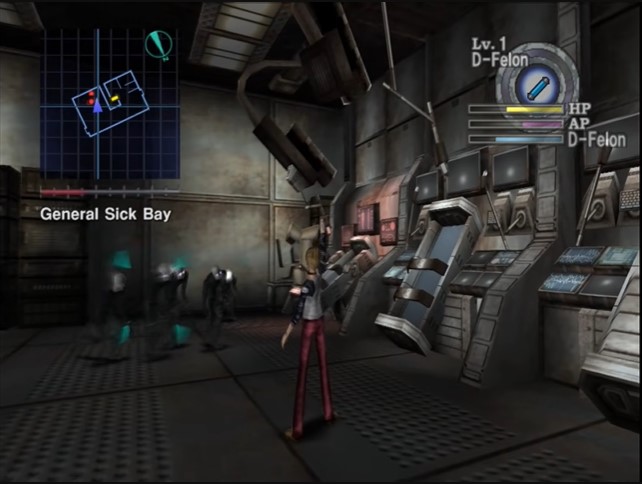
    • Michelangelo Memorial Hospital – sterile halls filled with former caretakers turned threats, a twisted introduction to your fragile powers.
    • Rion’s House – once a place of safety, now twisted by confrontation with Birdman, one of Dorothy’s “children.”
    • Babylon Hotel – chaotic, stylish, and home to brutal encounters with Rainheart and Rita, psychic foes as unstable as you are.
    • Mushroom Tower – the final climb toward Dorothy, the cold, godlike AI that orchestrates your suffering.

    Each boss isn’t just an obstacle; they’re living embodiments of Dorothy’s experiments, mirrors of what Rion could become. The game’s final stage, drenched in sterile dread, leaves you exhausted both mechanically and emotionally — and that’s before the ending revelations about Rion’s true nature.


    Galerians: Rion (2002 CGI Movie)

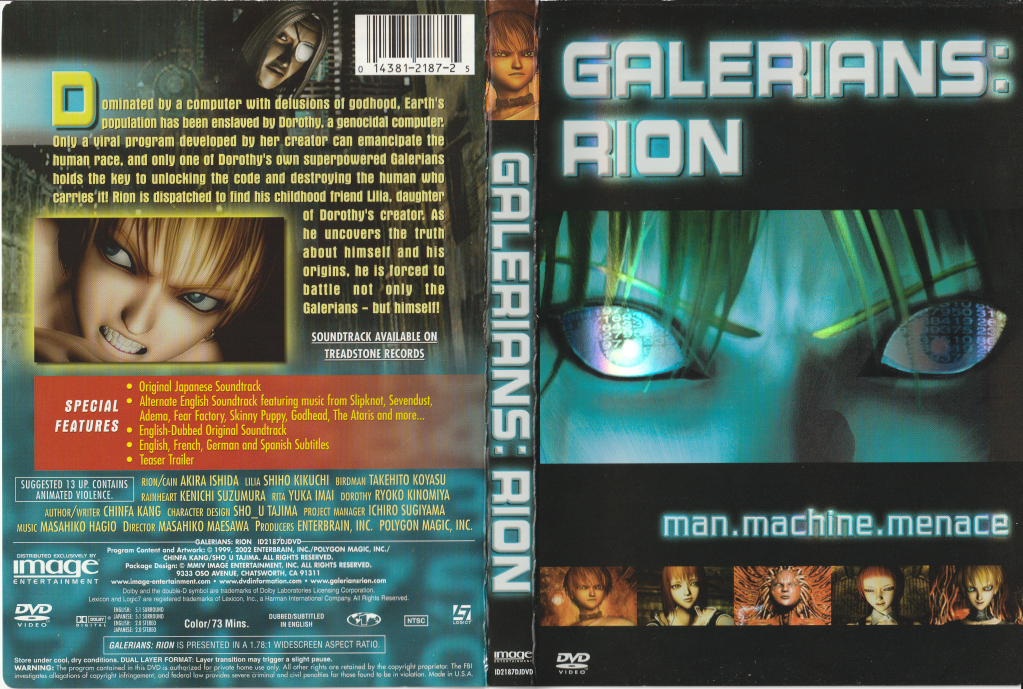
    A couple years later, fans got something unexpected: Galerians: Rion, a full CGI movie.

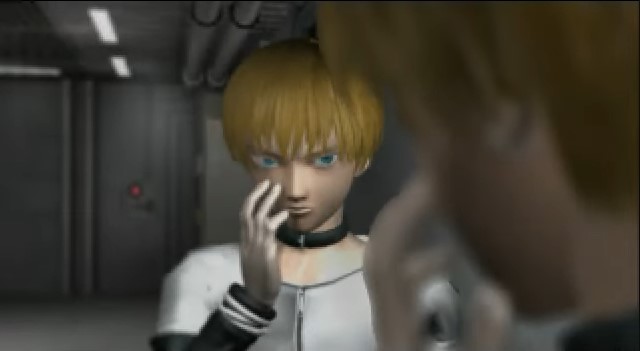
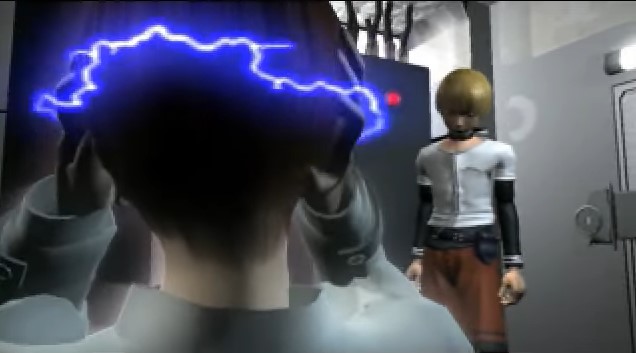
    Think Final Fantasy: The Spirits Within style visuals — glossy, cinematic, and way ahead of its time for such a niche horror property. The movie retold the first game’s story but streamlined it, cutting much of the exploration and emphasizing flashy psychic battles instead.

    The most controversial change was the ending. Where the PS1 game gave us one of the bleakest conclusions in survival horror, the film rewrote it to keep Rion alive — clearly paving the way for Galerians: Ash. For newcomers, it was a more digestible, “cleaned-up” retelling, but for players like me, it lost some of the raw edge that made the original unforgettable.


    2002–2003: Horror Evolves on PS2

    By the time Galerians: Ash launched on PS2 (2002 in Japan, 2003 in the West), the genre had shifted. Survival horror wasn’t just popular — it was splitting into blockbusters vs. experiments.

    • Silent Hill 2 (2001) rewrote the rulebook for psychological horror.
    • Fatal Frame (2001) introduced ghost photography as combat.
    • Resident Evil Code: Veronica X (2001) and Resident Evil Zero (2002) kept Capcom’s dominance strong.
    • Clock Tower 3 (2002) and Siren (2003) tried bold, experimental AI-driven scares.

    Enter Sammy Studios, who published Ash outside Japan. Sammy, better known for arcade hits, was making a push into console publishing. Backing a cult sequel like Ash was a gamble — but one that kept Polygon Magic’s vision alive.

    In Ash, Rion returns to face Ash, Dorothy’s terrifying final “child.” The environments are bigger, the visuals cleaner, and combat more polished — but the mechanics of psychic dependency remain. If anything, the sequel leans harder into the disturbing edge of the original, at a time when most horror games were chasing cinematic prestige.


    Why the Galerians Series Faded

    Both Galerians and Ash were outsiders in their eras.

    • On PS1, Galerians got lost among juggernauts like Resident Evil and Silent Hill.
    • On PS2, Ash was overshadowed by games that redefined the genre’s future.

    But more importantly:

    • Drug dependency as gameplay – Brilliant but controversial.
    • Edgy, bleak storytelling – No power fantasy, just tragedy.
    • Cult status only – Without mainstream traction, the series couldn’t sustain sequels.

    That’s why, in my opinion, Galerians won’t ever get a revival. It’s too raw, too edgy, and too tied to mechanics modern publishers wouldn’t dare touch.


    Playing Galerians Today

    Even if the series is gone, I still revisit it. My Miyoo Mini makes replaying Galerians on the go super nostalgic, though to be honest, I prefer my RG28XX most of the time — the horizontal form factor just feels better for those tricky trigger-based psychic powers.

    As for Ash, it’s comfortably sitting on my tablet and phone, where I chip away at it in short bursts. With Halloween around the corner, it’s the perfect time to step back into that bleak, oppressive world.


    Final Thoughts

    Galerians may never return, but maybe that’s for the best. It burned bright in its moment, dared to go where few games would, and left behind something unforgettable. For me, replaying it now isn’t just nostalgia — it’s a reminder of when horror games weren’t afraid to disturb you, not just scare you.

    And honestly? In a genre packed with monsters and gore, I’ll take one tragic psychic teen overdosing his way through the apocalypse any day.

  • First Impressions: Fire Emblem Shadows

    First Impressions: Fire Emblem Shadows

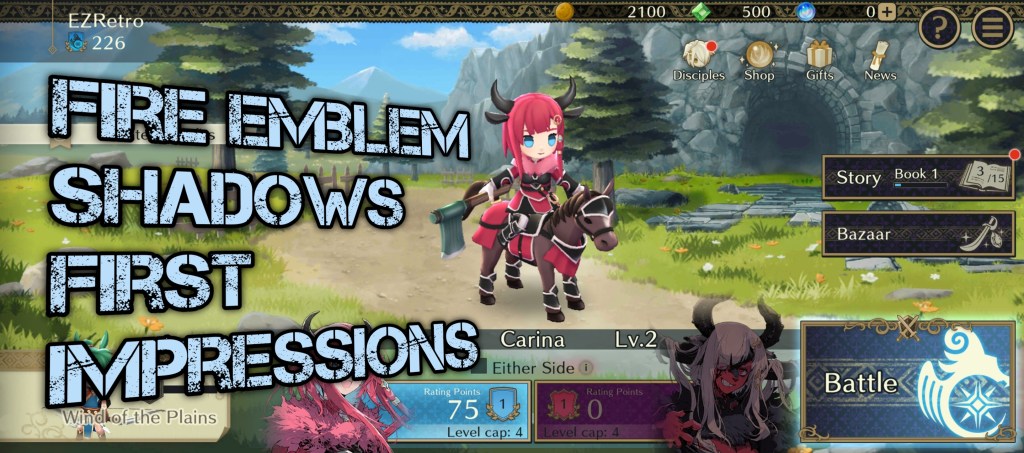
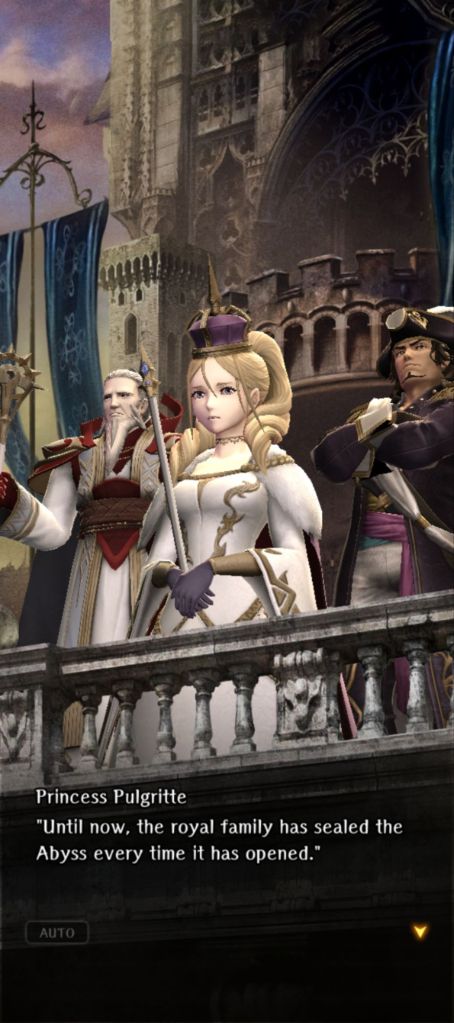
    If you guys follow my blogs, you’ll know that Fire Emblem is one franchise I’m absolutely crazy about. And today, out of nowhere, Nintendo just dropped another entry on mobile called Fire Emblem Shadows.

    I’ve got to be honest—when I first saw the news, I was surprised there wasn’t any build-up or hype leading to this release, nothing like the huge campaign that came with Fire Emblem Heroes a few years back. But now that I’ve actually played it, I get it. This wasn’t just a launch—it was a shadow drop in every sense of the word.

    Nintendo unveiled Fire Emblem Shadows with a short trailer that went live right alongside the game’s release. The presentation leaned heavily into the idea of secrecy and betrayal, teasing its unique hook: real-time tactical battles where one of your supposed allies might secretly be working against you. The press release itself echoed the same theme—“real-time tactics and treachery”—and it fits the vibe perfectly.

    Idle Gameplay Meets Social Deduction

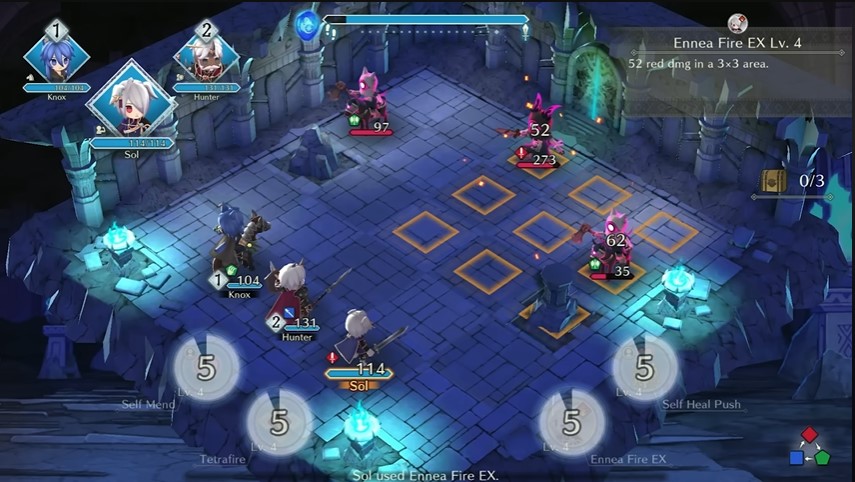
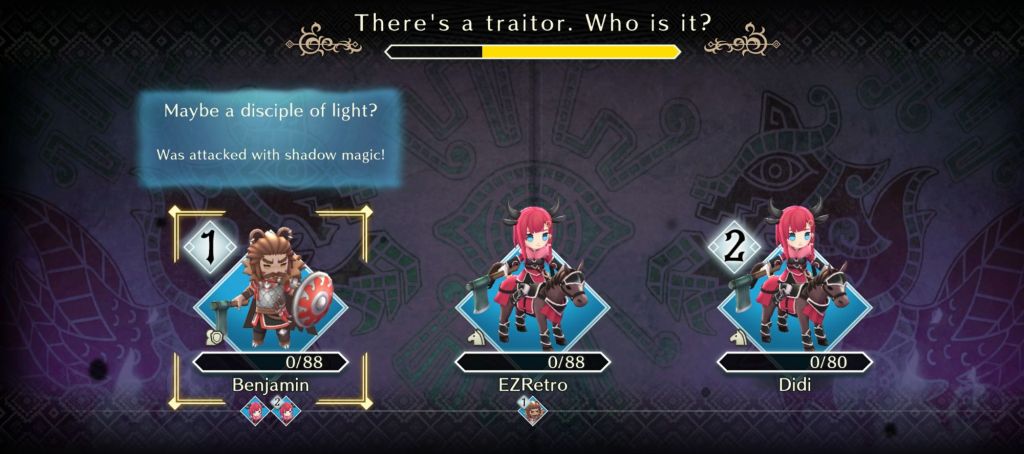
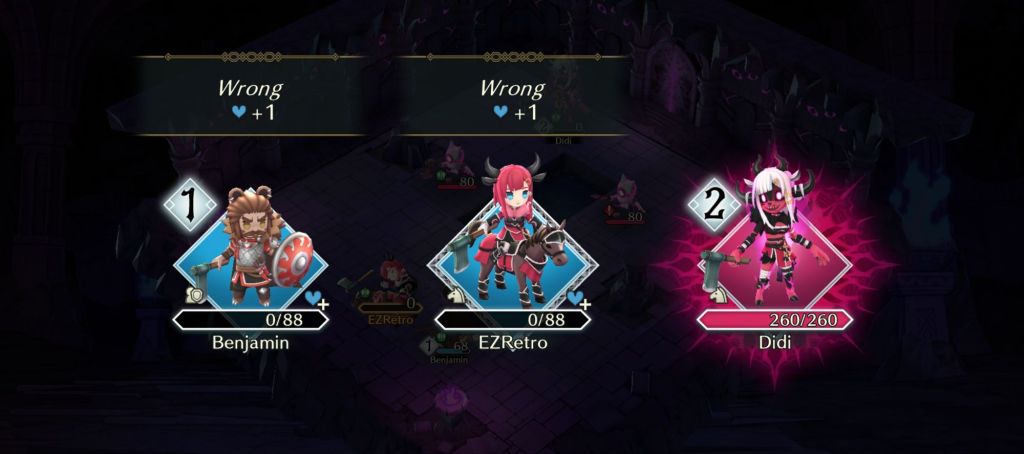
    So essentially, at least from my first few hours, Shadows plays out more like an idle game than a traditional strategy RPG. The combat mostly runs on autopilot, with the only real interaction being when you tap to trigger skills as their cooldowns reset. Then, starting from the second battle, the game flips into an Among Us-style twist—you and your group actually get to vote on who the disciple of shadow is. That vote affects how the next battle unfolds, which is a pretty wild departure from the Fire Emblem formula we’re used to.

    My Honest Take

    And like I said, I’ve got to be honest here—I’m not loving this game, although I’m trying hard to give it a chance. It honestly feels like the devs suddenly got someone on the creative team who said:

    “Hey, you know what would make Fire Emblem on mobile more epic? Take all the things that make a mobile game work—idle gameplay, cutesy characters, microtransactions for gacha pulls on skins, costumes, and playable units—then mash it together with Among Us mechanics so we can justify it being multiplayer.”

    And boom—Fire Emblem Shadows happened.

    Multiplayer Fun… But a Bit Shallow

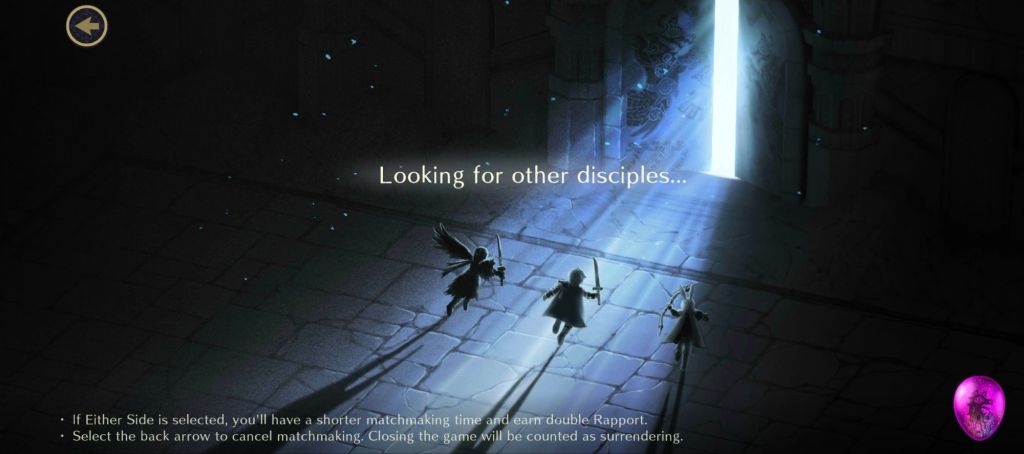
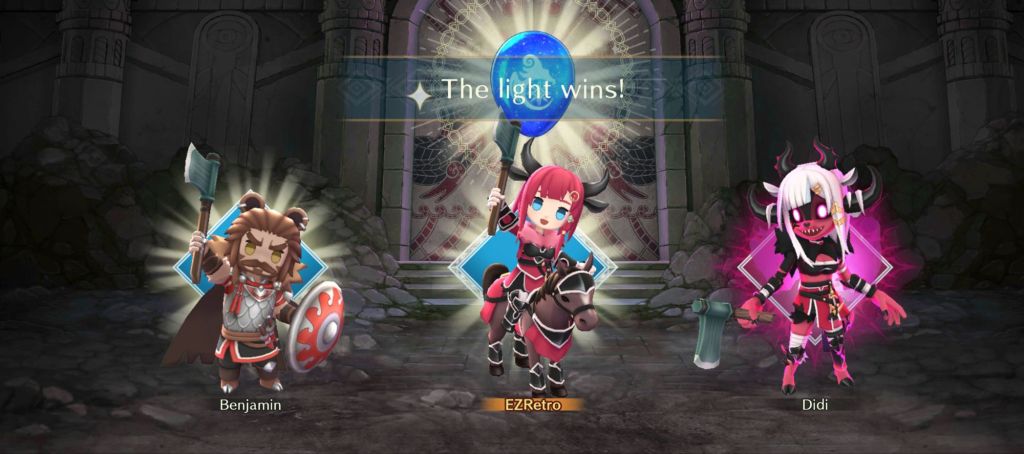
    It is fun in a way, because now Fire Emblem is a multiplayer game. Although, to be honest, I actually enjoyed Fire Emblem Heroes more because it was a single-player experience where I could play at my own pace. With Shadows, everything seems to revolve around the online battles. You and two other players team up to fight monsters—but here’s the twist: one of you is secretly trying to be sneaky and backstab the rest without being too obvious.

    Then comes the second battle phase, where you and your team vote on who you think the disciple of shadow is. If your guess is right, your team gets a big advantage, like being able to revive twice instead of just once.

    Now, I’ve only been playing for about an hour to get a feel for it, but for some reason I keep getting accused of being the disciple—even when I’m not! Maybe it’s my handle, or maybe it’s because I’m always using the main protagonist in battle? Either way, it’s a weirdly frustrating but kind of funny part of the experience.

    Game Mechanics & Depth

    As far as game mechanics go, I don’t see a ton of depth here. Each game only has three players, so there’s a 50% chance you’ll guess the disciple correctly. That makes the social-deduction element pretty shallow right now, but this is just the early stage, so maybe the devs will refine it over time.

    And that, my friends, is why mobile games become hits—through beta testing and tweaking before going live. Honestly, I don’t know who beta-tested this game or why they thought it was a great launch, but the game is out now and you can try it for yourself on the Play Store and App Store.

    For me, though? I’m putting this one down for now. I’ll wait a few months until the game figures out what it wants to become. Playing it now and griping over it could probably sour my mood for the Fire Emblem franchise on mobile, and I don’t want that.

    Good thing Fire Emblem Heroes is still there to pick up the ball—it’s honestly the best mobile game Nintendo has made so far, and that includes Mario Kart Mobile as well.

  • A Beginner’s Guide to The Last Remnant’s Union System – Explained the Way I Understand It

    A Beginner’s Guide to The Last Remnant’s Union System – Explained the Way I Understand It

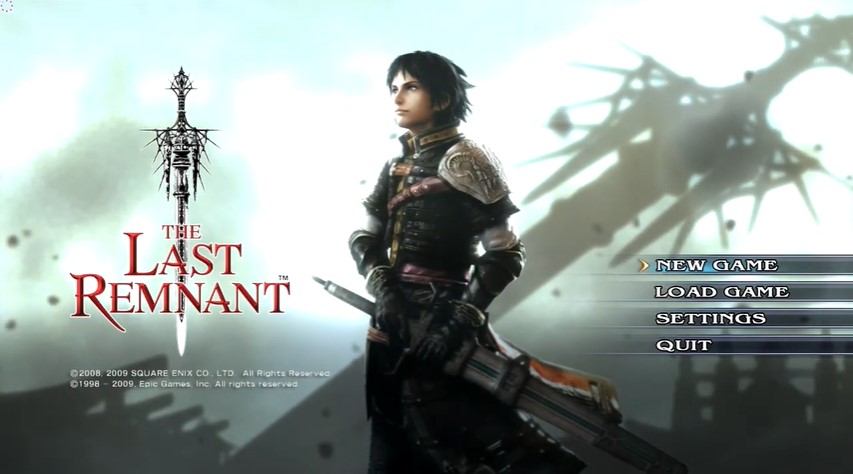
    Through the years, whenever my buddies ask me what game I’m grinding on my phone that feels long and epic, one of my top answers has been The Last Remnant Remastered on mobile.

    Now, don’t get it twisted—I’m no pro at this game. In fact, I’d still call myself a beginner even after all the hours I’ve sunk into it. But maybe that’s exactly why I want to talk about it. Because when I first picked it up, I was just as lost as anyone else, especially with the game’s biggest curveball: the Union System.

    This is my take on it—not as an expert, but as someone who slowly figured things out and wants to make it a little less confusing for the next beginner diving in.

    So What’s the Deal With the Union System?

    Before The Last Remnant, JRPGs mostly stuck to familiar formulas:

    • Classic Turn-Based (like Dragon Quest or Final Fantasy I–X) → You control each character one by one, pick from “attack, magic, item, defend,” and watch the turns play out. Simple and reliable.
    • ATB – Active Time Battle (popularized by Final Fantasy IV–IX) → Each character has a gauge that fills in real time. When it’s full, you act. It added pressure and speed to the turn-based formula.
    • FFXII’s Gambit System (2006) → This one let you pre-program AI behavior, like “if ally HP < 50%, then cast Cure.” It was revolutionary for letting battles play out more automatically but still under your rules.

    And then along comes The Last Remnant. It said: “Forget controlling individuals—what if you controlled squads instead?”

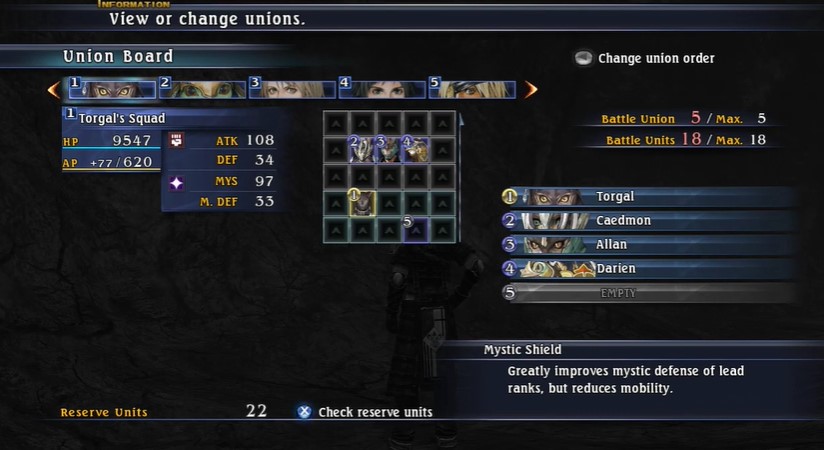
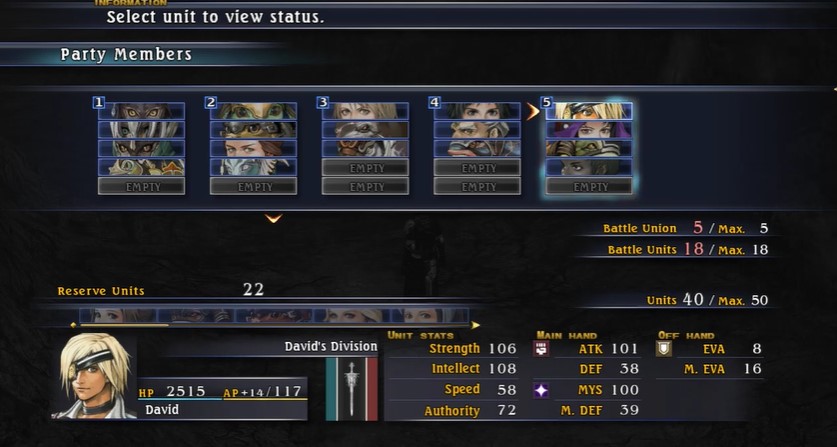
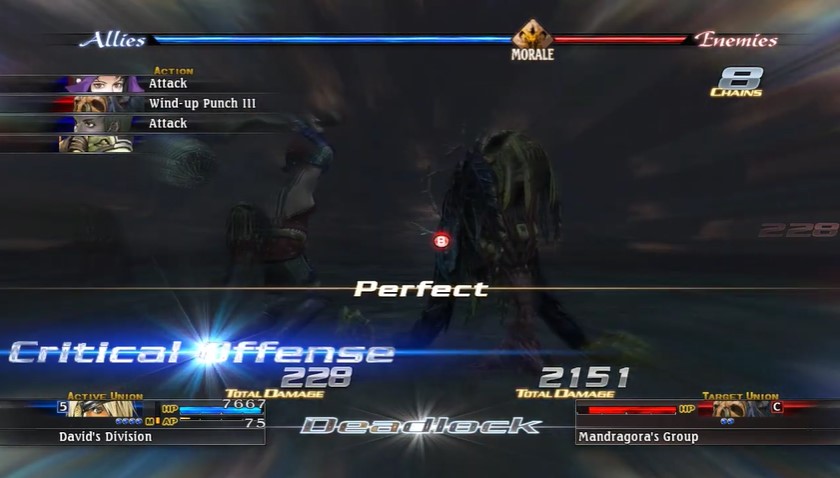
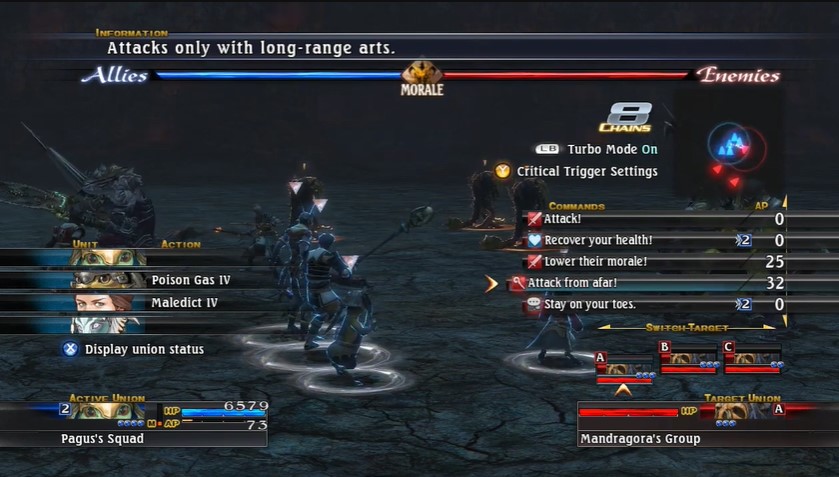
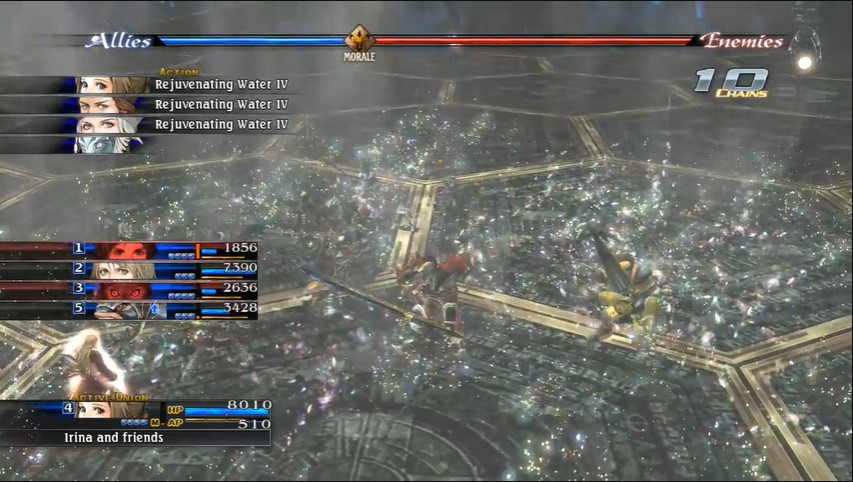
    That’s the Union System. Instead of giving commands to each party member, you organize them into unions (basically mini-teams). You don’t pick every spell or attack. You issue orders to the entire squad, and they act as one.

    This flipped combat into something totally different. Suddenly, you’re less like a hero leading a party and more like a commander directing armies. Positioning, morale, and squad synergy mattered just as much as raw stats.

    For some players, that shift felt groundbreaking. For others—me included when I first tried it—it felt confusing as hell.

    The Flow of Battle – What You Do Before You Even Swing

    The real fight doesn’t start when you press “attack”—it starts in how you set up your unions. As a beginner, this part felt overwhelming to me because you have to think about:

    • Who leads each union (leaders bring skills and arts)
    • Who fills the squad (soldiers add stats and stability)
    • What formation you’re using (offensive, defensive, or balanced setups)

    And then, once you’re in a dungeon or field, you also have to pay attention to enemy groups. Do you charge them head-on? Try to flank? Or split your unions to keep them from surrounding you?

    This whole “prep before action” makes fights feel more like mini war puzzles. If you mess up the setup, the battle feels 10x harder no matter how strong your characters are.

    Commands – The Clear and the Confusing Ones

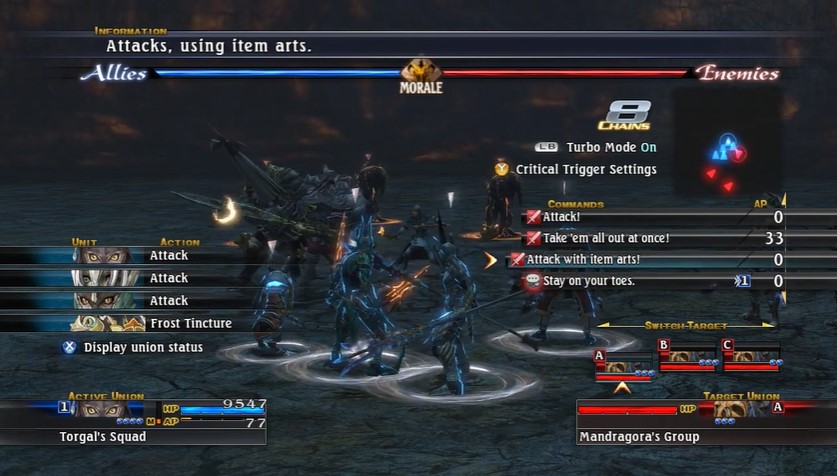
    Once the fighting actually starts, the game gives you commands for your unions. Some are straightforward and easy to understand:

    • Attack with combat arts! → your melee moves
    • Attack with mystic arts! → your spells
    • Heal with remedies! → your items and recovery

    But then you get the vague stuff like:

    • Play it by ear
    • Go all out!
    • Wait and see

    And here’s where the frustration kicks in. As a beginner, I remember just staring at those and going, “What am I actually telling my squad to do?”

    How I Learned to Read the Vague Commands

    After a lot of trial and error (and a few rage quits), here’s how I’ve come to understand those vague orders:

    • Play it by ear → Think of it as “do what makes sense.” The union might attack, heal, or buff depending on the situation. Good for balanced teams.
    • Go all out! → Pure offense. They’ll blow AP, use their strongest moves, and ignore healing. Best for when the enemy’s on the ropes.
    • Wait and see → Defensive or conserving mode. They’ll defend, poke with weak moves, or just save AP. Use it when you’re setting up or trying to survive.
    • Save them no matter what! → Your emergency revive/heal button. Everyone drops offense to bring allies back.
    • Keep your HP up! → Focuses on healing and survival above all else.

    Once I started thinking of them like battle moods instead of strict commands, they made a lot more sense.

    Strategy – When to Use What

    Here’s my beginner advice on using these commands without losing your mind:

    • Use “Play it by ear” for balanced unions that can attack and heal. It gives the AI room to adapt.
    • Use “Go all out” when you know you’re safe or you just need raw damage to push through.
    • Use “Wait and see” to stall or when you’re trying to build AP for big moves later.
    • Use “Save them no matter what” sparingly, because sometimes it wastes turns if no one is actually down.
    • Use “Keep your HP up” when facing tough bosses or multiple enemy unions that can shred you in a turn.

    It’s not perfect—you’ll still sometimes scream at your squad for making dumb choices—but it’s part of the chaos that makes this system fun.

    Wrapping It Up – Why I Still Recommend This Game

    Here’s the truth: The Last Remnant is still hard to understand, even today. If you’re new, the Union System will feel overwhelming and the vague commands will confuse you. But once you get past that hump? The game transforms. Battles feel bigger, strategies feel deeper, and experimenting with different unions actually becomes addictive.

    That’s why I keep it on my phone. I’ve spent hours tweaking squads, retrying fights, and just enjoying the controlled chaos of this system. And yeah, the mobile remaster costs around $19.99, which isn’t exactly cheap. But for me? If I dropped twenty bucks and didn’t play it, that would be the real waste.

    So I keep coming back. And maybe that’s the magic of The Last Remnant: it doesn’t hold your hand, but once you start to get it, you’ll want to stick around and keep learning.

  • The EZRetro plays Handbook: 10 Games to Get You Hooked on the RG28XX

    The EZRetro plays Handbook: 10 Games to Get You Hooked on the RG28XX

    It’s been barely two weeks since I got my RG28XX, and I’ve been completely glued to it. Like a kid with a new toy, I’ve been switching between games non-stop, quickly learning what plays well and what doesn’t. As a JRPG/RPG fan, I naturally gravitate toward that genre. But let’s be real about the PSP emulation: it’s a bit of a hit-and-miss.

    The Allwinner H700 chipset is powerful for a budget device, but most PSP games are a bit laggy, and some are downright unplayable due to the missing analog stick. Plus, the screen’s resolution isn’t a perfect 16:9 match for the original PSP, so you have to scale and fit it to fill the screen, which is a no-no for purists.

    But for someone not too picky about screen size and is more focused on playing something on a small retro handheld, it’s perfect.

    Even with the quirks, limiting recommendations to just RPGs doesn’t do this little handheld justice. It’s given me the chance to play other games, and after two weeks of non-stop play, here’s my top 10 games to try.

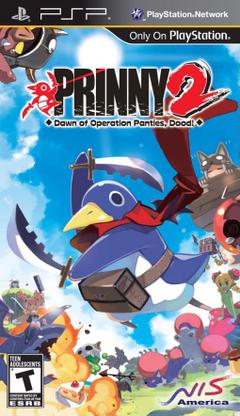
    Prinny 2: Dawn of Operation Panties, Dood!

    psp box art

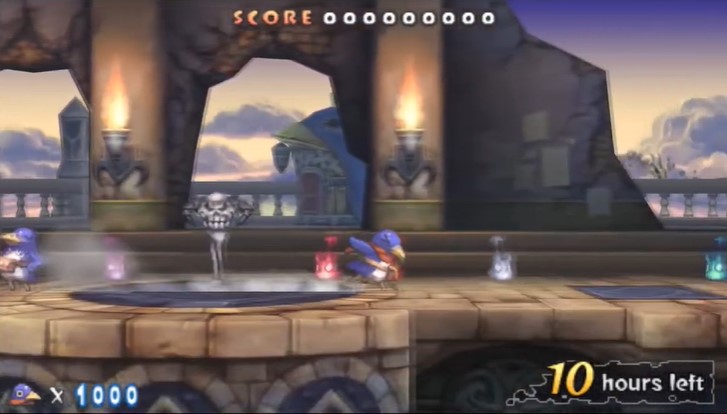
    I’ll be honest—I’ve never been great at platformers on PSP using my phone. The tiny screen, touch overlays, and lack of a proper controller made even basic levels frustrating. But on the RG28XX, everything changed. While the screen is a bit cramped and the buttons are small, I finally beat the first level and a saw Etna inside the castle. It felt like a real win.

    Gameplay-wise, Prinny 2 is a classic side-scrolling platformer, but Nippon Ichi Software adds its signature style. The animations are smooth, and the game’s humor is just absurd enough to keep you laughing even while dying repeatedly. You’ll really end up caring about the side characters and NPCs, dood!

    Fun Fact: Nippon Ichi’s dialogue is so ridiculous and over-the-top that even minor characters steal the spotlight. I’m not usually a fan of side-scrolling platformers, but Prinny 2 had me invested in the story and the laughs, and that’s what matters most.

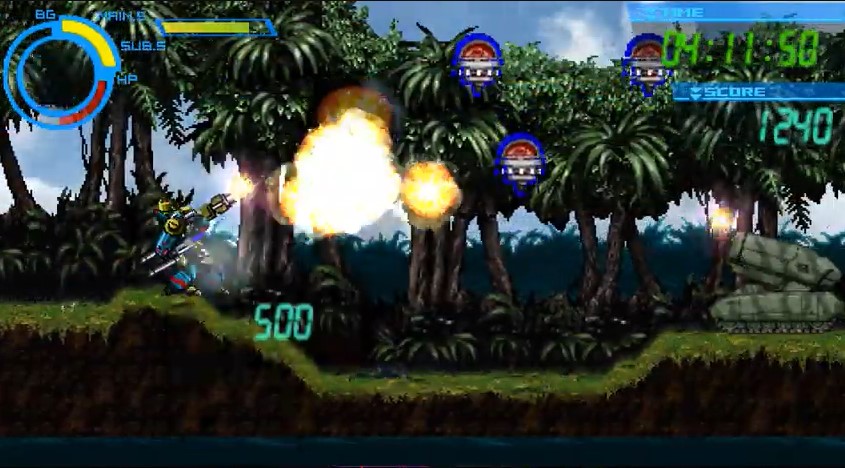
    Kisou Ryuhei Gunhound

    Kisou Ryuhei Gunhound is a side-scrolling mecha shooter that had me glued from start to finish. You pilot your giant robot through futuristic stages filled with enemies and obstacles. The controls on the RG28XX are precise enough that even intense shooting sequences feel smooth.

    The story follows a world under siege, and while it’s not particularly deep, the excitement comes from blasting through waves of enemies and upgrading your mecha. For someone who enjoys mecha and action, this is a perfect handheld experience.

    Fun Fact: Despite its small screen, the RG28XX handles the visuals perfectly, making every boss fight feel as epic as it would on a console.

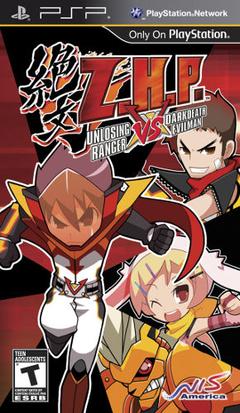
    ZHP: Unlosing Ranger vs. Darkdeath Evilman

    Unlosing Ranger psp box art

    ZHP is one of the quirkiest tactical RPGs I’ve ever played. You lead a colorful, bizarre team through strategic missions filled with absurd story beats and hilarious dialogues. On the RG28XX, it feels surprisingly comfortable, even during long grind sessions.

    The game’s humor is its standout feature, but don’t mistake it for a joke game—the strategy is real. Positioning your characters and timing your attacks can mean the difference between victory and defeat.

    Fun Fact: Some levels are so absurdly funny that you’ll spend more time laughing than strategizing, which is part of the charm. It’s a tactical RPG that doesn’t take itself too seriously.

    Ys vs. Sora no Kiseki

    This one is a little different from the others on my list. Ys vs. Sora no Kiseki is a fighting game that’s a total love letter to fans of both the Trails and Ys series. You get to play through each character’s unique story arc, and you can upgrade their equipment and customize them, which really makes you want to keep playing long after the main story is over. That ability to customize is what gives it some serious replay value.

    Fun Fact: A worldwide release is scheduled for October 10, 2025, on PS4, PS5, Switch, and PC with enhanced features, according to the publisher refint/games.

    TwinBee Portable

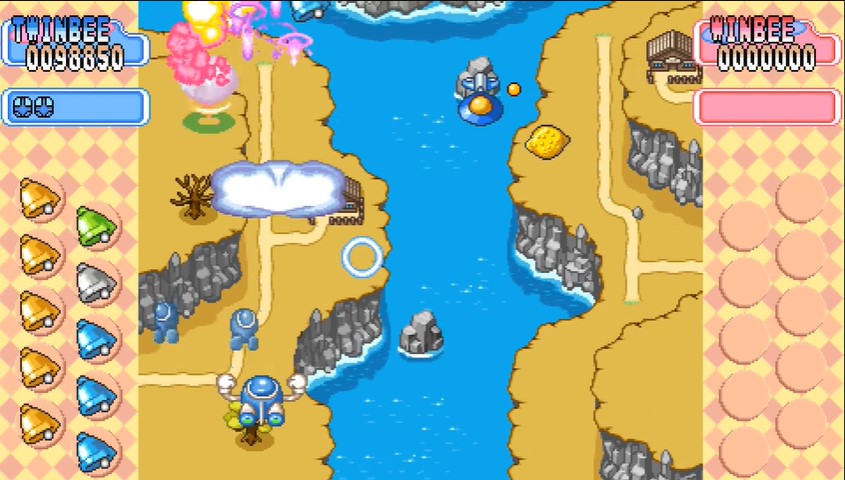
    TwinBee Portable is a vertical shooter with an aesthetic that’s so colorful it’s almost hypnotic. Controlling the ship is straightforward, making it easy to pick up on the RG28XX. The power-ups add a layer of strategy to the simple shooting mechanics, turning it into a deeper experience than it first appears. Since it’s a Japanese-only release, I’m just assuming the story is light and charming, but seriously, who needs a story when what hooked me to this game is the retro vibe and pure nostalgia? It’s the kind of game that’s easy to jump into for a quick session or a longer run.

    Fun Fact: TwinBee’s charm comes from its cheerful music and playful visuals—Konami really nailed that arcade vibe.

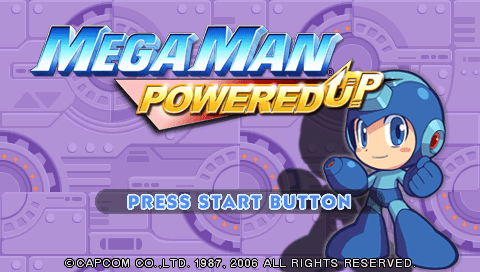
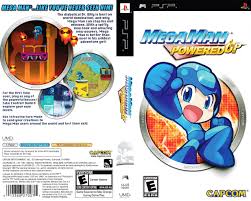
    Mega Man Powered Up

    megaman powered up psp cover

    Mega Man Powered Up is classic Mega Man with upgraded graphics and remade levels. It’s challenging but fair, and controlling the blue bomber on the RG28XX felt surprisingly natural. The satisfaction of finally defeating a tough boss never gets old.

    The story is minimal but fun, staying true to Mega Man’s roots as a robot hero battling evil. The level design is clever, and each stage has its own personality.

    Fun Fact: You can create and share your own levels, making it a mini creative outlet on the go.

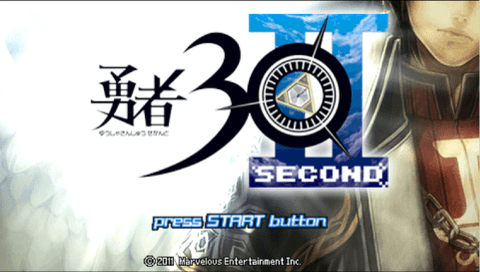
    Yuusha 30 Seconds

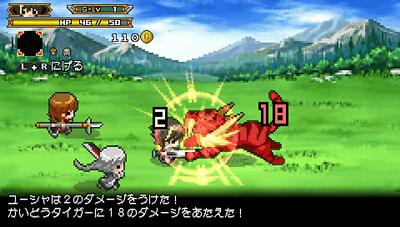
    Yuusha 30 Seconds is a fast-paced mini-RPG where battles and decisions happen in short, exciting bursts. Perfect for handheld play, it keeps you on edge while still being strategic. The story follows a hero who must make quick choices to save their world, making every second count.

    The gameplay of Yuusha 30 Seconds is what truly makes it a standout. Back when it was released, the concept was totally unique, and it still feels incredibly fresh today. The core loop is simple: you have 30 seconds to save the world. This crazy-fast timer forces you to make quick, strategic decisions. Every second counts as you run to level up, buy equipment, and defeat the final boss. It’s a genius concept that turns the traditional RPG grind on its head and keeps every moment filled with high-stakes action.

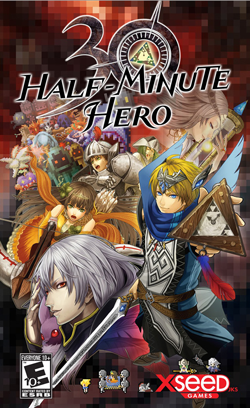
    Fun Fact: Another title, Half-Minute Hero, was also released for western audiences on PSP. Although that’s a great game, I would still recommend hunting down an English translation patch for Yuusha 30 Seconds because the Japanese release is more challenging and has more content.

    Dissidia 012 Duodecim (RPG Mode)

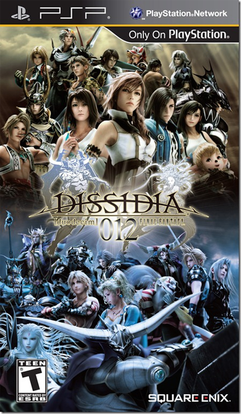
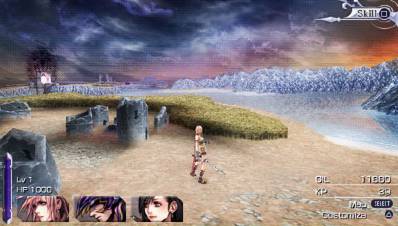
    This one is a bit different. I play Dissidia 012 Duodecim in RPG Mode. There’s an option in the settings to switch from the usual action style to a more tactical RPG-style battle where you input attacks as the battle takes place.

    While I’ll be honest, I usually play this on PPSSPP on my phone since the touch controls and ability to set hotkeys make the game more fluid for me, the RG28XX still offers a great experience in RPG Mode. Even with the controls being a bit cramped and the absence of an analog stick, it’s a perfect fit for this little handheld.

    Fun Fact: Each character has a fully voiced story, and the massive cast includes heroes and villains from almost every major title in the series.

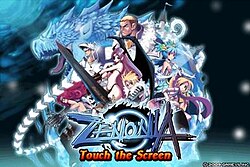
    Zenonia

    Zenonia is a classic hack-and-slash RPG that’s perfect for handheld sessions. You explore dungeons, fight enemies, and uncover a story of revenge and justice. The controls feel great on the RG28XX, making combat smooth and satisfying.

    The story is simple but effective, with multiple endings that encourage replayability. I love how easy it is to pick up and play without losing any of the RPG charm.

    Fun Fact: Zenonia was so popular that it eventually found its way to mobile devices, becoming one of the early success stories for JRPGs on the app store.

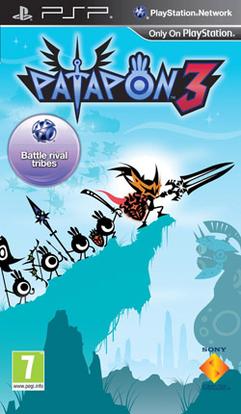
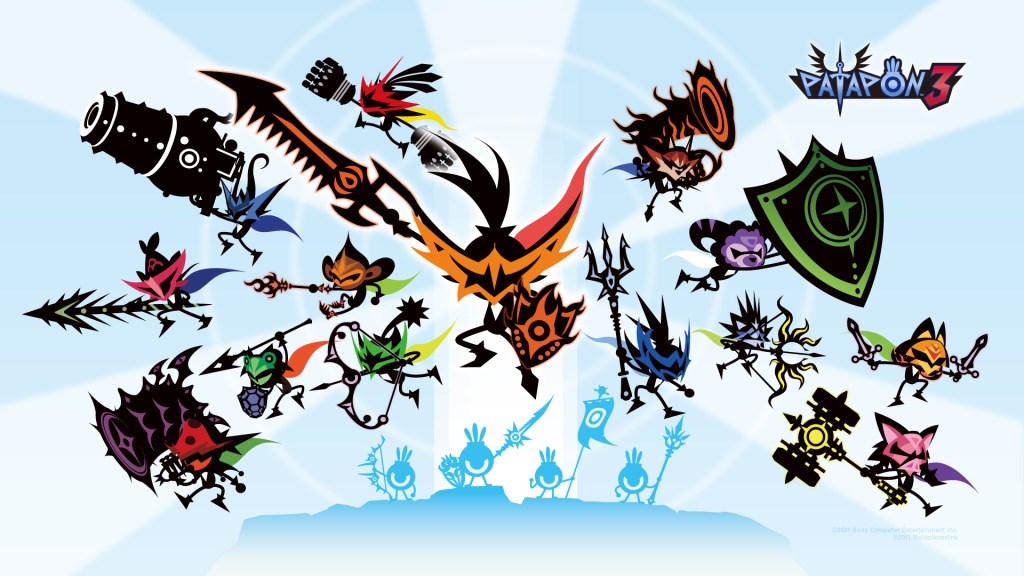
    Patapon 3

    Patapon 3 perfectly blends rhythm and strategy. You command a tiny Patapon tribe in battles that are essentially musical performances. The gameplay is simple, but timing your beats correctly feels incredibly satisfying.

    The story follows your tribe as they journey to conquer enemies and survive in a whimsical world. It’s easy to lose track of time because the rhythm-based gameplay is so addictive.

    Fun Fact: The unique rhythm-strategy gameplay of Patapon 3 has a rich history. The first game introduced the unique concept of commanding a tribe with drumbeats. Patapon 2 built on that with the introduction of hero units, new classes, and a multiplayer mode. Patapon 3 then evolved the formula even further with a persistent online focus, a more detailed leveling system, and an even deeper focus on the central hero character.

    Final Thoughts

    This list proves that the RG28XX can handle far more than just RPGs. From humor and platforming to epic storytelling and rhythm, this little handheld really delivers, and I can’t wait to see what other hidden gems I discover next.

  • Wizardry Variants Daphne: A Dungeon Crawler Worth Getting Lost In

    Wizardry Variants Daphne: A Dungeon Crawler Worth Getting Lost In

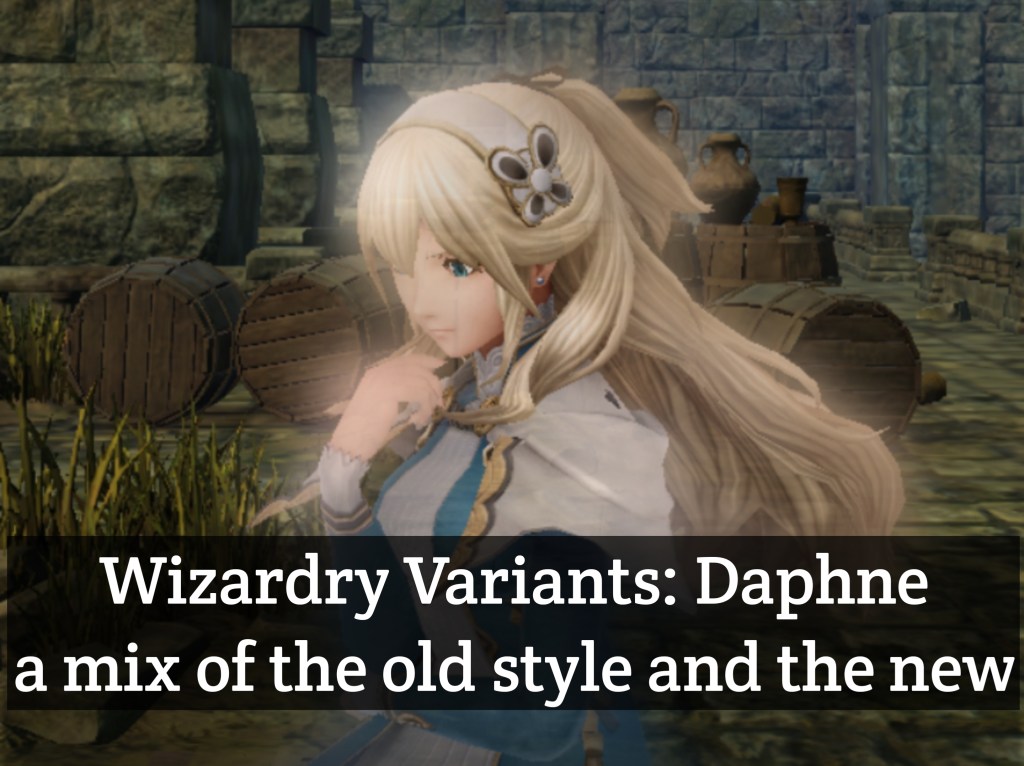
    Look, I know I said I was going to do daily blogs on different games, but sometimes you stumble onto one title that grabs you so hard you can’t let go. That’s exactly what happened with Wizardry Variants Daphne.

    A little Wizardry history

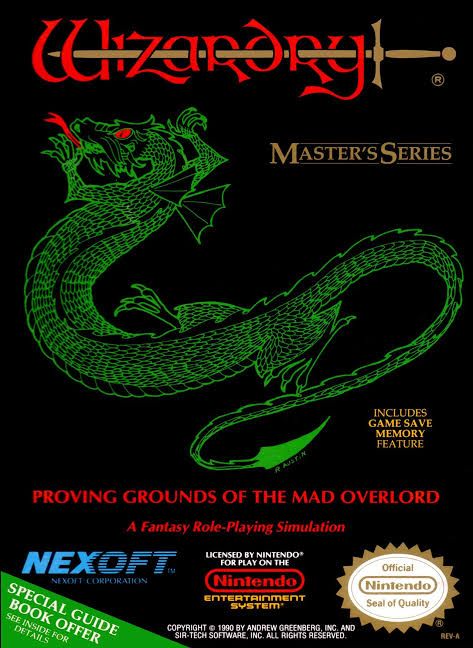
    Wizardry: proving Grounds of the mad overlord NES box art

    The Wizardry series goes way back, starting in 1981 with Proving Grounds of the Mad Overlord, created by Andrew C. Greenberg and Robert Woodhead for the Apple II. It’s considered one of the godfathers of the dungeon crawler genre, and over the years it spawned a full line of mainline entries all the way up to Wizardry 8 in 2001.

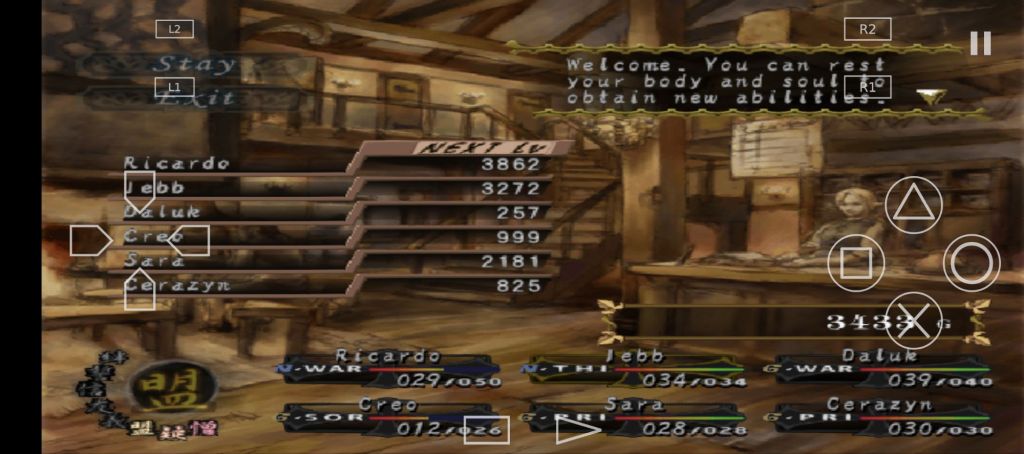
    Wizardry: Tale of the forsaken land running on nethersx2 on mobile

    For me, though, my Wizardry era really came alive on the PS2 with Wizardry: Tale of the Forsaken Land (2001). I played that game heavily, sinking countless hours into its cold, oppressive world and brutal dungeon systems. It had everything I loved about classic Wizardry but with the kind of atmosphere only a console RPG could deliver back then. That game kept me hooked for years, and honestly, I still think it’s one of the best dungeon crawlers on the PS2.

    So when Wizardry Variants Daphne showed up on mobile, it wasn’t just nostalgia kicking in—it felt like a natural continuation of what hooked me back in the PS2 days, but adapted into a modern format that works perfectly on mobile.

    And honestly, I was surprised this game even existed. Since the marketing for it was so low, it barely shows up in the Play Store as a recommendation. I had to manually type Wizardry for it to pop up, and what I found was way better than I expected.

    Story and Atmosphere

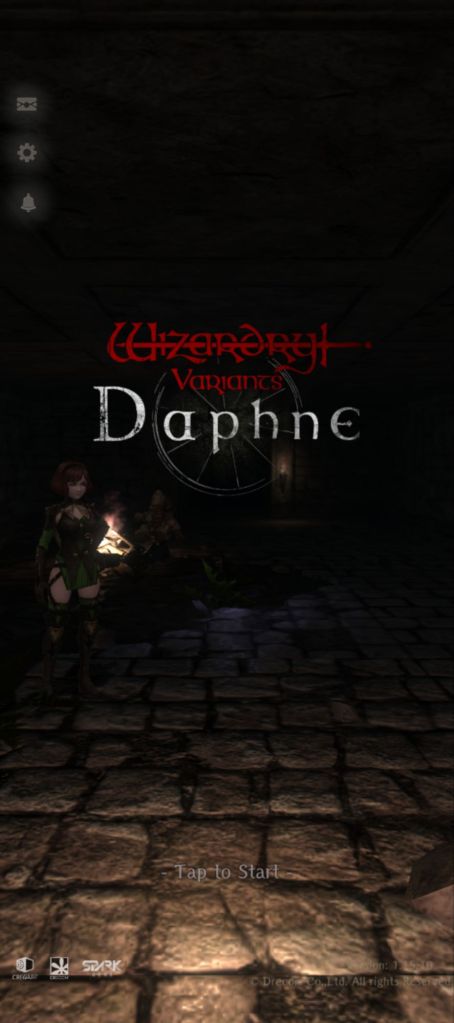
    Wizardry variants title screen

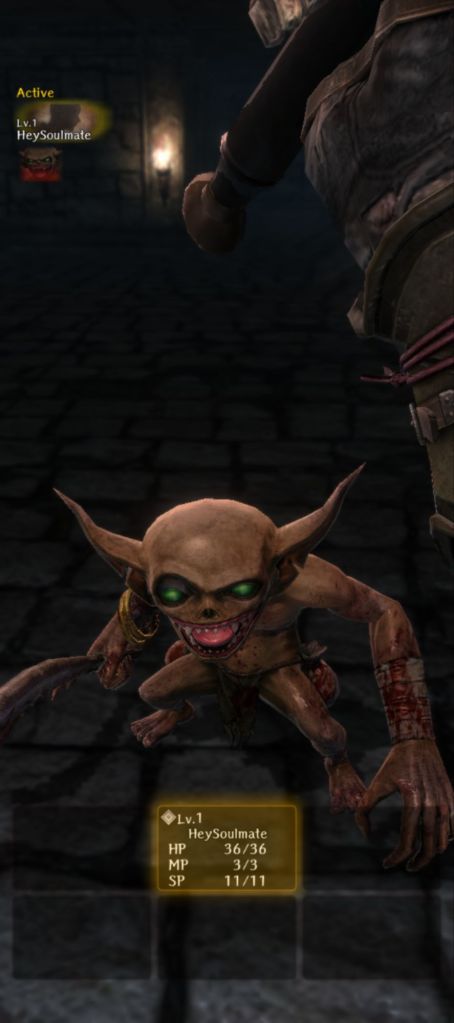
    The game opens with you in the middle of a dungeon. As you move through the maze, you start to sense an ominous presence following you. “Following” might be the wrong word—it feels more like stalking. Eventually, you get cornered and are forced into your first monster battle against two imps.

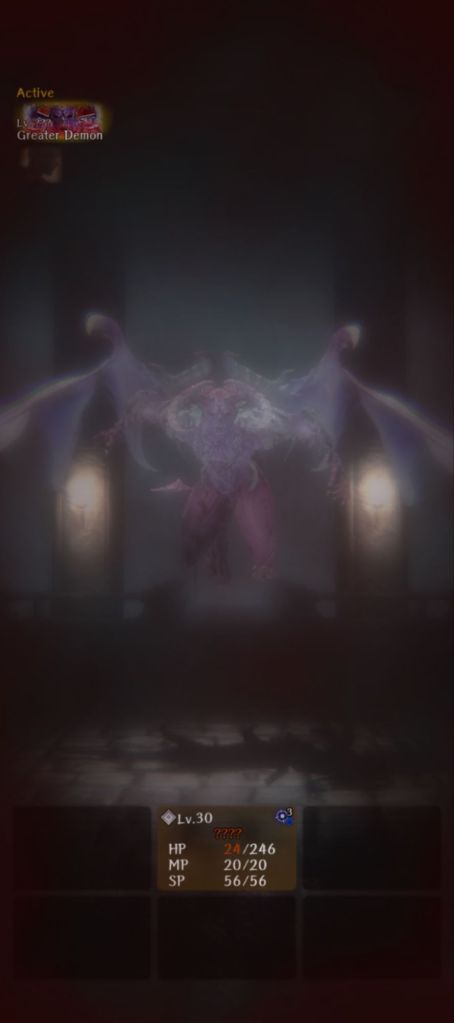
    Fight with the greater demon, the monster stalking you in the abyss

    Here, the game introduces the battle system, and what really clicked for me is how everything is shown from your personal point of view. Every sword swing, every spell, every strike your party members make—it’s all presented as if you’re right there on the battle line. Simple idea, but it works beautifully in portrait mode for a mobile dungeon crawler.

    Eventually, you manage to finish off the imps, but you’re left with nowhere to run. A locked door blocks your path, and behind you, that flying monster stalks closer. With no other choice, you fight back.

    Fighting one of the imps blocking your path to escape

    Of course, the battle doesn’t go in your favor. You fall, and what follows is one of the coldest, most memorable opening sequences I’ve seen in a mobile RPG. Time speeds up, your body rots away, monsters strip your gear, and all that’s left behind are your skeletal remains.

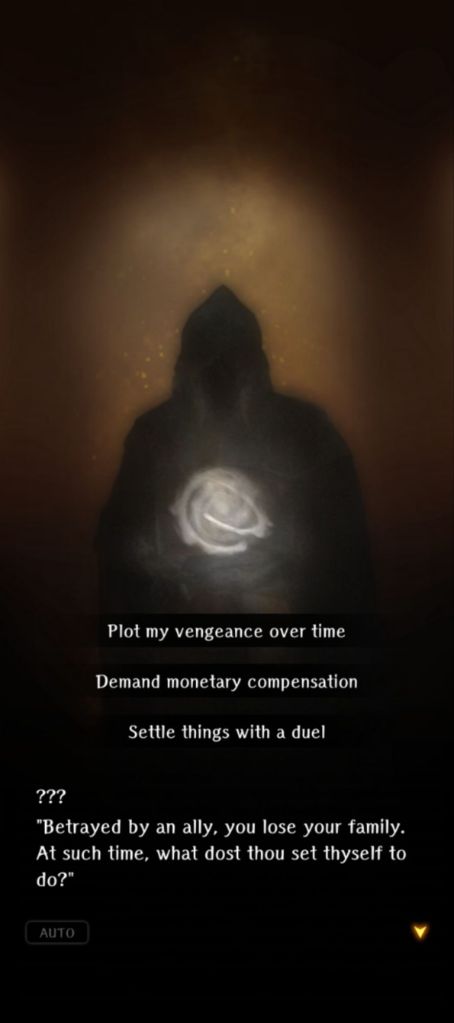
    Then, a hooded figure appears. I won’t spoil the dialogue here—it’s something you should really experience firsthand—but he begins asking you questions. Based on your answers, he recommends stats and an alignment, essentially setting the foundation for your character build. The whole sequence is immersive, eerie, and backed by chilling music that nails the mood perfectly.

    Character Creation and Progression

    Character creation gives you a set of questions to answer from 3 choices.

    When you wake again, you find that you’ve taken the form of a ghul—an undead, zombified humanoid monster. Not long after, you meet an apparition who seems surprised to see a ghul that can still speak. Eventually, she asks if you’re human, and introduces herself as Lulunarde, a legendary adventurer who perished in the abyss and now roams as a spirit.

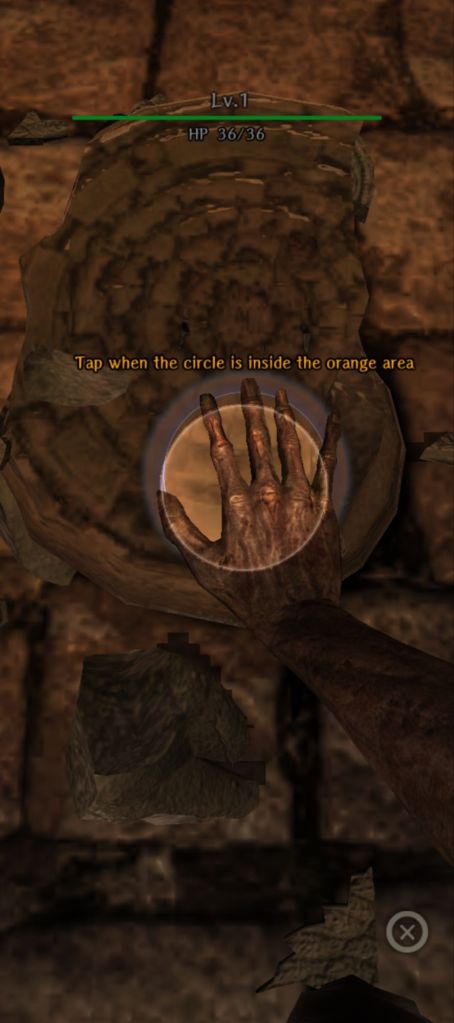
    Introducing the right hand of insight. A player skill that restores save point statues inside the maze

    She guides you to a broken teleport statue and teaches you about your main ability: the Right Hand of Insight. This lets you restore these statues, opening blocked paths and giving you a way to navigate further into the abyss.

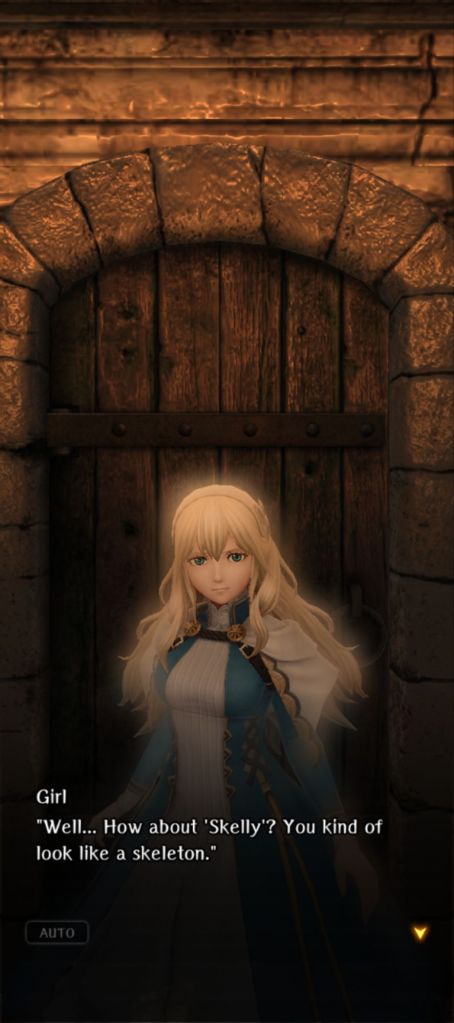
    Your first companion Lulunarde.

    Before leaving, she asks your name. If you choose not to name yourself, she even suggests a few quirky options of her own. Afterward, she reveals her name and hints at a deeper backstory—one I’m sure will unfold more as you progress.

    From there, you push deeper, clearing monsters, looting broken weapons and armor, and collecting bones from fallen adventurers. These bones (and junk loot) are more important than they first appear—they tie directly into the game’s gacha system.

    Finally, you find the exit and step outside into the world.

    The Town Hub

    The home screen is where you can access different locations on the world

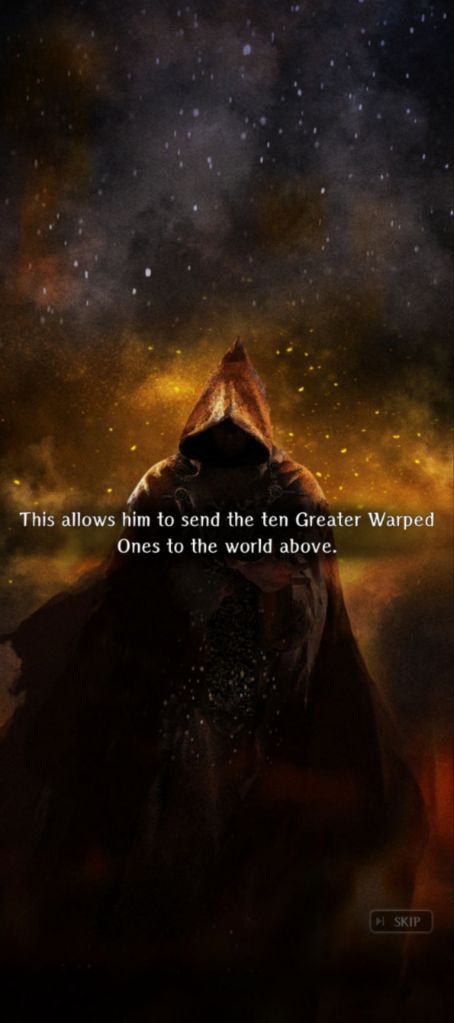
    Once outside, you get a short exposition cutscene explaining the origins of the abyss. From there, you’re brought to the home menu, which serves as the central hub where you prepare between dungeon runs.

    Here’s a quick breakdown of each location:

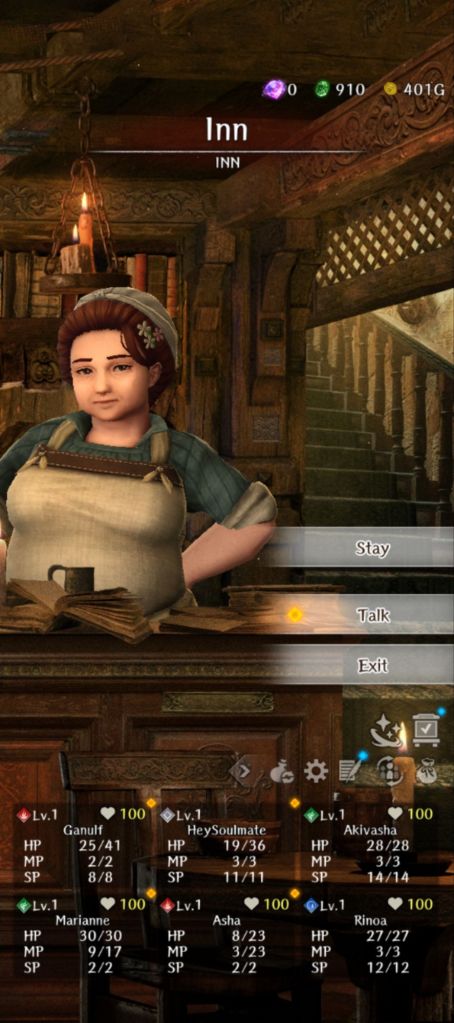
    The Inn

    The inn is where you rest after a dungeon run. This is also where you level up your characters’ skills and prepare your party for the next dive.

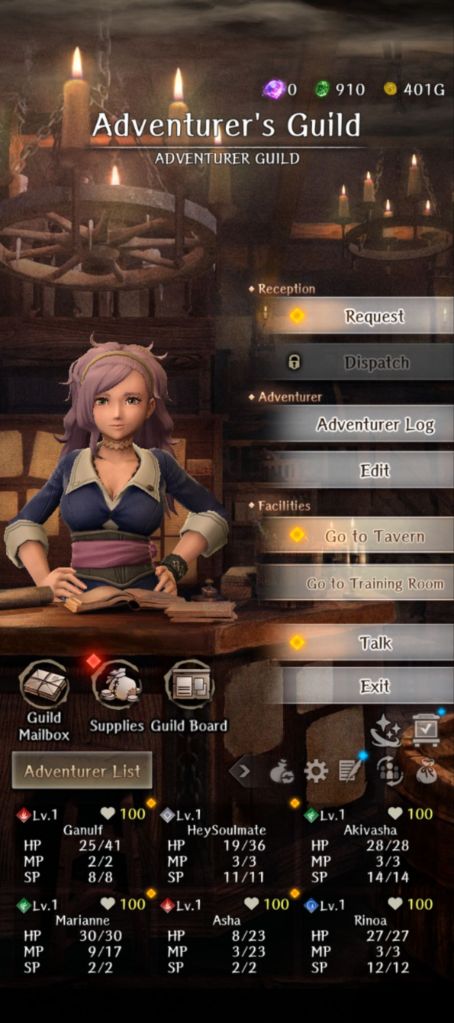
    Adventurers Guild

    The guild is where you accept quests, recruit new members, and form or train your party. It’s the beating heart of your adventuring team.

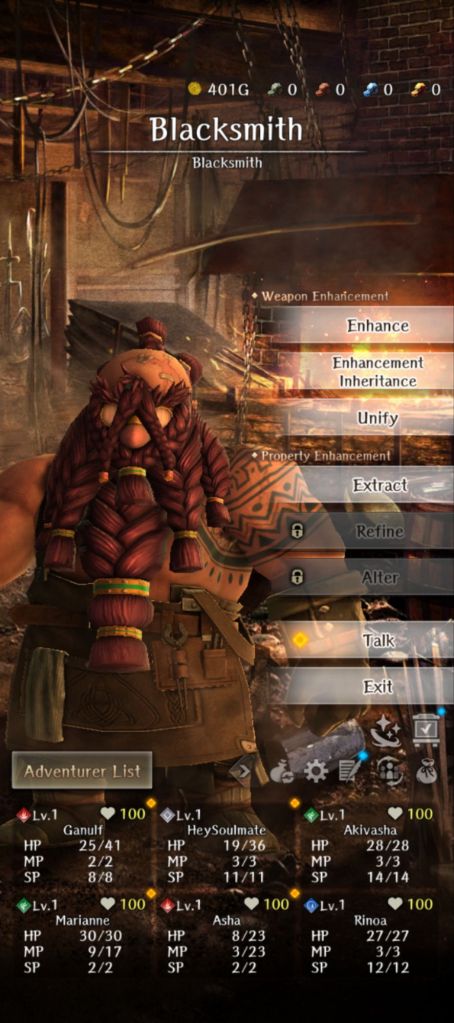
    The Blacksmith

    The blacksmith is where you refine and upgrade your weapons and armor. You don’t buy gear here—everything you use comes from dungeon drops or through the gacha system that transforms broken equipment into usable pieces. The blacksmith’s role is to take what you’ve earned and make it stronger.

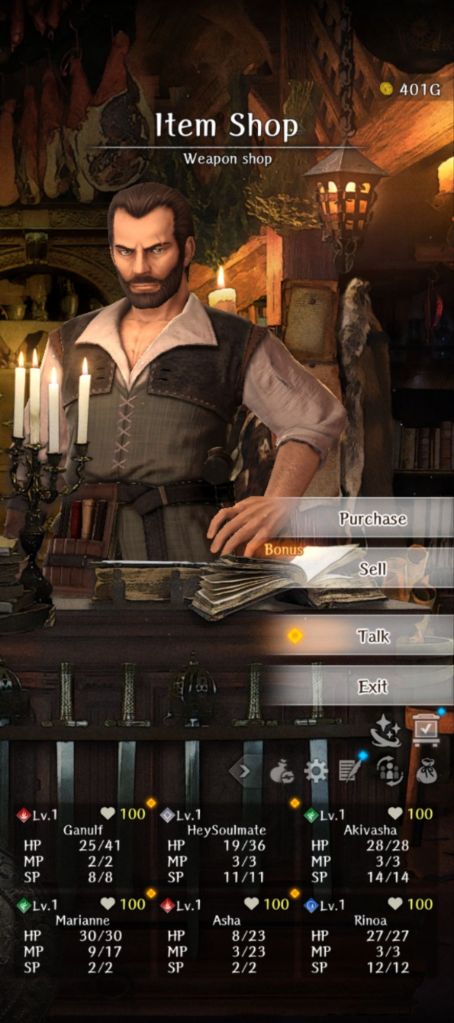
    The Item Shop

    The item shop is where you handle your consumables and extra gear. You can buy potions and support items for dungeon runs, but it’s also the place where you sell off weapons and armor you don’t need.

    The Ruins

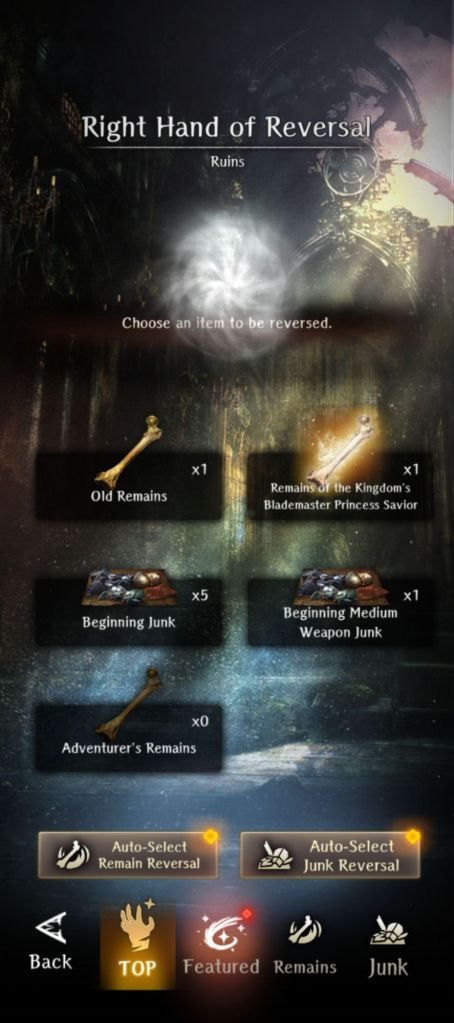
    This is where Wizardry Variants Daphne puts its unique spin on the gacha system. Instead of pulling with tickets or premium currency, you use your Right Hand of Resurrection to raise adventurers from the bones you’ve gathered. Bones are tiered—legendary bones can resurrect legendary adventurers.

    The same goes for weapons and armor. All that junk loot you grab? It gets transmuted here into usable equipment. It’s a clever mechanic that makes the gacha feel like part of the game’s world, rather than something bolted on.

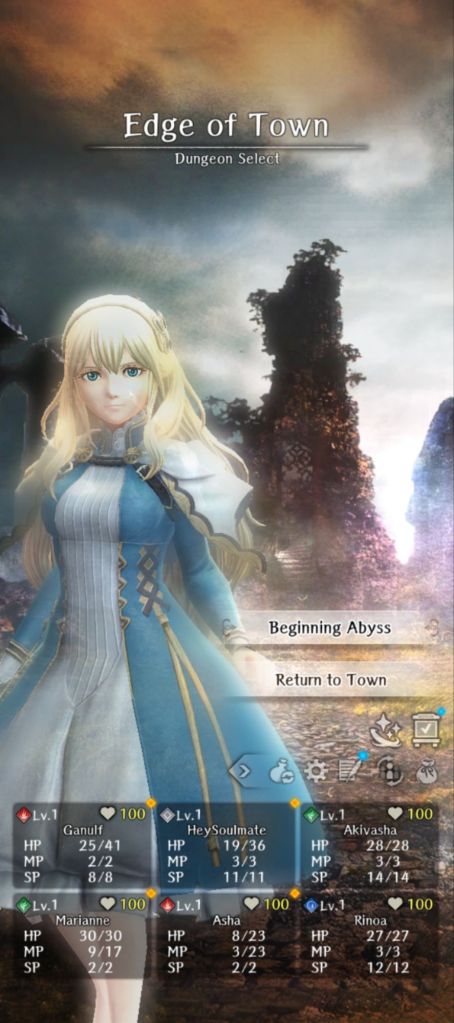
    The Edge of Town

    Finally, the edge of town is your gateway back to the abyss. Once your party is set, your gear prepared, and your quests accepted, this is where you head out for another run.

    Final Thoughts

    I’d love to dive deeper into how the abyss itself plays out, but honestly, my time with it so far has been hampered by some nasty connection issues. The game would run fine for a few minutes, then suddenly freeze. At first, I thought it was my phone, so I tried restarting and logging back in, but the problem kept coming back. Eventually, it reached the point where it would freeze just seconds after I got back in, which was maddening.

    I already sent feedback to the devs through the Play Store, and I really hope they address it soon—because this game deserves to run smoothly.

    That said, connection hiccups aside, Wizardry Variants Daphne has everything I want in a modern dungeon crawler. The grim atmosphere, the clever twist on gacha, the haunting story setup—it’s all there. For me, it’s an easy 10/10 and a must-play for anyone who’s into dungeon crawlers or wants something darker and more immersive on mobile.

  • Why I Keep Coming Back to Fire Emblem Heroes

    Why I Keep Coming Back to Fire Emblem Heroes

    There are games you play once and move on from, and then there are games you always find yourself coming back to, no matter how casually. For me, Fire Emblem Heroes falls in that second category. I don’t grind every event or chase every new unit, but even after all these years,

    I still return to it every now and then. To explain why, I need to go back a bit—back to where my connection with Fire Emblem really started.

    The spark that got me hooked

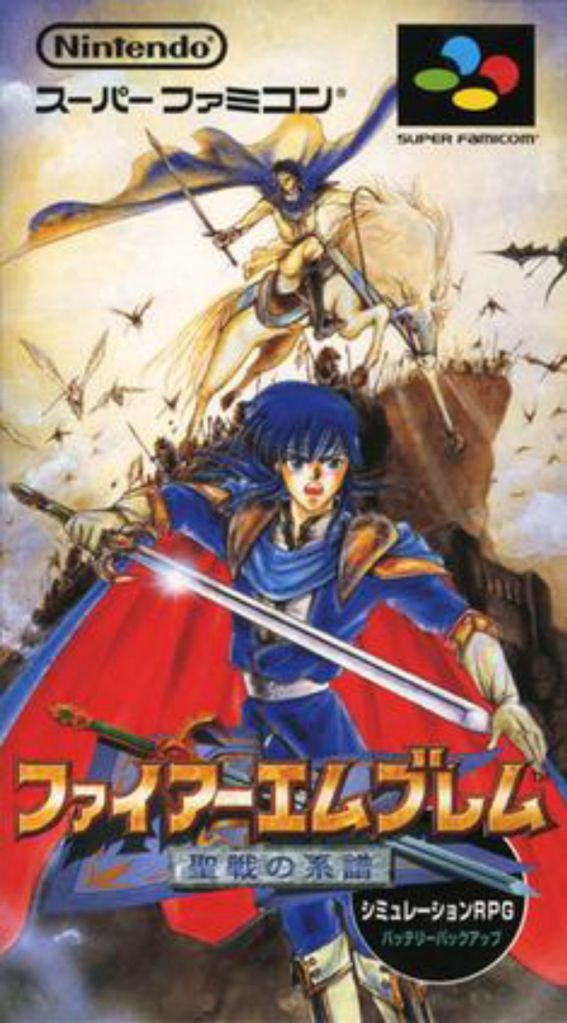
    Fire emblem 4 Genealogy of the holy war Snes box Art

    When Fire Emblem Heroes first came out back in 2017, it immediately caught my attention. I went out of my way just to find a way to download it.

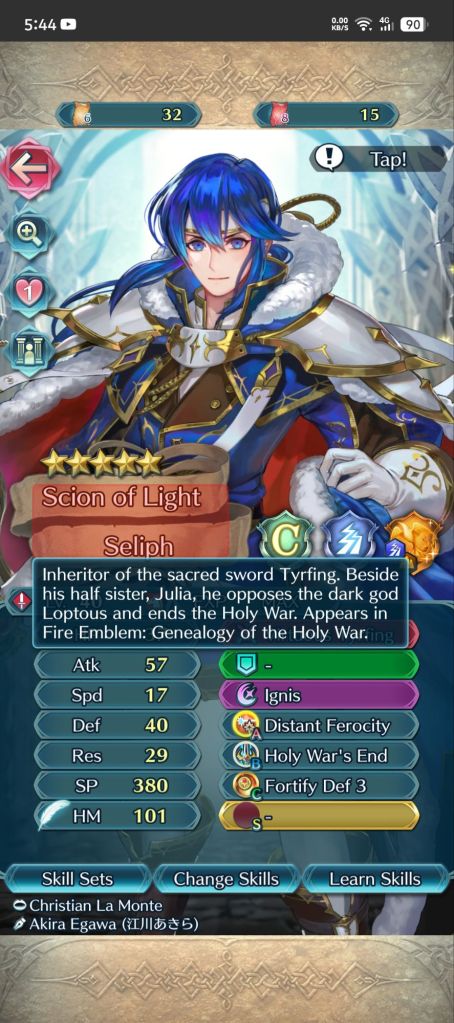
    Seliph, one of the main characters in fire emblem 4 (image from fire emblem heroes)

    Being a longtime fan of the series, it felt like something I couldn’t miss out on. My history with Fire Emblem goes way back to childhood with Fire Emblem 4, which many still call one of the greatest entries in terms of story. But for me, the moment I really got invested in the franchise was during my college years.

    My college fire emblem grind

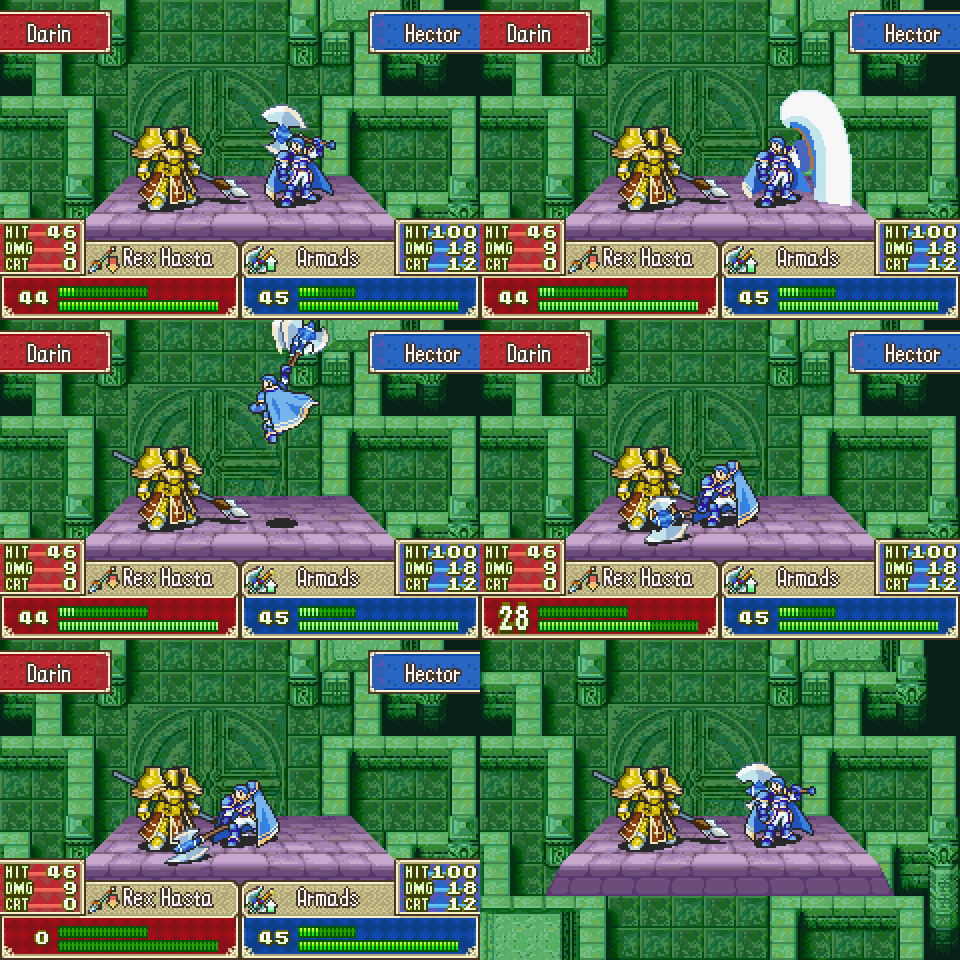
    Fire emblem the blazing blade Hector gameplay (GBA)

    I still remember sitting in my dorm room, skipping out on social gatherings, and just spending hours on my laptop running GBA Fire Emblem games through an emulator. Weekends would vanish as I replayed campaigns, mixed and matched different character supports, and dove into their backstories. That was my comfort zone—me, my desk, and the world of Fire Emblem.


    The one that almost ended it all

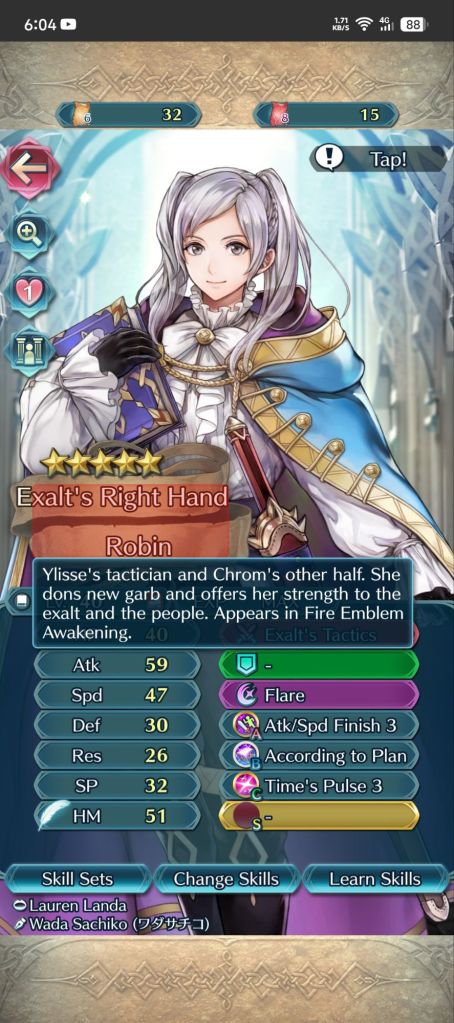
    Robin, female version of protagonist in fire emblem awakening (fire emblem heroes)

    Of course, I missed a few entries along the way, like Path of Radiance on the GameCube, since I never owned one. But I was always reading up on the series, watching how things were unfolding. When news spread online that Fire Emblem Awakening was in development, I followed it closely.

    What stood out to me was that this game was being built as a “make or break” moment for the franchise. The team basically poured everything into it, and in my opinion, the game is both approachable for newcomers and and exceeded expectations for old fans like myself.

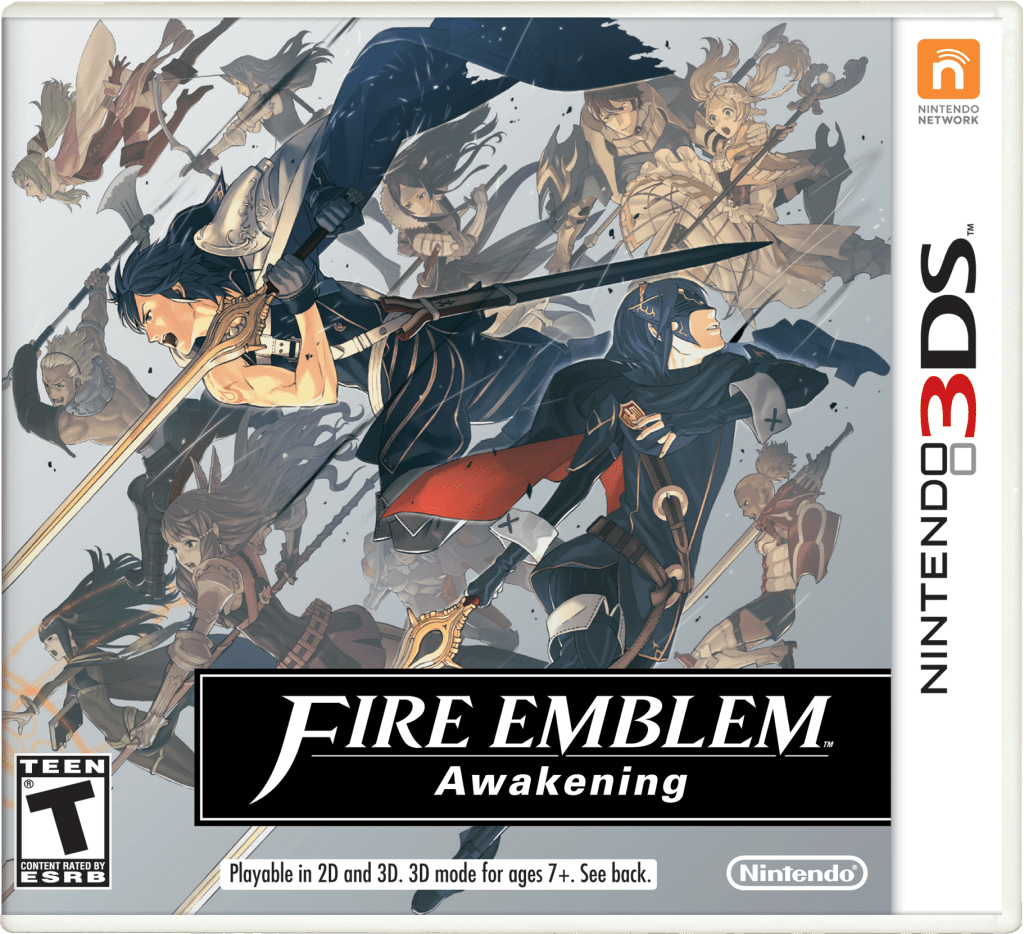
    Fire emblem awakening 3ds box art

    When Awakening finally dropped on the 3DS, the reviews were incredible. Never in my life had I wanted a 3DS so badly—but being a fresh young adult, money was tight.

    Handhelds were expensive, I was just starting to work, and whatever spare cash I had usually went into my side hobby of collecting PSPs. (For the record, I had the fat PSP, the 2000, and my most painful purchase ever—the PSP 3000 that I bricked within a day trying to install custom firmware. If you know, you know.)

    Finally getting to play awakening

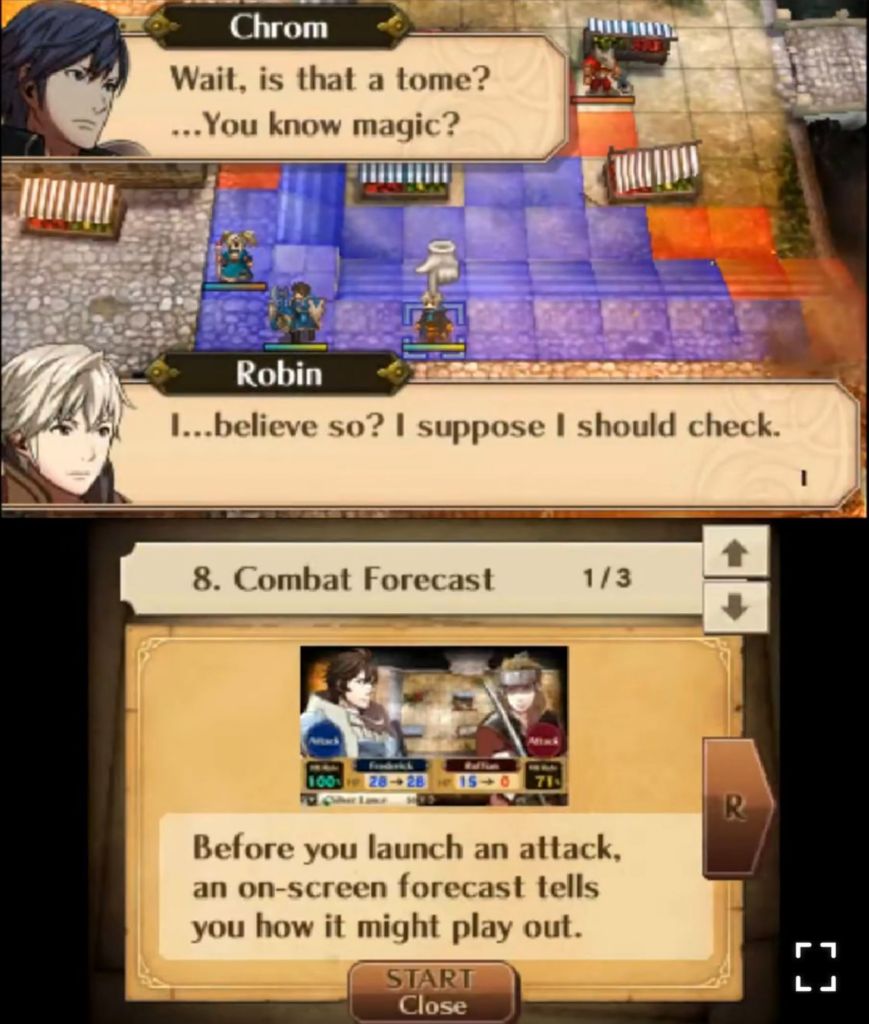
    Fire emblem awakening gameplay (citra emulator)

    It wasn’t until years later, when the Citra emulator became stable enough, that I finally got to play Awakening on mobile. Sure, it was laggy, it crashed a lot, and cutscenes were a gamble—but I pushed through and loved every second of it. That led me down the line to Fire Emblem Fates and Echoes, and by then, my love for the series had reignited in full.

    Enter Fire Emblem Heroes

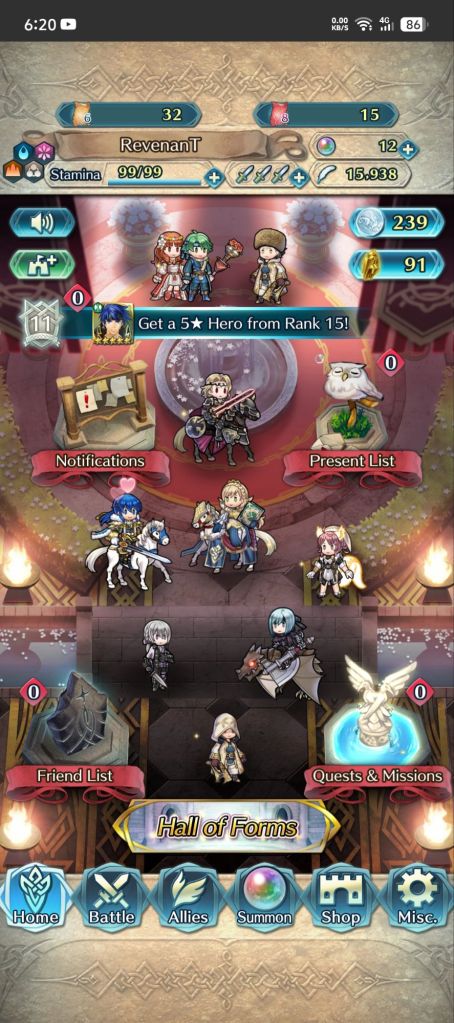
    Fire emblem Heroes home screen

    So when Fire Emblem Heroes launched, I had to try it. The timing wasn’t great for me—I had spotty internet, and the game requires a stable connection—but even then, I was hooked. The story chapters pulled me in, and the gacha system felt surprisingly fair.

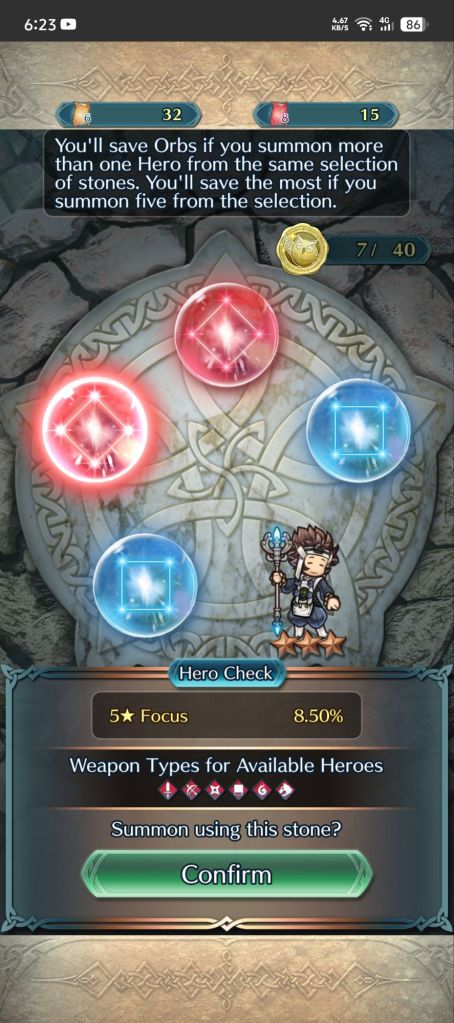
    Fire emblem heroes summon screen

    Summoning only costs 5 orbs, and if you go for a full five-pull on a banner, the cost per pull actually drops. On top of that, the game gives out free summon tickets and even first-pull freebies on banners. It never felt like it was pushing me to spend, which is rare for a mobile game (and believe me, I’ve played a lot of mobile gacha games).

    Why I’m still here after 8 years

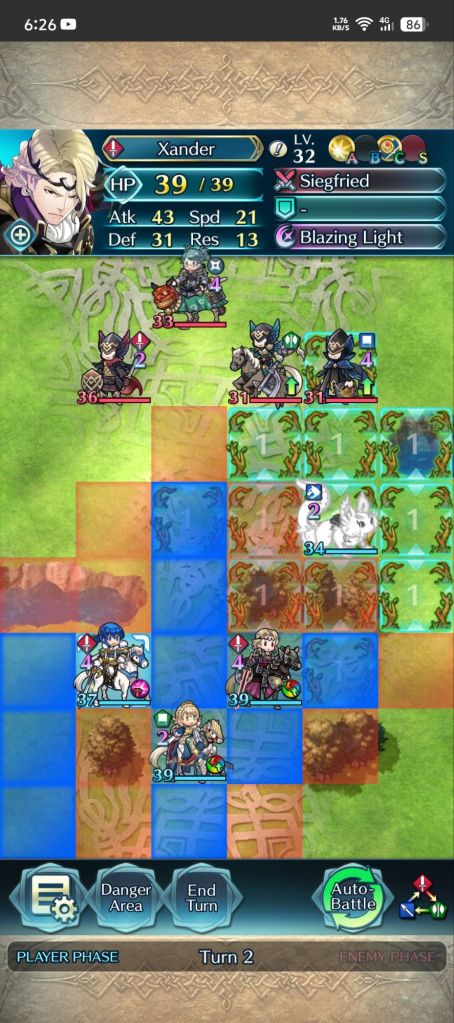
    Fire emblem heroes map battle screen

    Now, don’t get me wrong—Heroes still has its challenges. Some maps definitely require you to know your tactics, and yes, there’s always the option to whale and max out top-tier characters. But I’ve been playing casually for over eight years now—since February 2017, without spending a single cent—and I’m still enjoying it.
    Sure, I don’t get to pick the heroes I want to have (I’m looking at you Hector) but it really doesn’t matter since I love the franchise and getting low tier side characters from the fire emblem universe is like seeing a long lost friend after he’s been gone for a long time.

    A Love letter to Fire Emblem fans

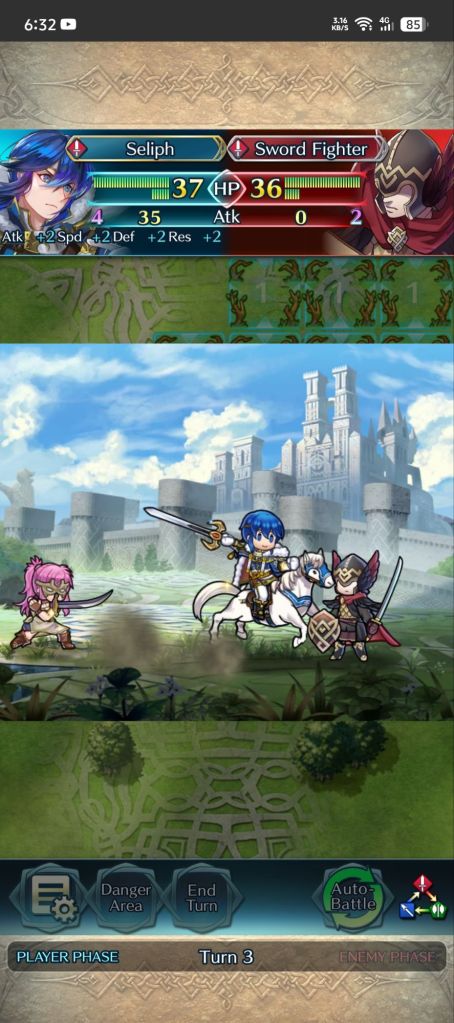
    Seliph and Marissa battle screen (Fire Emblem Heroes)

    For me, Fire Emblem Heroes feels like a love letter to fans. It celebrates the series’ history, keeps things fresh with constant updates, and yet never punishes you for just playing at your own pace.

    I don’t grind every event, I don’t chase every new banner, but I keep coming back. And honestly, I see myself playing casually until the servers shut down—or until the day I can’t pick up my phone anymore, whichever comes first.

  • Mecharashi Review: The Best Front Mission Mobile Game Alternative in 2025

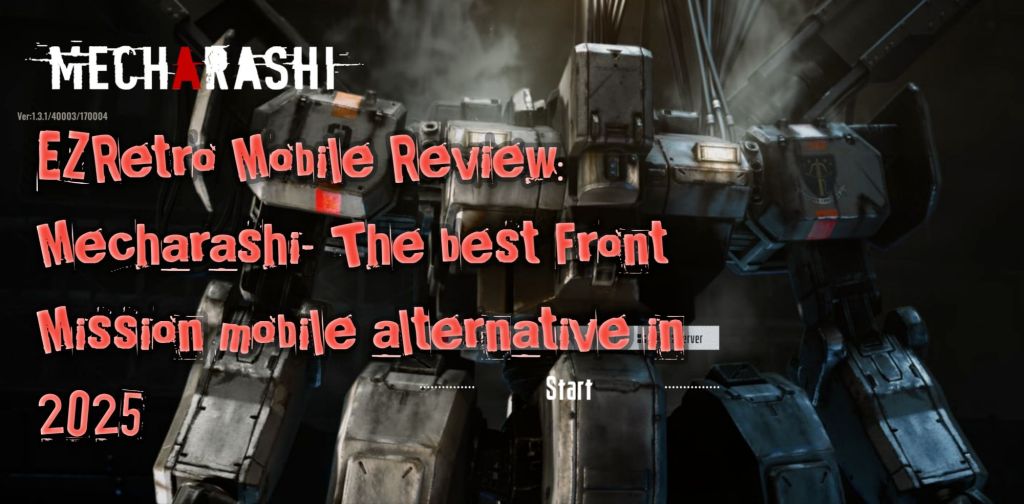
    Looking for Front Mission mobile games that deliver tactical mech combat? Mecharashi (Metal Storm) stands as your only option for authentic Front Mission-style gameplay on mobile devices today. This tactical RPG mobile game brings the legendary part destruction system to your phone.

    Why Square Enix Cancelled Front Mission 2089: Borderscape Mobile Game

    Square Enix announced Front Mission 2089: Borderscape in 2022, partnering with BlackJack Studio to bring the beloved mech strategy game franchise to mobile platforms. Front Mission fans celebrated worldwide. Finally, we’d get tactical mech combat with the series’ signature part destruction system on our phones.

    Then Square Enix pulled the plug in October 2022. The company terminated the deal without providing detailed public explanations, leaving Front Mission mobile game fans empty-handed once again.

    From Cancelled Front Mission to Mecharashi: BlackJack Studio’s Mobile Mech Game

    BlackJack Studio didn’t waste their work. The developer transformed their Front Mission mobile project into Mecharashi, launching it in Japan in October 2024 through HK TenTree Games. Square Enix fought back with a copyright lawsuit in March 2025, claiming BlackJack illegally used Front Mission assets in their new mobile strategy game.


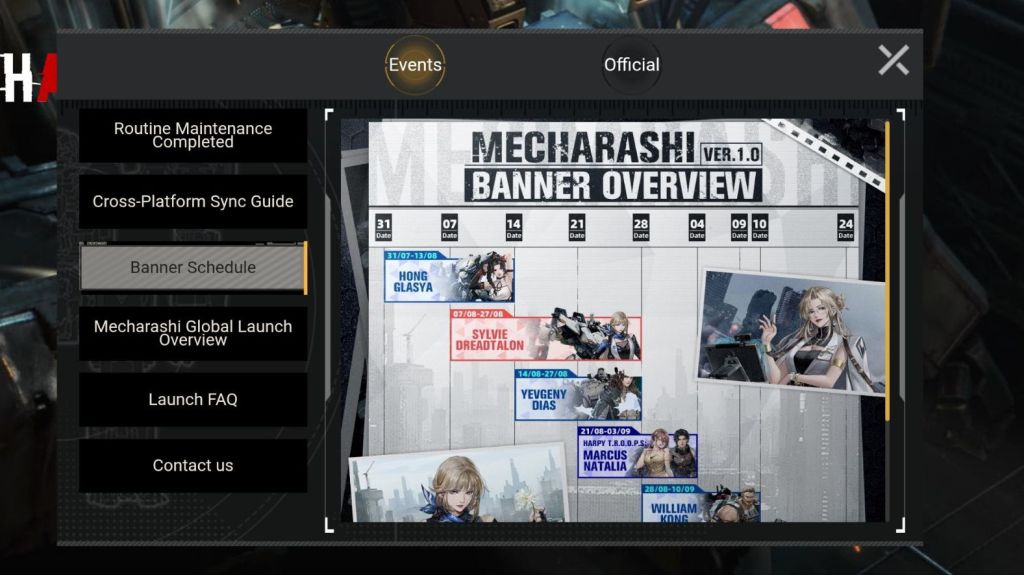
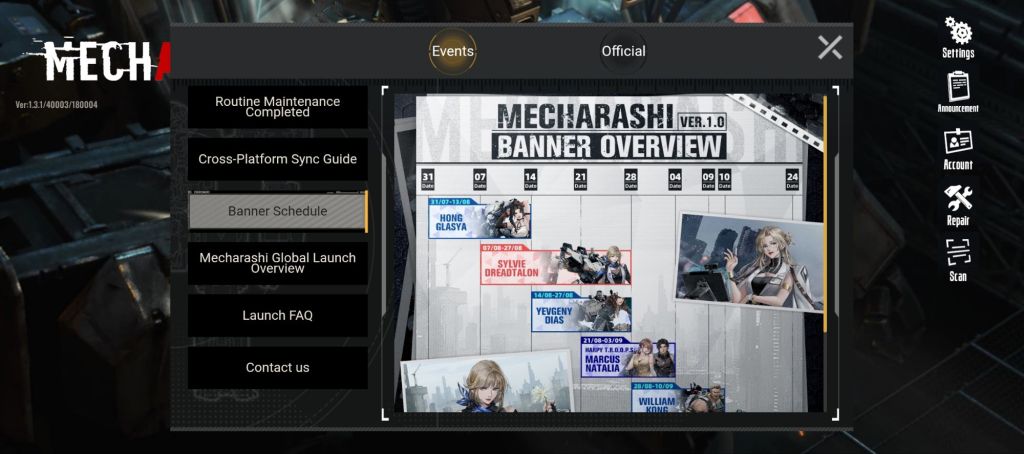
    The legal drama settled by May 2025, and Mecharashi launched globally on July 31, 2025, after hitting 1 million pre-registrations.

    Mecharashi Gameplay: Part Destruction System Like Front Mission Mobile

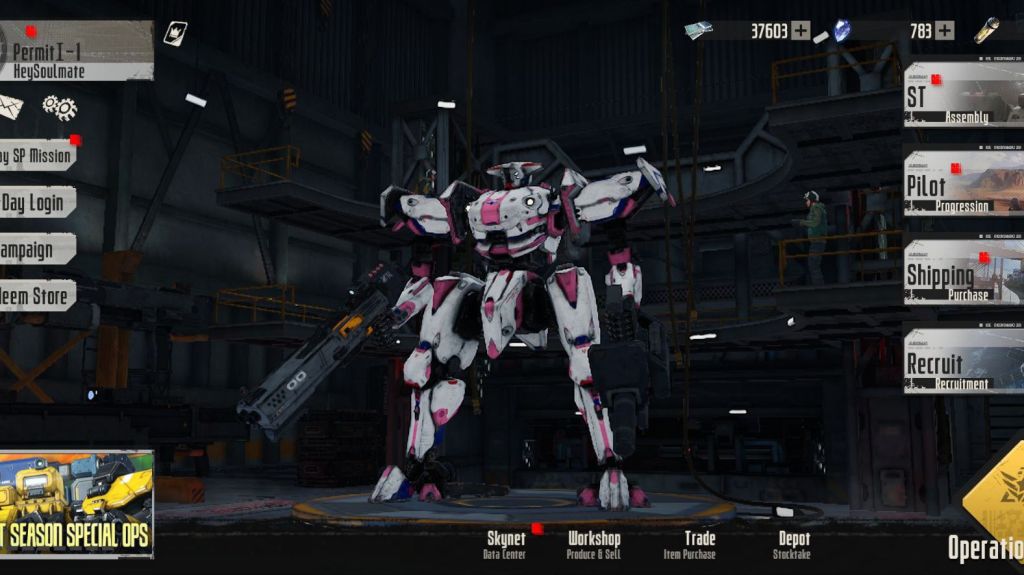
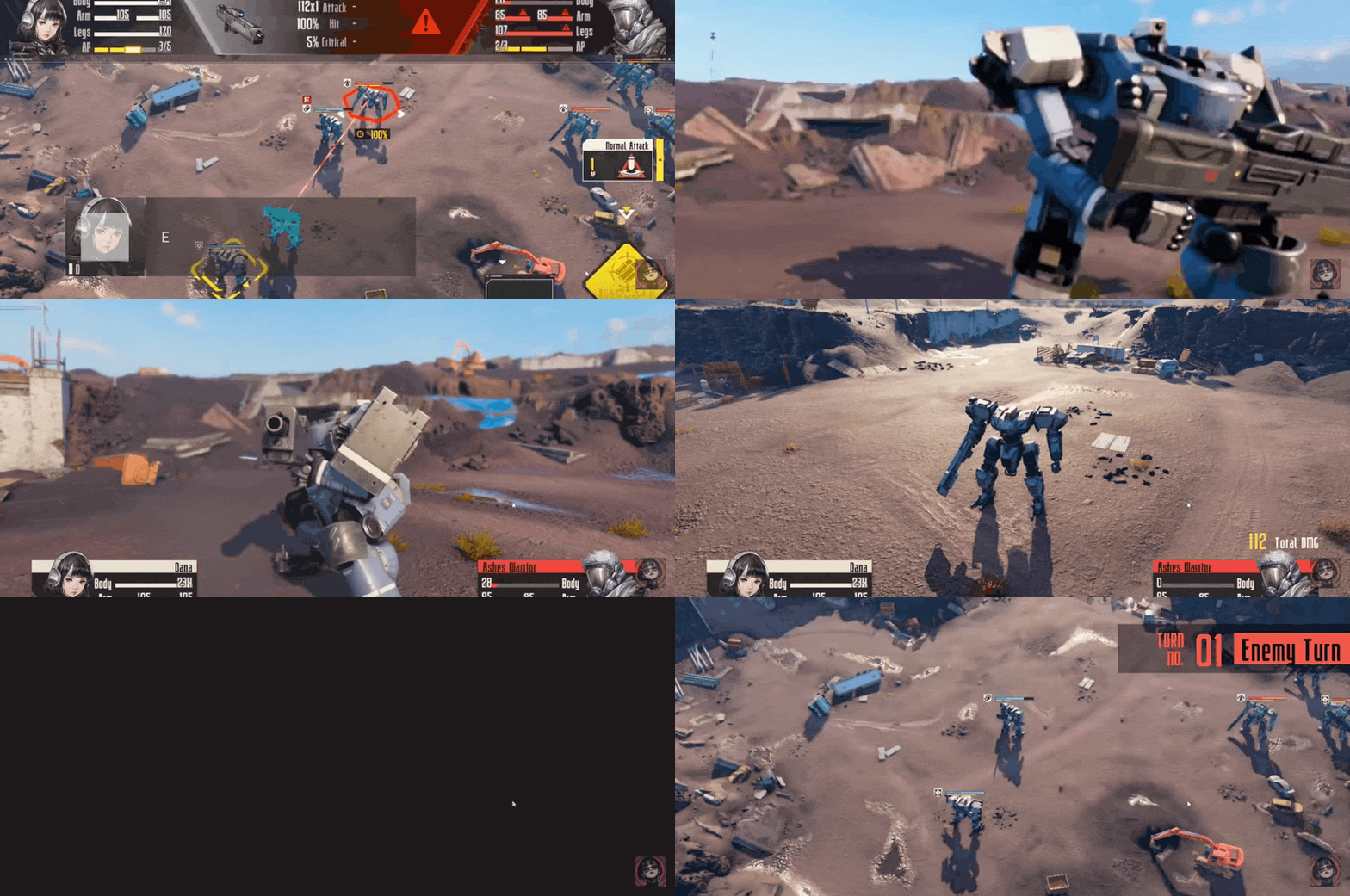
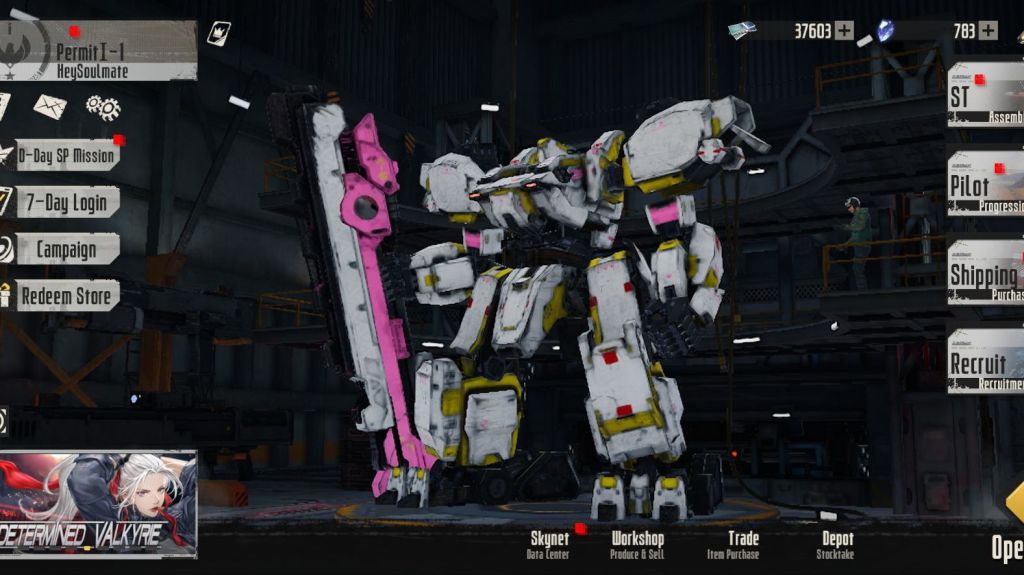
    Mecharashi delivers what mobile strategy games typically ignore: genuine tactical depth. The mobile mech game builds around a part destruction system that made Front Mission legendary – each mech component has separate hit points, and targeting specific parts becomes your key to victory.

    This tactical combat system defines the entire experience. Need to stop an enemy’s movement? Target the legs. Want to reduce their firepower? Destroy their weapon arms. Going for a quick kill? Focus fire on the torso for an instant takedown. This isn’t just damage dealing – it’s surgical warfare that rewards smart targeting over brute force.


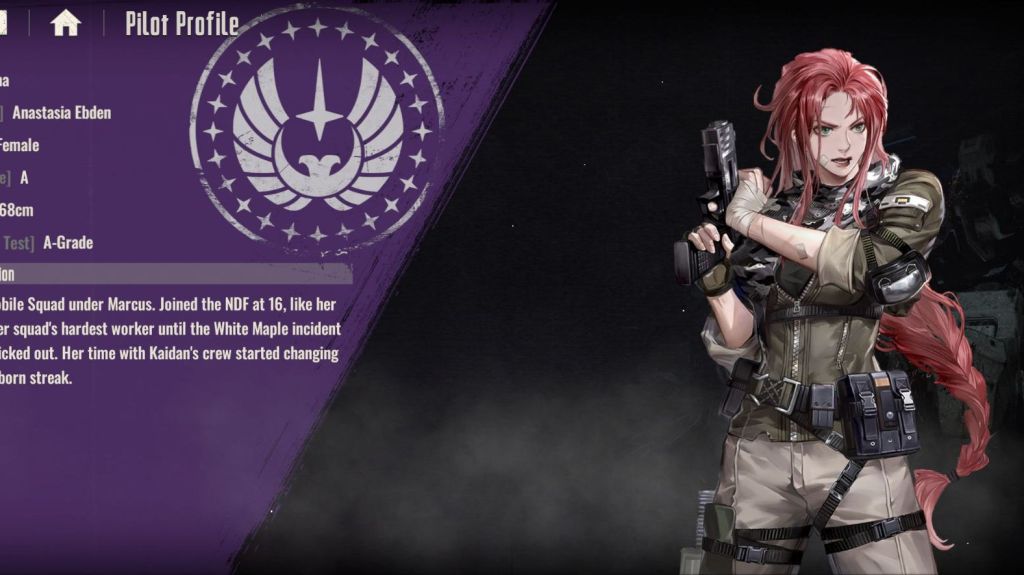
    The mech customization runs deep too. You can build mecha from different body parts, craft backstories for pilots, and paint schemes with over 120 colors. It captures that Front Mission feel of personalizing your war machines.

    But here’s where things get complicated. While the gameplay screams Front Mission, the story doesn’t. You’re not fighting in the political wars and corporate conspiracies that defined the series’ narrative identity. Instead, Mecharashi creates its own universe that feels more generic.


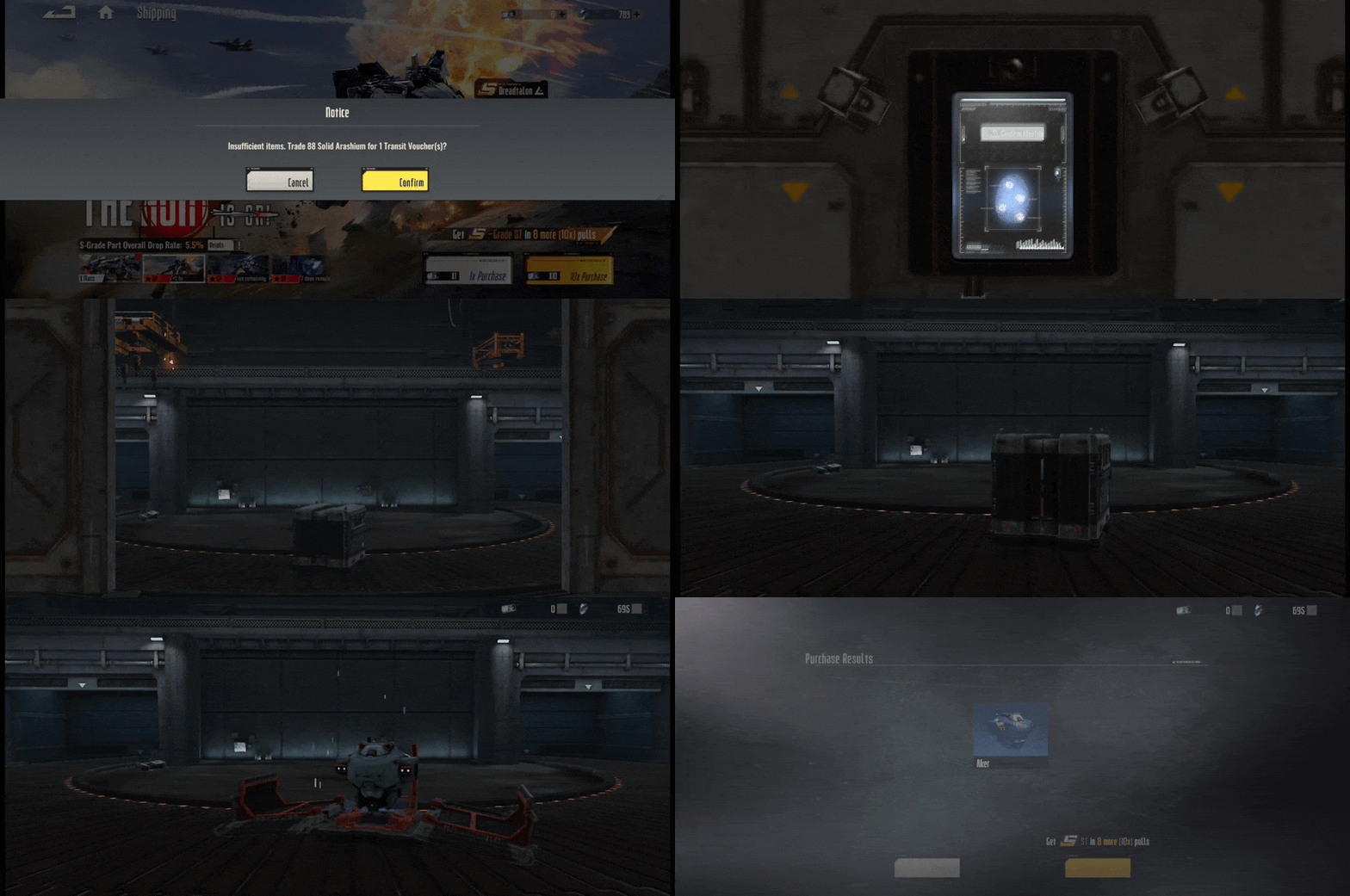
    However, the mobile game nails the gacha integration better than most mobile adaptations. The concept of supply drops makes perfect sense for acquiring new mech parts and pilots – it feels like military logistics rather than a casino. Characters get proper backstories that explain their roles, and the mech acquisition system fits naturally into the war setting.

    Best Mobile Mech Games 2025: Why Most Tactical RPGs Fail

    Search for Front Mission-like mobile games, and you’ll find disappointment. Most mobile mech games 2025 fall into these categories:

    – Action mobile games that abandon turn-based strategy entirely
    – Gacha collection games with simplified combat systems
    – Casual strategy games that strip away tactical complexity

    Into the Breach offers tactical mech combat, but plays more like a puzzle game than an RPG. BattleTech mobile exists on mobile platforms, but in limited, simplified forms that don’t capture the full mech strategy game experience.

    BlackJack Studio: The Developer Behind Mecharashi Mobile Game


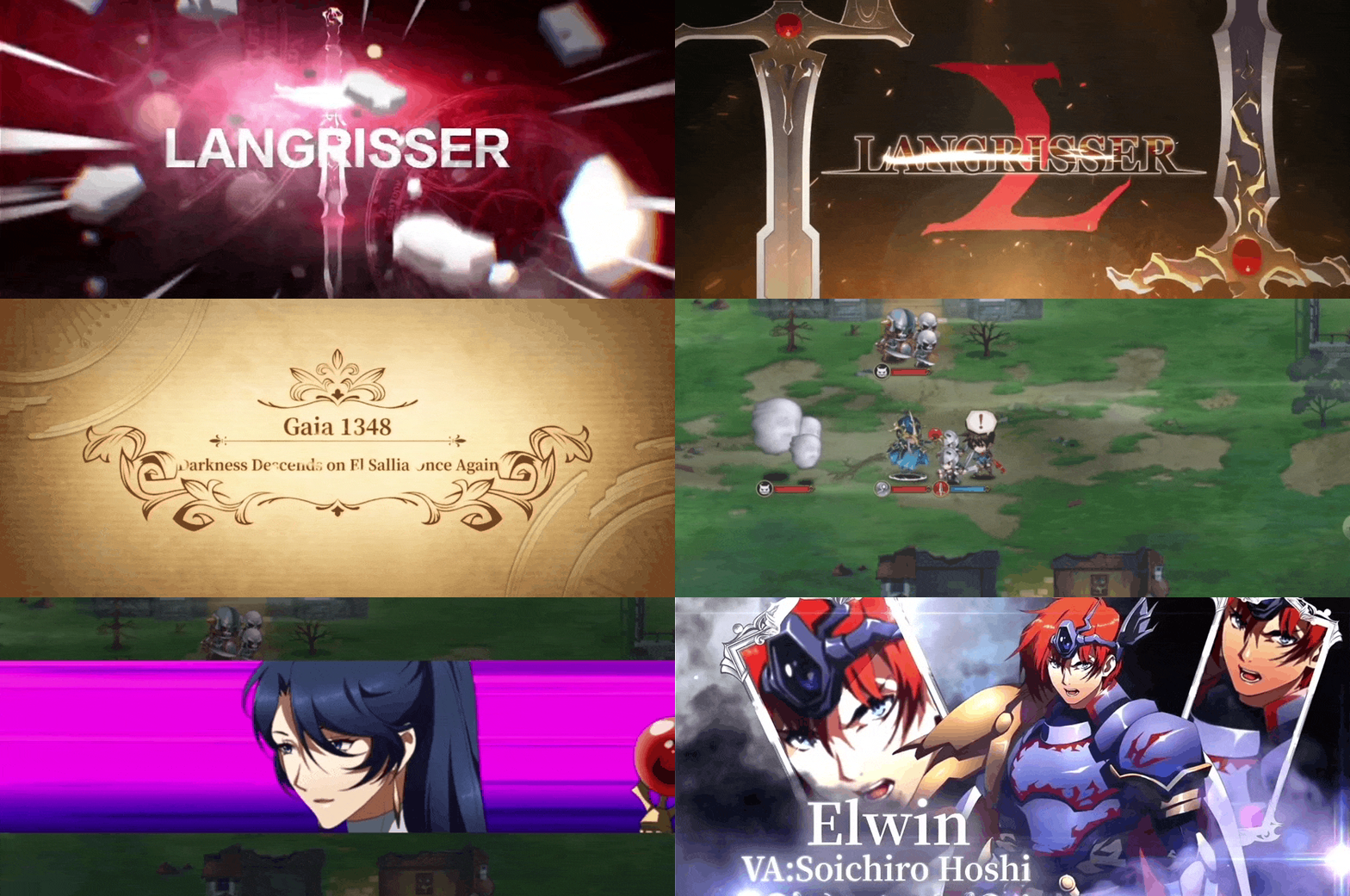
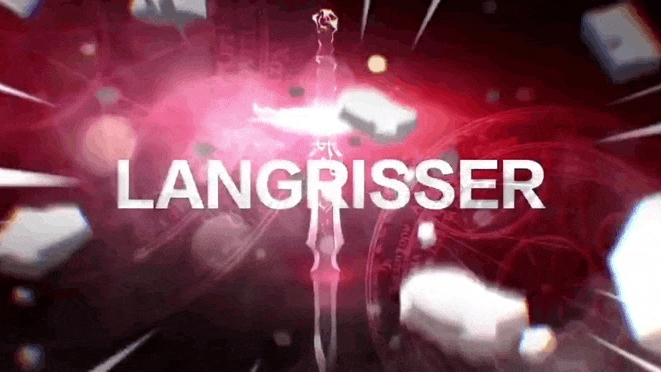
    BlackJack Studio proved their capability with Langrisser Mobile, which earned $130 million in China alone on iOS over ten months. They understand how to adapt complex strategy games for mobile audiences without destroying their core appeal.

    The studio’s termination from the Front Mission project likely stemmed from creative control conflicts rather than technical limitations. BlackJack Studio stated the termination happened “in order to have more continuity and control in content creation” – suggesting Square Enix wanted more oversight than the developer’s structure could accommodate.

    Front Mission Mobile Games: Your Only Two Options in 2025

    Want Front Mission gameplay on mobile? You have exactly two paths:

    Option 1: Play Mecharashi
    Get the closest thing to a modern Front Mission mobile experience, built by developers who understand tactical mech combat and mobile platforms.

    Option 2: Emulate Classic Front Mission Games
    Run original Front Mission games through SNES, PlayStation, or PS2 emulators on mobile. You’ll get authentic experiences without mobile adaptations, though touch controls can feel clunky for menu-heavy tactical games.

    Mecharashi Gacha System: Free to Play or Pay to Win?

    Look, we’re not drowning in options here. Square Enix had the chance to give us the Front Mission mobile game we’ve been begging for, and they blew it. BlackJack Studio picked up the pieces and built something that actually respects your intelligence as a strategy gamer.


    But let’s be real – Mecharashi isn’t perfect. Every new weapon, mech part, or pilot comes down to chance pulls from gacha banners. Even throwing real money at the game won’t guarantee you’ll get that specific mech set or ace pilot you’re eyeing. Everything’s a gamble, which stings when you just want to build your dream squad.


    Here’s the thing though – if you’re mainly here for the story mode and tactical combat, you probably won’t need to spend a cent. The game throws plenty of free currency and parts at you through regular play. Learn which banners give you the best odds for what you need, time your pulls right, and optimize your resources. Suddenly that gacha system becomes way more manageable.

    Still, it’s what we’ve got. You can either jump in and enjoy some actual tactical depth on your phone, or keep hoping someone else will magically appear with a better Front Mission clone.

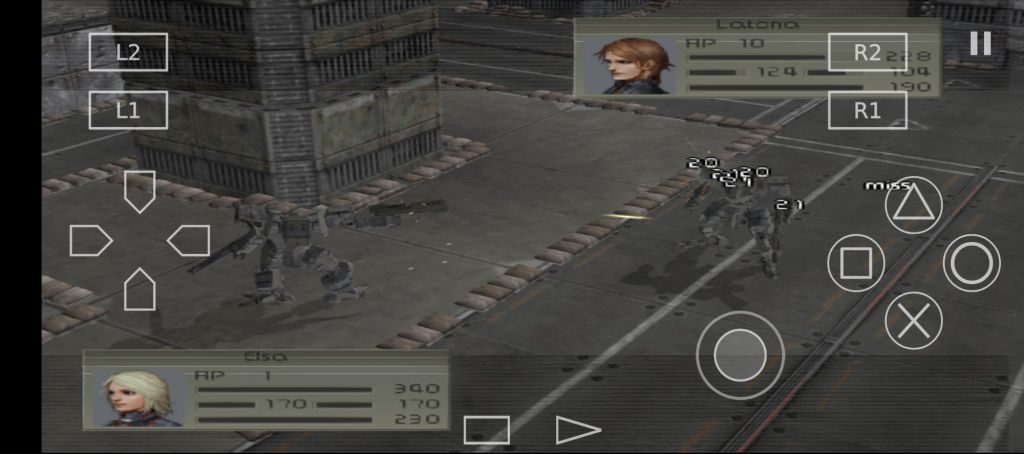
    Front Mission 4 played via NetherSx2 emulator on mobile


    Me? I’m tired of waiting for Square Enix to remember they own one of the best mech franchises ever made. Sometimes you’ve got to take what you can get, and right now, Mecharashi beats scrolling through another page of match-three games pretending to be strategy titles.

Design a site like this with WordPress.com
Get started