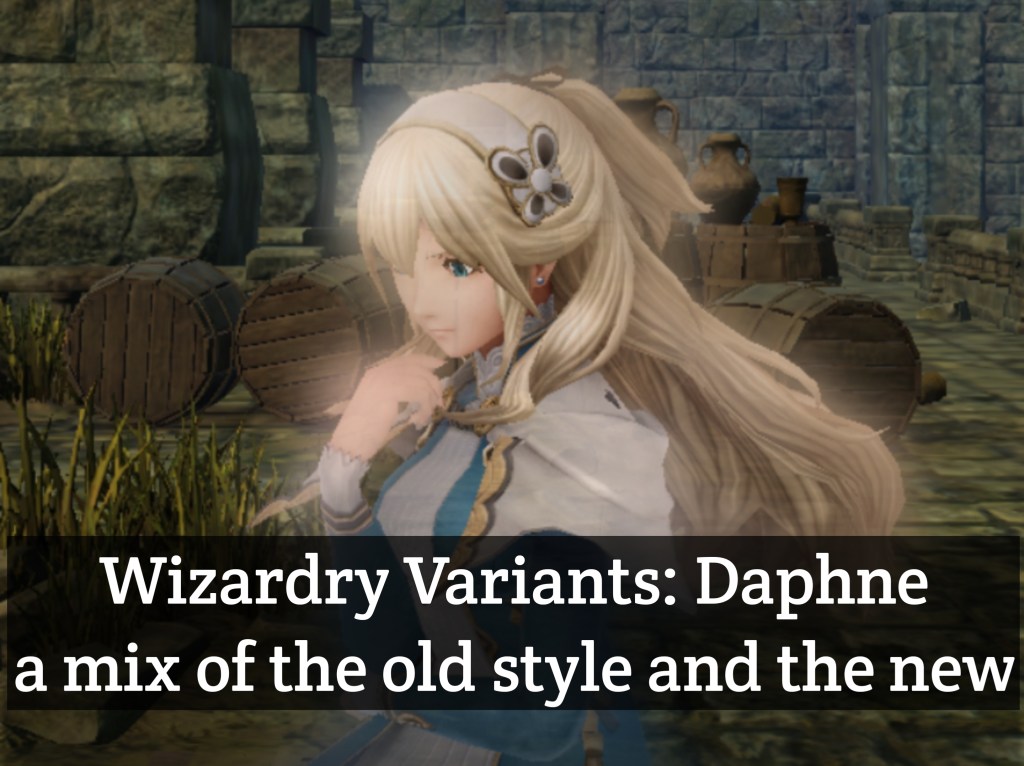
Look, I know I said I was going to do daily blogs on different games, but sometimes you stumble onto one title that grabs you so hard you can’t let go. That’s exactly what happened with Wizardry Variants Daphne.
A little Wizardry history
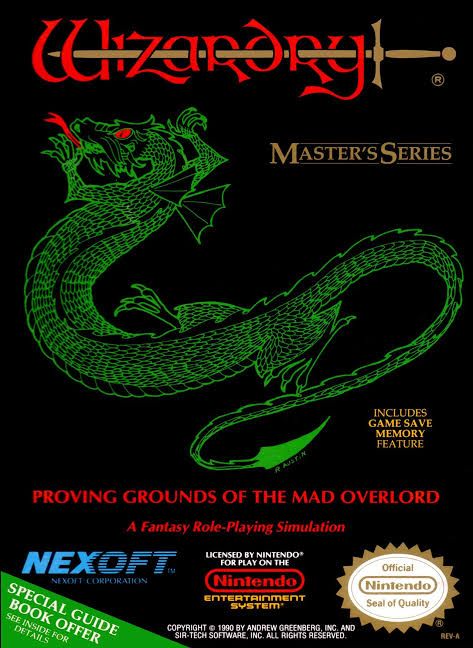
The Wizardry series goes way back, starting in 1981 with Proving Grounds of the Mad Overlord, created by Andrew C. Greenberg and Robert Woodhead for the Apple II. It’s considered one of the godfathers of the dungeon crawler genre, and over the years it spawned a full line of mainline entries all the way up to Wizardry 8 in 2001.
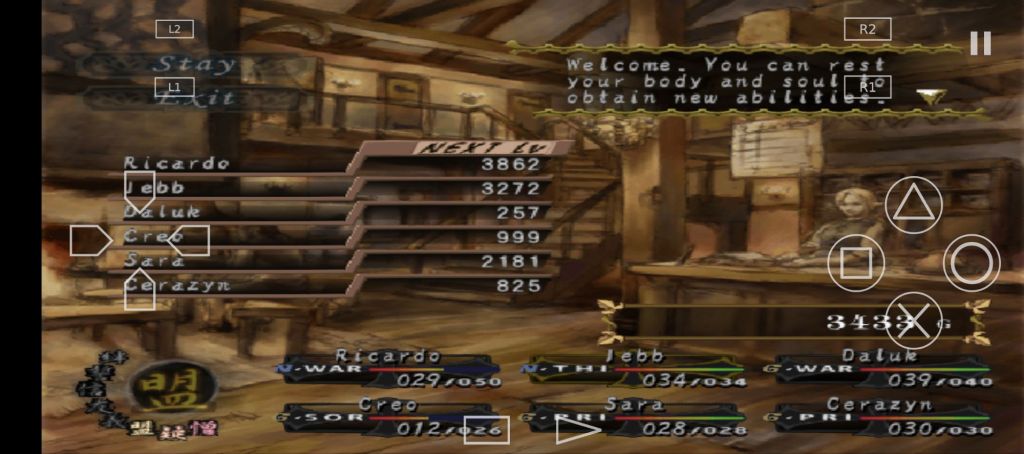
For me, though, my Wizardry era really came alive on the PS2 with Wizardry: Tale of the Forsaken Land (2001). I played that game heavily, sinking countless hours into its cold, oppressive world and brutal dungeon systems. It had everything I loved about classic Wizardry but with the kind of atmosphere only a console RPG could deliver back then. That game kept me hooked for years, and honestly, I still think it’s one of the best dungeon crawlers on the PS2.
So when Wizardry Variants Daphne showed up on mobile, it wasn’t just nostalgia kicking in—it felt like a natural continuation of what hooked me back in the PS2 days, but adapted into a modern format that works perfectly on mobile.
And honestly, I was surprised this game even existed. Since the marketing for it was so low, it barely shows up in the Play Store as a recommendation. I had to manually type Wizardry for it to pop up, and what I found was way better than I expected.
Story and Atmosphere
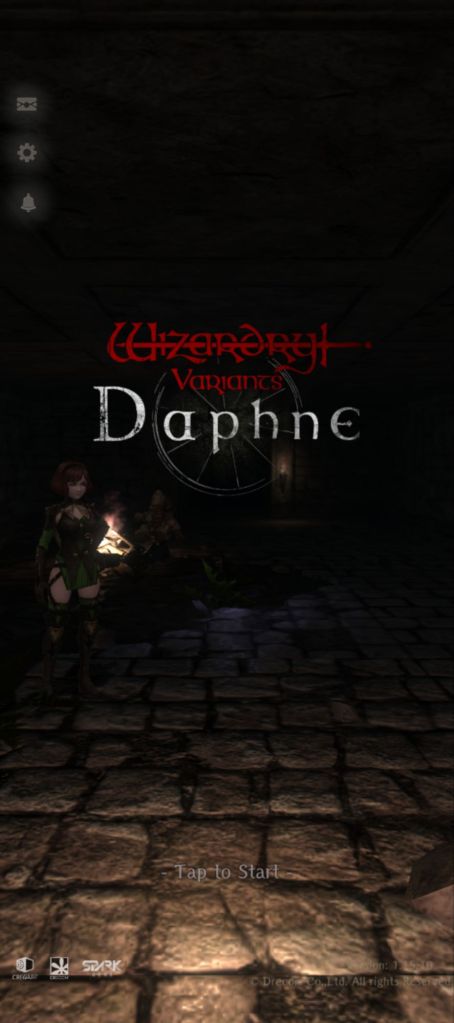
The game opens with you in the middle of a dungeon. As you move through the maze, you start to sense an ominous presence following you. “Following” might be the wrong word—it feels more like stalking. Eventually, you get cornered and are forced into your first monster battle against two imps.
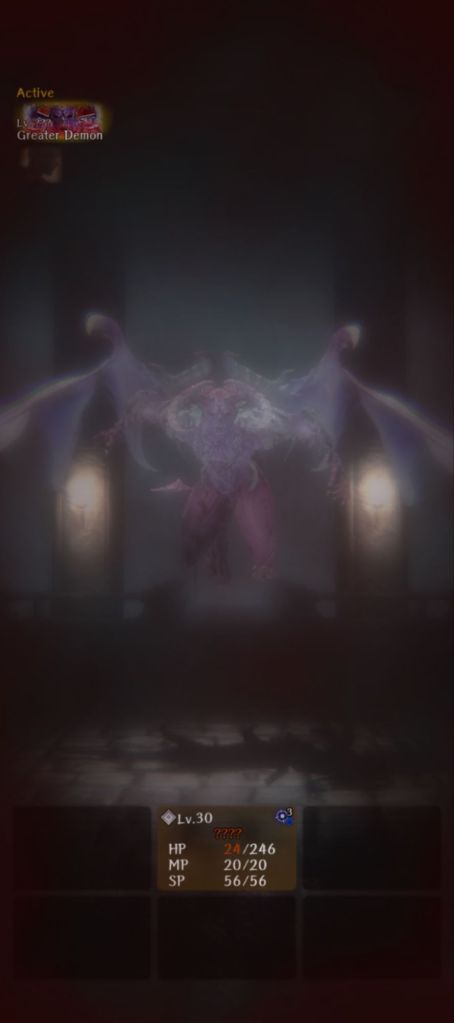
Here, the game introduces the battle system, and what really clicked for me is how everything is shown from your personal point of view. Every sword swing, every spell, every strike your party members make—it’s all presented as if you’re right there on the battle line. Simple idea, but it works beautifully in portrait mode for a mobile dungeon crawler.
Eventually, you manage to finish off the imps, but you’re left with nowhere to run. A locked door blocks your path, and behind you, that flying monster stalks closer. With no other choice, you fight back.
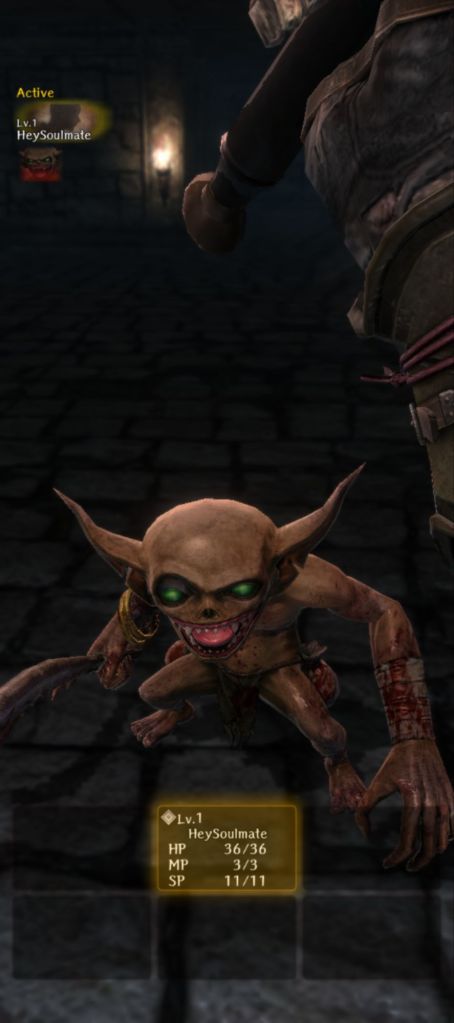
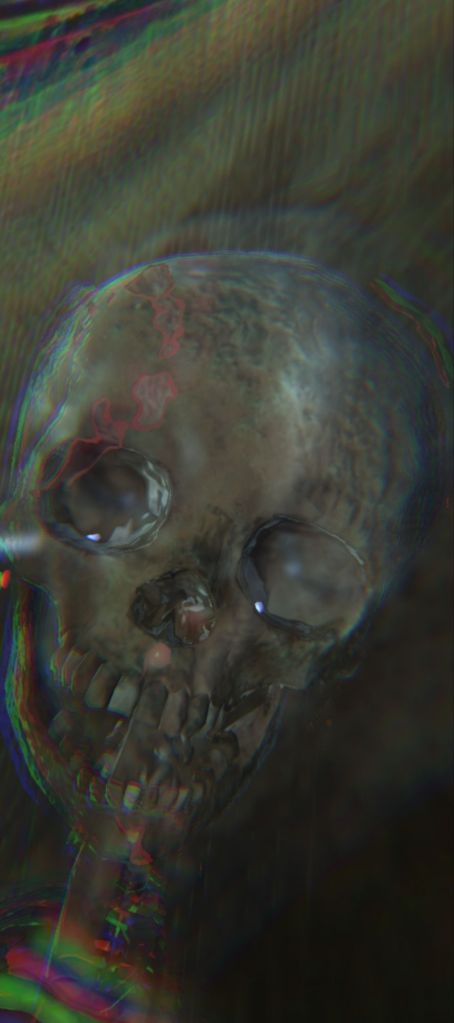
Of course, the battle doesn’t go in your favor. You fall, and what follows is one of the coldest, most memorable opening sequences I’ve seen in a mobile RPG. Time speeds up, your body rots away, monsters strip your gear, and all that’s left behind are your skeletal remains.
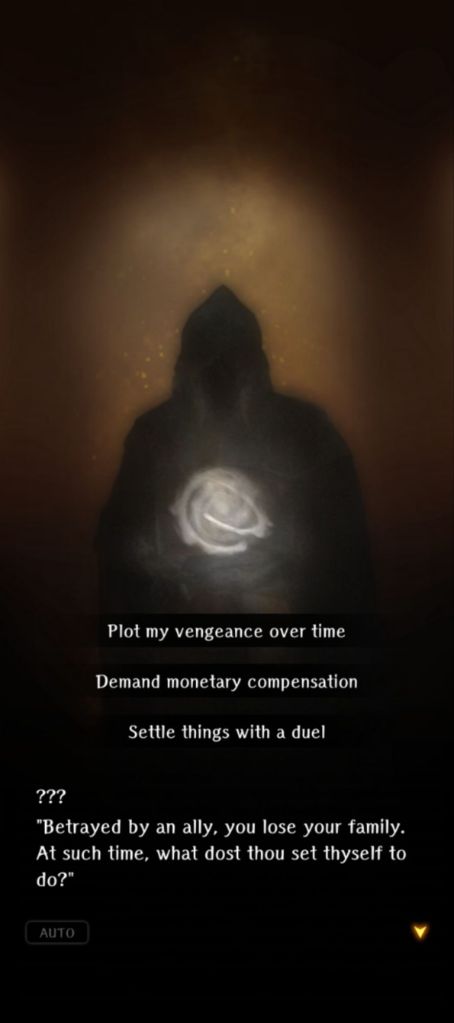
Then, a hooded figure appears. I won’t spoil the dialogue here—it’s something you should really experience firsthand—but he begins asking you questions. Based on your answers, he recommends stats and an alignment, essentially setting the foundation for your character build. The whole sequence is immersive, eerie, and backed by chilling music that nails the mood perfectly.
Character Creation and Progression
When you wake again, you find that you’ve taken the form of a ghul—an undead, zombified humanoid monster. Not long after, you meet an apparition who seems surprised to see a ghul that can still speak. Eventually, she asks if you’re human, and introduces herself as Lulunarde, a legendary adventurer who perished in the abyss and now roams as a spirit.
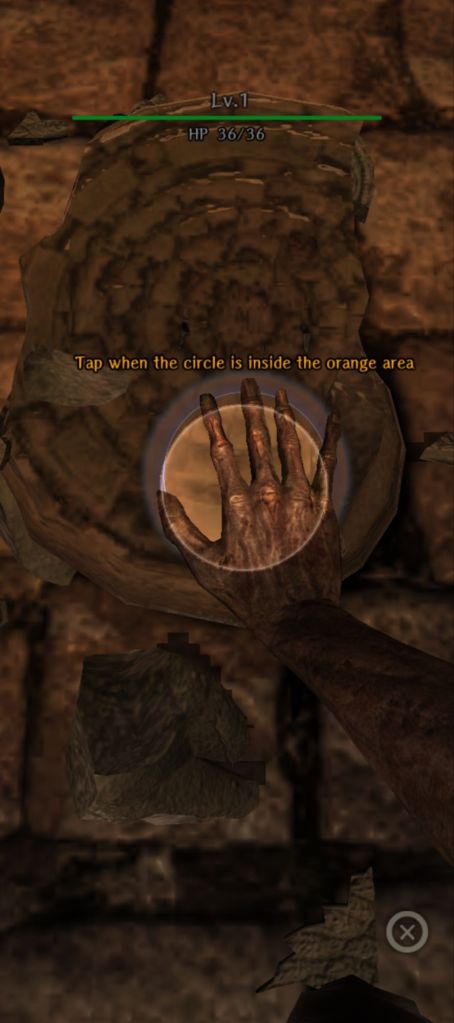
She guides you to a broken teleport statue and teaches you about your main ability: the Right Hand of Insight. This lets you restore these statues, opening blocked paths and giving you a way to navigate further into the abyss.
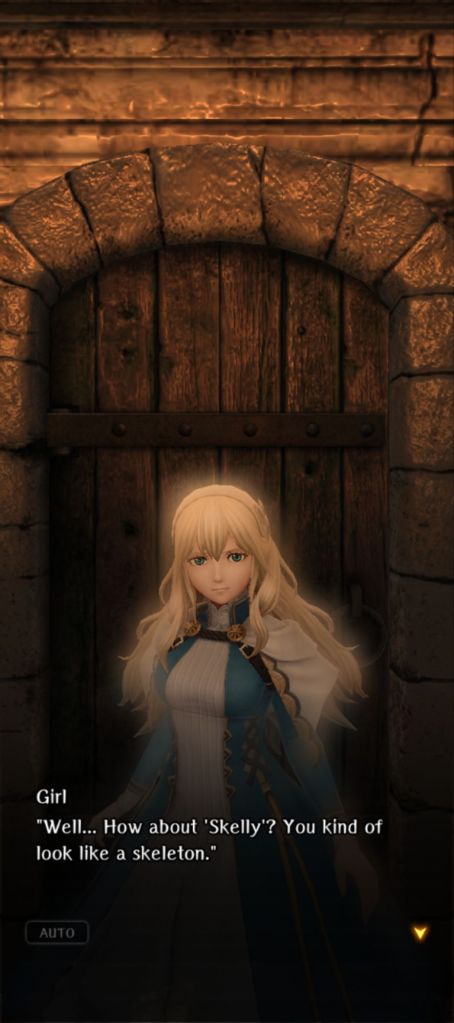
Before leaving, she asks your name. If you choose not to name yourself, she even suggests a few quirky options of her own. Afterward, she reveals her name and hints at a deeper backstory—one I’m sure will unfold more as you progress.
From there, you push deeper, clearing monsters, looting broken weapons and armor, and collecting bones from fallen adventurers. These bones (and junk loot) are more important than they first appear—they tie directly into the game’s gacha system.
Finally, you find the exit and step outside into the world.
The Town Hub

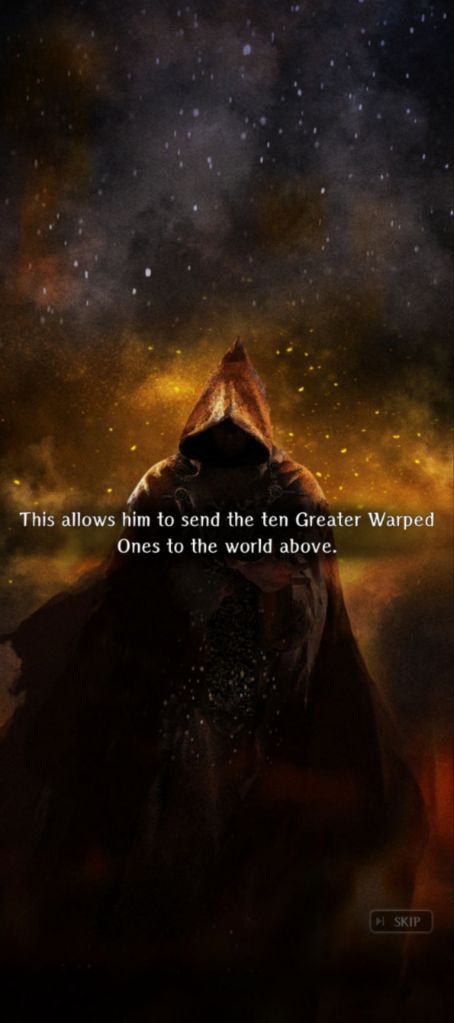
Once outside, you get a short exposition cutscene explaining the origins of the abyss. From there, you’re brought to the home menu, which serves as the central hub where you prepare between dungeon runs.
Here’s a quick breakdown of each location:
The Inn
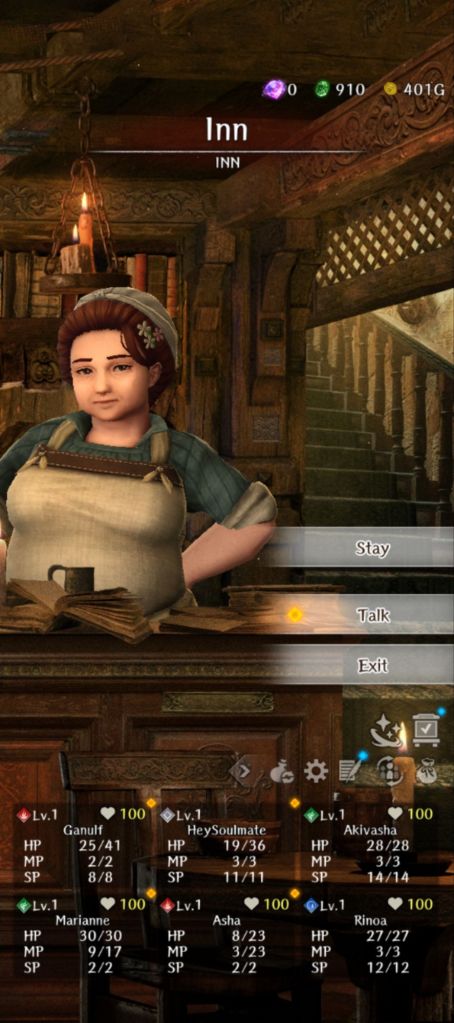
The inn is where you rest after a dungeon run. This is also where you level up your characters’ skills and prepare your party for the next dive.
Adventurers Guild
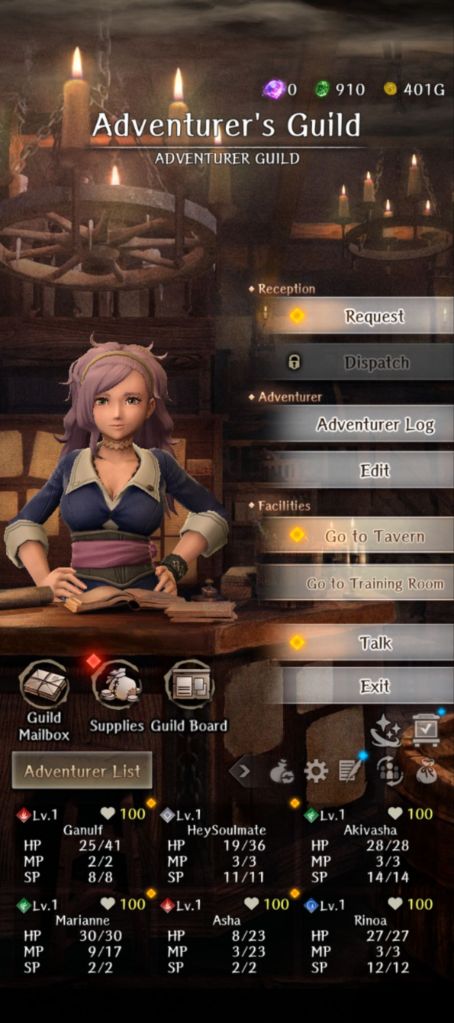
The guild is where you accept quests, recruit new members, and form or train your party. It’s the beating heart of your adventuring team.
The Blacksmith
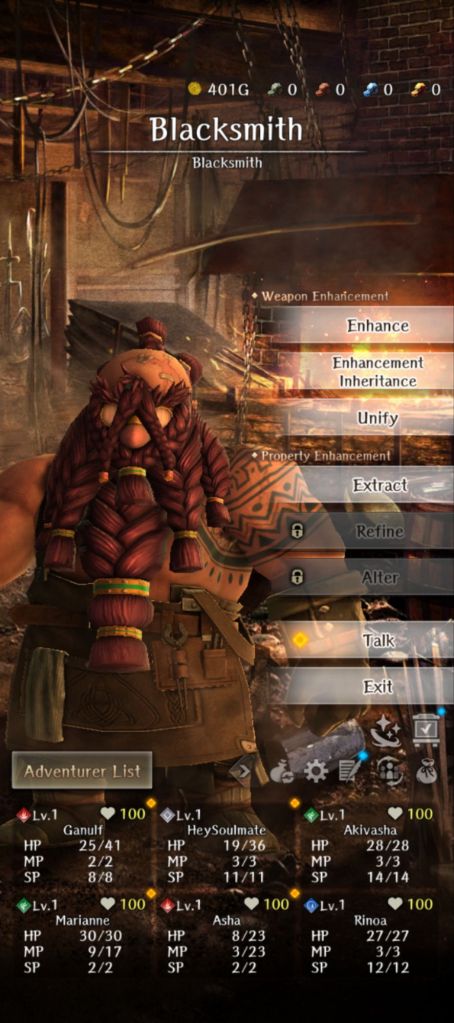
The blacksmith is where you refine and upgrade your weapons and armor. You don’t buy gear here—everything you use comes from dungeon drops or through the gacha system that transforms broken equipment into usable pieces. The blacksmith’s role is to take what you’ve earned and make it stronger.
The Item Shop
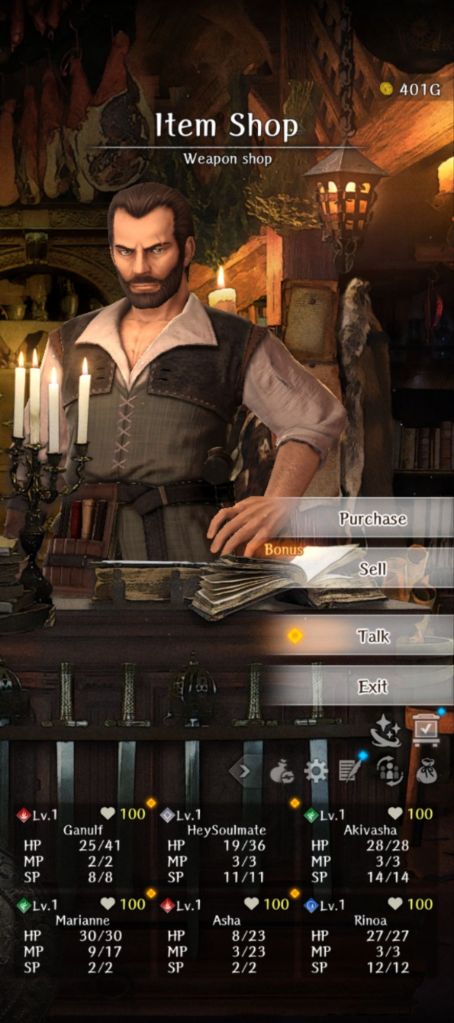
The item shop is where you handle your consumables and extra gear. You can buy potions and support items for dungeon runs, but it’s also the place where you sell off weapons and armor you don’t need.
The Ruins
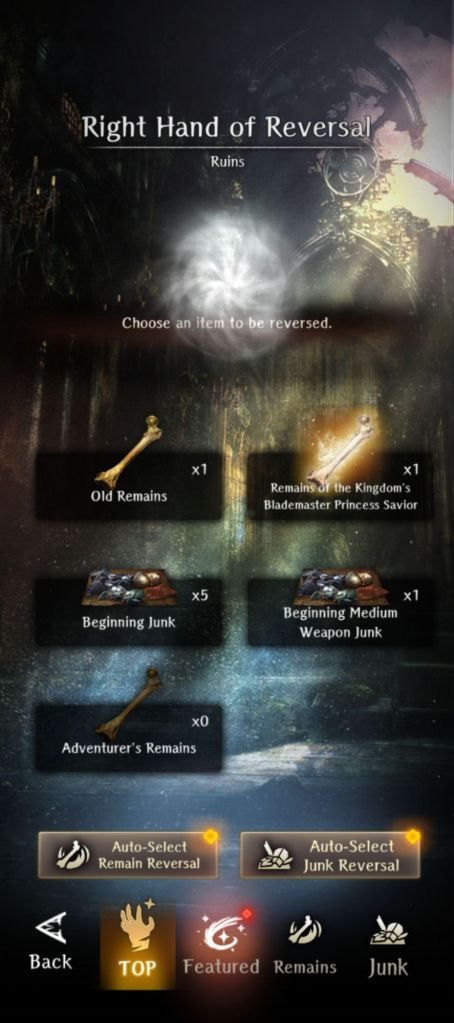
This is where Wizardry Variants Daphne puts its unique spin on the gacha system. Instead of pulling with tickets or premium currency, you use your Right Hand of Resurrection to raise adventurers from the bones you’ve gathered. Bones are tiered—legendary bones can resurrect legendary adventurers.
The same goes for weapons and armor. All that junk loot you grab? It gets transmuted here into usable equipment. It’s a clever mechanic that makes the gacha feel like part of the game’s world, rather than something bolted on.
The Edge of Town
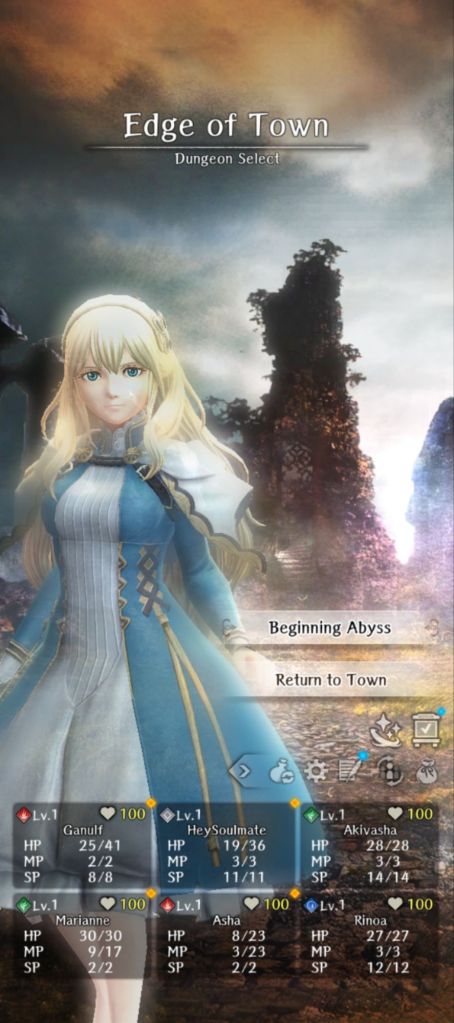
Finally, the edge of town is your gateway back to the abyss. Once your party is set, your gear prepared, and your quests accepted, this is where you head out for another run.
Final Thoughts
I’d love to dive deeper into how the abyss itself plays out, but honestly, my time with it so far has been hampered by some nasty connection issues. The game would run fine for a few minutes, then suddenly freeze. At first, I thought it was my phone, so I tried restarting and logging back in, but the problem kept coming back. Eventually, it reached the point where it would freeze just seconds after I got back in, which was maddening.
I already sent feedback to the devs through the Play Store, and I really hope they address it soon—because this game deserves to run smoothly.
That said, connection hiccups aside, Wizardry Variants Daphne has everything I want in a modern dungeon crawler. The grim atmosphere, the clever twist on gacha, the haunting story setup—it’s all there. For me, it’s an easy 10/10 and a must-play for anyone who’s into dungeon crawlers or wants something darker and more immersive on mobile.
 EZRetro Plays